


It took 300 years, but Virginia's only convicted witch has finally been pardoned.
State Governor Timothy Kaine was asked to exonerate Grace Sherwood, who was tried by water and accused of using her powers to cause a woman to miscarry. On Monday, the 300th anniversary of Sherwood's "ducking" trial, Kaine obliged, issuing what a spokesman called "an informal pardon."
"Today ... I am pleased to officially restore the good name of Grace Sherwood," Kaine wrote in a letter that Mayor Meyera Oberndorf read aloud before a re-enactment of the ducking.
"With 300 years of hindsight, we all certainly can agree that trial by water is an injustice," Kaine wrote. "We also can celebrate the fact that a woman's equality is constitutionally protected today, and women have the freedom to pursue their hopes and dreams."
The mayor also proclaimed Monday "Grace Sherwood Day." She praised the tenacity of local resident Belinda Nash who had petitioned to "clear the name of a woman whose only sin was she was left a widow, she worked hard and some of the people didn't like her."
Sherwood lived in what today is the rural Pungo neighborhood and later became known as "The Witch of Pungo." She went to court a dozen times, either to fight witchcraft charges or to sue her accusers for slander.
In her final case, she was 46 when she was accused of using her powers to cause a neighbor to miscarry.
On July 10, 1706, Sherwood was dropped into the Lynnhaven River and floated -- proof she was guilty because the pure water cast out her evil spirit, according to the belief system of the time.
Kaine spokesman Kevin Hall said the informal pardon is "a gesture of goodwill" for Nash, 59, who has been researching Sherwood for years and is part of a group that annually remembers Sherwood with a re-enactment in the river.
"The governor thought this was a decent gesture to make on the 300th anniversary of a woman who, I think most reasonable people would agree, was wronged and a victim of a frenzy," Hall said.
For Monday's ceremony the re-enactment took place on land -- in front of the Ferry Plantation House, a historic home where Nash volunteers as director and, dressed in costume, tells visitors about Sherwood.
The courthouse where part of Sherwood's trial was carried out was located on the old plantation property.
Nash's daughter, Danielle Sheets, was tied cross-bound, her thumbs to her toes, and placed in a small boat, just as Sherwood would have been.
"I be not a witch. I be a healer," Sheets shouted, in character. "Before this day be through, ye will all get a worse ducking than I."
As the real Sherwood was pulled from the water, a downpour supposedly started. The sky remained clear on Monday.
Sherwood may have been jailed until 1714, when records show she paid back taxes and with the help of then-Governor Alexander Spotswood she was able to reclaim her property. She then lived quietly until her death at 80.
Nash said she hopes Kaine's action will help her find a place to put a Sherwood statue, a picture of which she unveiled on Monday.
"Every time it seemed that people said, `We don't want a statue of a witch,'" said Nash, who has raised about a third of the US$92,000 cost of the bronze statue. "Well, now she is no longer a statue of a witch."
After the ceremony, Mary Sherwood Holt of Newport News gave Nash US$1,000 toward the statue -- a donation from Holt and her cousin, John Sherwood of Annapolis, Maryland. He has a boat named Witch of Pungo.
The family thinks they may be related to Grace Sherwood, Holt said, "and we a have a passion for her in any event."
"I just think it's a wonderful story," said Holt, 79. "Any strong, competent woman is still considered a witch by some people, right?"

An American scientist convicted of lying to US authorities about payments from China while he was at Harvard University has rebuilt his research lab in Shenzhen, China, to pursue technology the Chinese government has identified as a national priority: embedding electronics into the human brain. Charles Lieber, 67, is among the world’s leading researchers in brain-computer interfaces. The technology has shown promise in treating conditions such as amyotrophic lateral sclerosis and restoring movement in paralyzed people. It also has potential military applications: Scientists at the Chinese People’s Liberation Army have investigated brain interfaces as a way to engineer super soldiers by boosting
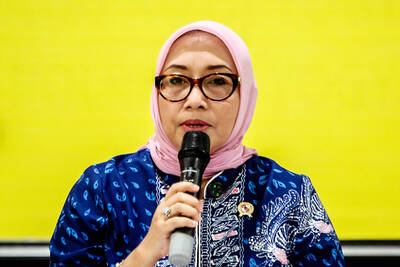
Indonesian police have arrested 13 people after shocking images of alleged abuse against small children at a daycare center went viral, sparking outrage across the nation, officials said on Monday. Police on Friday last week raided Little Aresha, a daycare center in Yogyakarta on Java island, following a report from a former employee. CCTV footage circulating on social media showed children, most younger than two, lying on the floor wearing only diapers, their hands and feet bound with rags. The police have confirmed that the footage is authentic. Police said they also found 20 children crammed into a room just 3m by 3m. “So
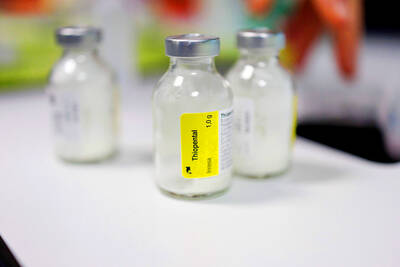
A grieving mother has ended her life at a clinic in Switzerland four years after the death of her only child. Wendy Duffy, 56, a physically healthy woman, died at the Pegasos clinic in Basel after struggling to cope with the death of her 23-year-old son, Marcus. The former care worker, from the West Midlands, England, had previously attempted to take her own life. The case comes as assisted dying would not become law in England and Wales after proposed legislation, branded “hopelessly flawed” by opponents, ran out of time. Ruedi Habegger, the founder of Pegasos, described Duffy’s death as
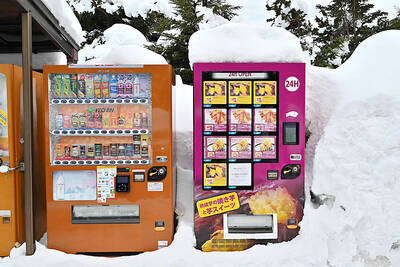
From post offices and parks to stations and even the summit of Mount Fuji, Japan’s vending machines are ubiquitous, but with the rapid pace of inflation cooling demand for their drinks, operators are being forced to rethink the business. Last month beverage giant DyDo Group Holdings announced it would remove about 20,000 vending machines — about 7 percent of their stock nationwide — by January next year, to “reconstruct a profitable network.” Pokka Sapporo Food & Beverage, based in Nagoya, also said last month it would sell its 40,000-machine operation to Osaka-based Lifedrink Co. “The strength of the vending machine


 RSS
RSS