


■ South Korea
Protesters kept from base
Thousands of students and civic activists scuffled with police yesterday as they tried to approach the site of a new US military base to protest expansion plans, but no major clashes occurred. More than 4,000 anti-US activists tussled with police near the site in Pyeongtaek, about 65km south of Seoul, but couldn't break through a barricade blocking the road to the base site. "Withdraw US troops! Let's guard our farmland!" chanted protesters, wearing masks to hide their identity. The crowd later dispersed voluntarily. Nearly 20,000 riot police were deployed.
■ Nepal
King's powers to be stripped
The seven main political parties are planning to strip the king of most of his powers, especially control over the army, and declare the parliament supreme, they said. Rajendra Pandey, a senior leader of the Communist Party of Nepal (UML), said the proposal could wrest the king's control over the Royal Nepalese Army and give it to parliament, also changing its name to the Nepal Army. The king is also set to loose the "His Majesty's" tag to the government which may simply be renamed the Nepal government. Also on the agenda is scrapping the Raj Parishad or Privy Council, a key advisory body of the king.
■ Fiji
Monitors endorse election
Last week's elections, while fraught with many minor problems, were given a preliminary seal of approval by a British Commonwealth observer group yesterday. The week of voting ended on Saturday, with the result expected on Wednesday. Observer group chairman K.D. Knight said although there were some shortcomings they did not appear to be an attempt to "fix" the outcome. Problems during the week-long election included the late delivery of ballot papers on the opening day, names missing from the voter register and general confusion over how and where to vote. The observer team will remain to monitor the counting.
■ Indonesia
Five die from bird flu
Five people from the same family have died of bird flu, according to local tests, a health official said yesterday. The two men, two women and an eight-year-old girl lived closely with each other in the Karo district of North Sumatra and came from "the same family tree," said I Nyoman Kandun, the health ministry's director general of disease control. Kandun said the five had been in contact with sick poultry and pigs near their homes before they fell ill and died within days of each other over the past three weeks.
■ Malaysia
Maids gain new protections
Indonesian maids will get greater protection and financial security under an agreement signed by the Southeast Asian neighbors, media reports said yesterday. Malaysian Prime Minister Abdullah Ahmad Badawi, who witnessed the signing with Indonesian President Susilo Bambang Yudhoyono in Jakarta on Saturday, said the deal would put an end to bilateral disputes over maid abuse allegations. Under the new accord, Indonesian maids will deal directly with their Malaysian employers, without the involvement of agents. The maids will also no longer need to pay anything before starting work as all costs such as the security deposit, transportation, handling of documents and the medical examination will be paid by the employers and then deducted from their wages, Bernama reported.
■ Germany
Hearts of gold, and mouths
The German Dentists' Relief Organization has been financing projects for children around the world with the proceeds from old gold fillings. Once every two or three years, Klaus Winter, the head of the German Dentists' Relief Agency, together with a few volunteers, sends around 70,000 letters to all the dental surgeons in the country requesting their old gold. "Every year, we receive around 20,000 envelopes with old gold crowns or gold fillings worth around 1.5 million euros [US$1.8 million dollars]," Winter says. With the proceeds from the gold donated by his colleagues' patients, he can finance charitable projects.
■ Russia
Putin looks to the future
President Vladimir Putin said on Saturday he would name a preferred successor to follow him as president and vowed to ensure a smooth handover of power when he steps down in 2008. He also obliquely hit back at criticism by the US leadership that he was backsliding on democracy, saying Russia would build up its ties with the West "patiently and calmly" and there would be no return to the Cold War. Putin, who was himself made acting head of state by then-president Boris Yeltsin to ensure his election, has long rejected talk he will change the Constitution and stand for a third successive term.
■ Germany
Hotline to the pontiff
Georg Ratzinger, brother of Pope Benedict XVI, has installed a special telephone in is home which he uses exclusively to talk to the pontiff. "When it rings I know that it it's my brother on the line," the 82-year-old told the newspaper Sueddeutsche Zeitung on Saturday. Ratzinger, who lives in the southern town of Ravensburg, said he speaks to the pope at least once a week, talking mostly about everyday things. Ratzinger said many things had changed for him in the 13 months since his brother was elected pope. He often gets phone calls asking for favors, such as arranging a private audience or passing on letters to the pontiff.
■ United Kingdom
Chavez visiting London
Venezuelan President Hugo Chavez was due to visit Britain yesterday with a packed two-day agenda that includes meetings with London's maverick mayor, left-leaning lawmakers and trade unions. The one thing missing is a face-to-face with Prime Minister Tony Blair or any government official for that matter. Tensions between the two governments have been escalating since February, when Blair told legislators in the House of Commons that Venezuela "should abide by the rules of the international community." Chavez responded by saying Blair's comments came like a ``cannon blast.'' Officials in Blair's office and the Foreign Ministry have declined to comment on the reasons why Chavez is not meeting with any senior British official, saying only that the Venezuelan leader's visit is "private."
■ France
Farmers say no to bears
Thousands of farmers protested on Saturday in the Pyrenees Mountains against a plan to repopulate bears in the region. Officials have already released two bears in the area and three more releases are planned. Farmers, in particular those who raise sheep, fear bear attacks on their flocks. Many at the demonstration in the town of Bagneres-de-Bigorre wore T-shirts that read "No to the bears!"
■ Iran
President ignores EU plans
President Mahmoud Ahmadinejad said yesterday that he considers "invalid" any European proposals that ask Iran to halt uranium enrichment. Ahmadinejad said that only Iran had the authority to make decisions about its nuclear program. Meanwhile a Foreign Ministry spokesman downplayed reports that inspectors from the UN nuclear watchdog have found traces of highly enriched uranium on equipment from an Iranian research center. Foreign Ministry spokesman Hamid Reza Asefi gave little weight to Friday's reports that International Atomic Energy Agency inspectors had found traces of highly enriched uranium. "It's insignificant. It's not important. Previously, things like this were said but later inspectors arrived at the right conclusions," Asefi told the media yesterday.
■ United States
Quake sparks interest in drill
Several countries not originally interested in a Pacific-wide tsunami drill have been signing up for the exercise after flaws occurred in warnings about a recent earthquake near Tonga. Since the 7.9-magnitude temblor hit on May 3, the Pacific Tsunami Warning Center in Hawaii has experienced a spike in replies to invitations about the test that were sent out by a UN agency two months ago. "It's convinced people that they really should participate," said Gerard Fryer, acting director of the center, which will launch mock bulletins of two simulated earthquakes beginning tomorrow. A Pacific warning system has been in place since 1965, but a full ocean-wide exercise has never taken place.
■ Puerto Rico
Shutdown to end
Governor Anibal Acevedo Vila has signed legislation ending a partial government shutdown that closed public schools and idled half of the central government's work force since May 1. More than 100,000 government workers and a half-million students will return to work and classrooms today after a two-week break they never planned for was resolved with the signature late on Saturday. "The government will reopen and return to normal on Monday. This has been an extraordinary victory for the people of Puerto Rico," said Acevedo, referring to the House and Senate's approval of an emergency loan to fund the government's operations and payroll until the end of the fiscal year on June 30.
■ United States
Sex offenders to be tracked
California plans to map the homes of nearly 2,000 sexual offenders using Global Positioning System satellite technology to certify they are staying far enough from schools, the head of the corrections department announced on Saturday. James Tilton said high-risk sex offenders will be monitored to ensure they are living about a kilometer from schools, in accordance with state law. "We will use whatever technology we can to make sure we are in compliance with all state laws and guidelines," he said.
■ United States
Suspected killer gator killed
Wildlife officers captured an alligator on Saturday they believe was responsible for fatally attacking a woman while she was out jogging. The 2.9m alligator was trapped just under the bridge where Yovy Suarez Jimenez, 28, was last seen, Florida Fish and Wildlife Conservation Commission spokeswoman said. Two human arms were found inside the alligator's belly, she said. Authorities still are not sure how the alligator attacked Suarez.

School bullies in Singapore are to face caning under new guidelines, but the education minister on Tuesday said it would be meted out only as a last resort with strict safeguards. Human rights groups regularly criticize Singapore for the use of corporal punishment, which remains part of the school and criminal justice systems, but authorities have defended it as a deterrent to crime and serious misconduct. Caning was discussed in the parliament after legislators asked how it would be used in relation to bullying in schools. The debate followed stricter guidelines on serious student misconduct, including bullying, unveiled by the Singaporean Ministry of

As evening falls in Fiji’s capital, a steady stream of people approaches a makeshift clinic that is a first line of defense against one of the world’s fastest-growing HIV epidemics. In the South Pacific nation — a popular tourist destination of just under a million people — more than 2,000 new HIV cases were recorded last year, a 26 percent increase from 2024. The government has declared an HIV outbreak and described it as a national crisis. “It’s spreading like wildfire,” said Siteri Dinawai, 46, who came to be tested. The Moonlight Clinic, a converted minibus parked in a suburban cul-de-sac in Suva, is

A MESSAGE: Japan’s participation in the Balikatan drills is a clear deterrence signal to China not to attack Taiwan while the US is busy in the Middle East, an analyst said The Japan Self-Defense Forces yesterday fired a Type 88 anti-ship missile during a joint maritime exercise with US, Australian and Philippine forces, hitting a decommissioned Philippine Navy ship in waters facing the disputed South China Sea, in drills that underscore Tokyo’s rising willingness to project military power on China’s doorstep. The drill took place as Manila and Tokyo began talks on a potential defense equipment transfer, made possible by Japan’s decision to scrap restrictions on military exports. The discussions include the possible early transfer of Abukuma-class destroyers and TC-90 aircraft to the Philippines, Japanese Minister of Defense Shinjiro Koizumi said. Philippine Secretary of
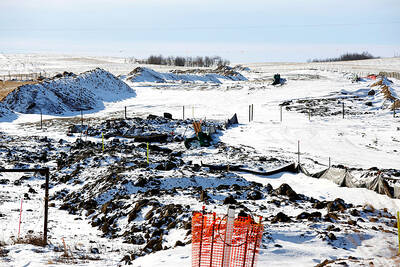
Separatists in Alberta are preparing to submit a petition tomorrow that they said has enough signatures to force a referendum on independence for the oil-rich Canadian province. Polls indicate the pro-independence camp remains a minority among Alberta’s 5 million people, but has hit a historic high of roughly 30 percent. Alberta separatists are also closer than ever to forcing a referendum, riding momentum fueled by intensifying grievances over Ottawa’s control of the provincial oil industry. They have also undeniably gotten a boost from the return to power of US President Donald Trump. After launching a petition in January, Stay Free Alberta, the group


 RSS
RSS