


The jury that will determine Zacarias Moussaoui's fate must decide whom it believes: Moussaoui himself, who, in stunning testimony, said he and shoe-bomber Richard Reid planned to fly a plane into the White House on Sept. 11, 2001; or the mastermind of the Sept. 11 attacks, who said Moussaoui had nothing to do with the attacks on Washington and New York.
Moussaoui's testimony on Monday at his death-penalty trial that he was part of the Sept. 11 plot came as a shock, since he previously had denied any role in the attacks that killed nearly 3,000 people.
As soon as Moussaoui finished testifying, the jury was read statements made by Khalid Shaikh Mohammed, the Sept. 11 mastermind now in US custody, who said Moussaoui was to have been used in a second wave of attacks completely disconnected from Sept. 11.
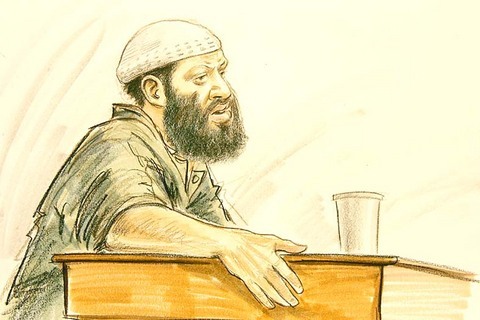
PHOTO: EPA
Moussaoui is the only person in the US charged in connection with the Sept. 11 attacks.
But even prosecutors are not alleging a direct role for Moussaoui in the Sept. 11 plot. Instead, they argue that Moussaoui allowed the Sept. 11 plot to go forward by lying about his al-Qaeda membership and his true plans when federal agents arrested him in August 2001.
He repeatedly had denied involvement in Sept. 11, and when he admitted guilt last April to conspiring with al-Qaeda to hijack aircraft and commit other crimes, he pointedly made a distinction between his conspiracy and Sept. 11.
On Monday, though, Moussaoui put himself at the center of the plot. He was asked by defense attorney Gerald Zerkin: "Before your arrest, were you scheduled to pilot a plane as part of the 9/11 operation?"
Moussaoui: "Yes. I was supposed to pilot a plane to hit the White House."
He said he knew few other details, except that planes were to be flown into the twin towers of the World Trade Center.
He had met Reid, his purported partner, in the 1990s at London's Finsbury Park mosque.
On Dec. 22, 2001, Reid was subdued by passengers on a flight from Paris to Miami when he attempted to detonate a bomb in his shoe. That plane landed safely in Boston. Reid later pleaded guilty and was sentenced to life in prison.
Moussaoui's defense attorneys, in their opening arguments, suggested that Moussaoui may prefer martyrdom to life in prison.
He is not cooperating with his court-appointed attorneys, and he testified against their wishes.
Mohammed's testimony came in the form of a 58-page statement culled from government interrogations. He said repeatedly that Moussaoui was to have been part of a second wave of attacks, distinct from US.
Mohammed said he was not aware that Moussaoui was in custody until after Sept. 11, and that Moussaoui's arrest on Aug. 16 would have disrupted Sept. 11 plans if he were a part of the operation. Mohammed said the second-wave of attacks never materialized because he did not anticipate the ferocity of the US response to Sept. 11 and the only other pilot backed out.
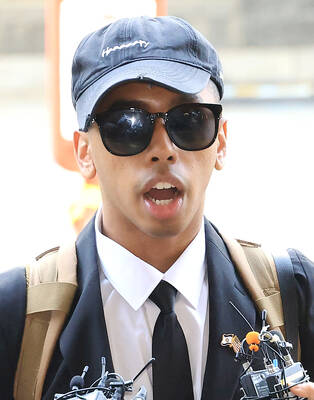
A US YouTuber who caused outrage for filming himself kissing a statue commemorating Korean wartime sex slaves has been sentenced to six months in prison, a court in Seoul said yesterday. Johnny Somali, 25, gained notoriety several years ago for recording himself doing a series of provocative stunts in South Korea and Japan, and streaming them on platforms such as YouTube and Twitch. South Korean authorities indicted Somali — whose real name is Ramsey Khalid Ismael — in 2024 on public order violations and obstruction of business, and banned him from leaving the country. “The court has sentenced him to six months in
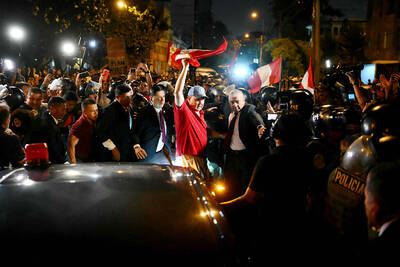
Former Lima mayor Rafael Lopez Aliaga, a Peruvian presidential hopeful, gathered hundreds of supporters in Lima on Tuesday and gave authorities 24 hours to annul the first round of the country’s election over allegations of fraud. Lopez Aliaga is locked in a tight three-way race with two other candidates for second place in Sunday’s vote. The election runner-up wins a ticket to June’s presidential run-off against front-runner Keiko Fujimori. “I am giving them 24 hours to declare this electoral fraud null and void,” said Lopez Aliaga, surrounded by a crowd of several hundred supporters. “If it is not declared null and void tomorrow,
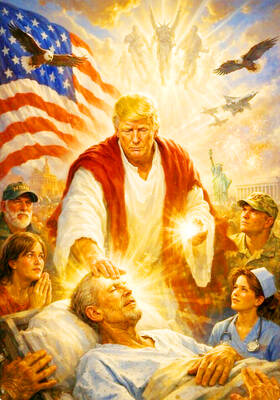
PAPAL RETORT: Pope Leo told reporters that he has ‘no fear, neither of the Trump administration nor speaking out loudly about the message of the Gospel’ US President Donald Trump has feuded with Pope Leo XIV over the Iran conflict — setting off an unholy row that could have serious political implications for the Republican leader back in the US. Trump has drawn barbs even from some allies over the attacks on the US-born pontiff, who has criticized the Trump administration over its immigration crackdown, the intervention in Venezuela and the Iran war. The president risks alienating the religious right in November’s crucial US midterm elections. So far the unprecedented clash between the leader of the most powerful military on Earth and the head of the world’s 1.4 billion
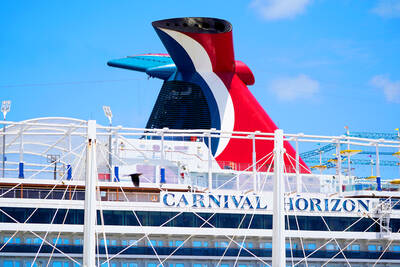
A 16-year-old boy has been charged with murder and aggravated sexual abuse in Florida in the death of his 18-year-old stepsister on a Carnival Cruise ship, the US Department of Justice said on Monday. Timothy Hudson was initially charged in February and subsequently indicted on March 10, but the breadth of the case was not known until a seal was lifted on Friday last week, weeks after US District Judge Beth Bloom in Miami said that he would be prosecuted as an adult at the request of the government. Anna Kepner had been traveling on the Carnival Horizon ship in November last


 RSS
RSS