


The harshest political crackdown in years is under way in Cambodia in what some analysts are calling the final stage in Prime Minister Hun Sen's drive to consolidate unchallenged power.
During the past year, he has choked off the last effective political opposition while continuing to marginalize the monarchy, manipulate the courts and intimidate labor unions and other civic groups.
In December, the leader of the only significant opposition party, Sam Rainsy, who had already fled the country, was sentenced in absentia to 18 months in prison for criminal defamation.
Now, with a series of arrests and lawsuits on defamation and related charges, Hun Sen is for the first time directly attacking the human rights groups that, by default, serve as a de facto democratic opposition.
"Cambodia right now is at a crossroads: It must decide whether it's going to be a real democracy or whether it's going to move inexorably toward a one-party state," US ambassador Joseph Mussomeli said.
The special UN envoy for human rights in Cambodia, Yash Ghai, said only strong action from the foreign countries that support Cambodia's economy could stop the slide.
"It has all the hallmarks of the beginning of a totalitarian regime," he said.
The human rights groups are the most substantial and lasting legacy of a major international effort by the UN in the early 1990s to implant democracy in Cambodia.
From 1975 to 1979, the communist Khmer Rouge caused the deaths of 1.7 million people, comprising nearly one-fourth of the nation's population.
In the decade that followed, Cambodia was ruled by a Vietnamese-backed communist government in which Hun Sen rose to leadership.
Hun Sen staged a coup in 1997. He then intimidated opponents, manipulated elections and cut constitutional corners, allowing him to move steadily to reclaim the full powers he held before the UN intervention.
The forms of democracy remain. A parliamentary election is to be held in 2008.
Hun Sen also noted that he had not taken action against Sam Rainsy's party, just against Sam Rainsy.
These forms, however, do not compensate for a policy of intimidation, the US ambassador said.
"They have scared the hell out of the opposition, and it becomes more difficult to take these trappings of democracy as the real thing each time another voice is silenced," Mussomeli said.
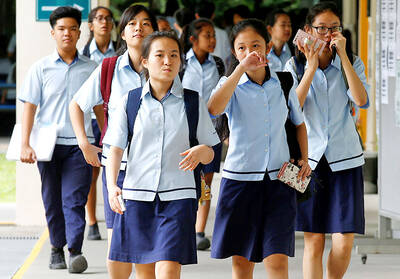
School bullies in Singapore are to face caning under new guidelines, but the education minister on Tuesday said it would be meted out only as a last resort with strict safeguards. Human rights groups regularly criticize Singapore for the use of corporal punishment, which remains part of the school and criminal justice systems, but authorities have defended it as a deterrent to crime and serious misconduct. Caning was discussed in the parliament after legislators asked how it would be used in relation to bullying in schools. The debate followed stricter guidelines on serious student misconduct, including bullying, unveiled by the Singaporean Ministry of

As evening falls in Fiji’s capital, a steady stream of people approaches a makeshift clinic that is a first line of defense against one of the world’s fastest-growing HIV epidemics. In the South Pacific nation — a popular tourist destination of just under a million people — more than 2,000 new HIV cases were recorded last year, a 26 percent increase from 2024. The government has declared an HIV outbreak and described it as a national crisis. “It’s spreading like wildfire,” said Siteri Dinawai, 46, who came to be tested. The Moonlight Clinic, a converted minibus parked in a suburban cul-de-sac in Suva, is
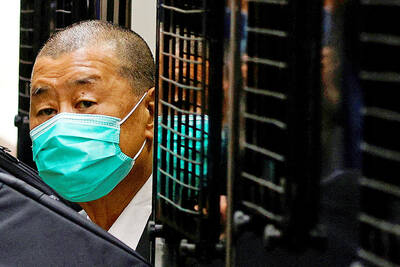
Jailed media entrepreneur Jimmy Lai (黎智英) has been awarded Deutsche Welle’s (DW) freedom of speech award for his contribution to Hong Kong’s pro-democracy movement. The German public broadcaster on Thursday said Lai would be presented in absentia with the 12th iteration of the award on June 23 at the DW Global Media Forum in Bonn. Deutsche Welle director-general Barbara Massing praised the 78-year-old founder of the now-shuttered news outlet Apple Daily for standing “unwaveringly for press freedom in Hong Kong at great personal risk.” “With Apple Daily, he gave journalists a platform for free reporting and a voice to the democracy movement in
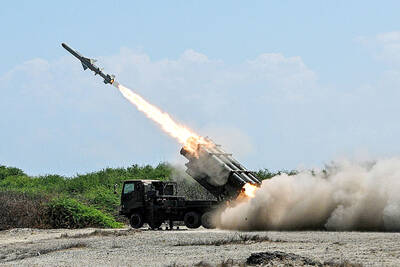
A MESSAGE: Japan’s participation in the Balikatan drills is a clear deterrence signal to China not to attack Taiwan while the US is busy in the Middle East, an analyst said The Japan Self-Defense Forces yesterday fired a Type 88 anti-ship missile during a joint maritime exercise with US, Australian and Philippine forces, hitting a decommissioned Philippine Navy ship in waters facing the disputed South China Sea, in drills that underscore Tokyo’s rising willingness to project military power on China’s doorstep. The drill took place as Manila and Tokyo began talks on a potential defense equipment transfer, made possible by Japan’s decision to scrap restrictions on military exports. The discussions include the possible early transfer of Abukuma-class destroyers and TC-90 aircraft to the Philippines, Japanese Minister of Defense Shinjiro Koizumi said. Philippine Secretary of


 RSS
RSS