


A well connected Washington lobbyist agreed on Tuesday to give evidence against top politicians whom he allegedly bribed, in what analysts predict may prove the biggest congressional scandal in US history.
The lobbyist, Jack Abramoff, pleaded guilty to engaging in a conspiracy involving "corruption of public officials" as well as fraud and tax evasion, after striking a deal with federal prosecutors that is expected to lift the lid on a culture of corruption in Congress, in which legislative favors are routinely exchanged for perks.
Politicians from both parties received money from Abramoff and his business clients, but the scandal is likely to inflict most damage on the Republican party, and could ultimately threaten its hold on Congress.
One of the party's most powerful figures, Tom DeLay, who was instrumental in orchestrating its victories in 2000, 2002 and 2004, is at the center of the investigation for his close financial ties to Abramoff. A senior White House budget official, David Safavian, has been arrested for failing to report gifts from the indicted lobbyist.
"This is potentially the biggest congressional scandal in history," said Melanie Sloan, formerly a federal prosecutor and the head of Citizens for Responsibility and Ethics in Washington, a watchdog organization. "Abramoff knew everybody. He knows how Washington works."
White House spokesman Scott McClellan was unable to say on Tuesday whether US President George W. Bush had ever met Abramoff, but he denounced the lobbyist.
"What he is reportedly acknowledged doing is unacceptable and outrageous," he said. "If laws were broken, he must be held to account for what he did."
Abramoff was a central fixture in Washington political life, wining and dining top politicians in his own restaurant, hosting them in plush corporate boxes at sporting events and paying for golf trips to Scotland.
The lobbyist and his partners also coordinated political donations worth US$1.7 million to more than 200 members of Congress on behalf of clients such as the Choctaw Indian tribe in Mississippi, the US-administered Northern Mariana islands in the Pacific and Russian oil magnates.
Legislation passed by Congress in recent years directly benefited those clients and the justice department is now seeking to prove that those votes were bought.
Papers presented to a Washington court on Tuesday alleged that Abramoff gave "money, meals, trips and entertainment to public officials and their relatives with the intent to influence and in return for agreements to perform official acts" benefiting Abramoff and his clients.
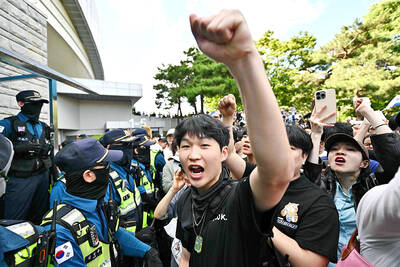
‘ABSURD MISTAKE’: The election commission said that there had been a failure to anticipate turnout after 14 polling stations ran short of ballot papers South Korean riot police yesterday cleared protesters from a Seoul polling station after a 35-hour blockade sparked by a shortage of ballot papers during local elections earlier this week. Wednesday’s election was the first nationwide vote since South Korean President Lee Jae-myung took office following the ouster of Yoon Suk-yeol over his short-lived martial law declaration. Lee’s ruling Democratic Party swept most races, but failed to flip the crucial Seoul mayoral seat. The South Korean National Election Commission apologized, blaming a failure to anticipate turnout after 14 polling stations in Seoul ran short of ballot papers. Some polling stations stayed open until 10pm to

France experienced its hottest spring on record, the French weather service said on Tuesday, after an exceptional early heat wave that also broke highs for the season in England and Wales. Meteo-France said the average nationwide temperature over March to May was 13.8°C — about 1.7°C above the norm, and surpassing records set in 2011 and 2020. “The warmest spring since records began in 1900,” it said in a bulletin. All three months were warmer than average, but the onset of an “unprecedented heatwave” late last month pushed the mercury to highs typically seen at the height of the summer. “Our country had never
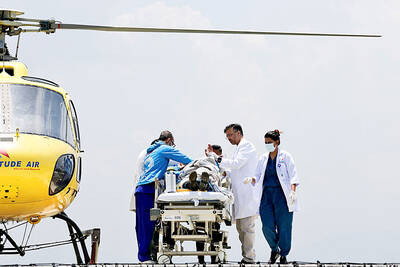
A Sherpa guide was found crawling to base camp on Mount Everest a week after he went missing and was reunited with his family, who had given up hope he would return. Dawa Sherpa was last seen on Friday last week descending the mountain, but he did not reach base camp even though his client did. The pair were among the last climbers on the mountain as the climbing season came to an end and the route was dismantled. Dawa was located by a cleaning crew on Thursday morning as he was crawling down the snowy slopes around the Khumbu Icefall, just above
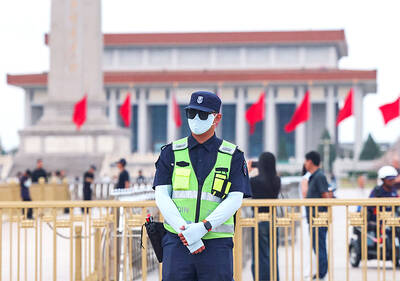
Chinese authorities are snuffing out any remembrance of the deadly 1989 military crackdown on student-led pro-democracy protests in Tiananmen Square, which happened 37 years ago yesterday, in a further tightening of a years-long campaign to erase what happened from public memory. Police told relatives of the victims they would not be allowed to visit a cemetery in Beijing on the anniversary of the crackdown, a person with knowledge of the matter said. Relatives of the victims visited the cemetery on the anniversary for more than 30 years to read memorial statements with police keeping watch, Amnesty International said. Hundreds of people,


 RSS
RSS