


A Jewish Defense League activist imprisoned for his role in a plot to bomb a California mosque and the office of a Lebanese-American US congressman was killed at a federal prison in Phoenix, an FBI spokesman said on Saturday.
Earl Krugel, 62, was killed in an assault on Friday evening at the Federal Correctional Institution, said FBI agent Richard Murray.
Murray wouldn't release further details but said federal authorities had opened a homicide investigation.
Krugel's wife, Lola, said FBI investigators told her an inmate had struck her husband on the head from behind with a cement block.
"Earl never saw it happening," she said. "He was exercising."
He had been at the medium-security prison for three days, according to his sister Linda Krugel, also of Los Angeles.
Earl Krugel, a former dental assistant from Los Angeles, and late JDL leader Irv Rubin were arrested in 2001 and charged with conspiring to bomb the King Fahd Mosque in Culver City and a field office of Republican Republican Darrell Issa, who is Lebanese-American.
Krugel pleaded guilty in 2003 to one count of conspiracy to violate the civil rights of worshippers at the mosque and one count of carrying an explosive device in connection with a conspiracy to impede or injure an office of the US.
Despite the plea, he was sentenced in September to 20 years in prison. The reasons for the collapse of an initial plea agreement were sealed, despite a lawsuit by news organizations to make the details public.
During the case, Krugel's lawyers said prosecutors were angered that his client withheld for several months the names of four people allegedly connected to the 1985 murder case of Alex Odeh, a regional director of the American Arab Anti-Discrimination Committee. Several former JDL members were suspected in the case, but no one was ever charged.
"Earl did not deserve what he got," Krugel's wife said Saturday. "It was all political. It was all about Alex Odeh and my husband did not know anything about Alex Odeh. I'm devastated and I'm shocked that the system allowed this to happen."
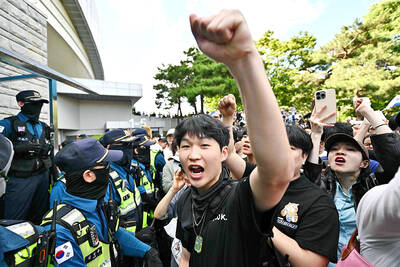
‘ABSURD MISTAKE’: The election commission said that there had been a failure to anticipate turnout after 14 polling stations ran short of ballot papers South Korean riot police yesterday cleared protesters from a Seoul polling station after a 35-hour blockade sparked by a shortage of ballot papers during local elections earlier this week. Wednesday’s election was the first nationwide vote since South Korean President Lee Jae-myung took office following the ouster of Yoon Suk-yeol over his short-lived martial law declaration. Lee’s ruling Democratic Party swept most races, but failed to flip the crucial Seoul mayoral seat. The South Korean National Election Commission apologized, blaming a failure to anticipate turnout after 14 polling stations in Seoul ran short of ballot papers. Some polling stations stayed open until 10pm to

France experienced its hottest spring on record, the French weather service said on Tuesday, after an exceptional early heat wave that also broke highs for the season in England and Wales. Meteo-France said the average nationwide temperature over March to May was 13.8°C — about 1.7°C above the norm, and surpassing records set in 2011 and 2020. “The warmest spring since records began in 1900,” it said in a bulletin. All three months were warmer than average, but the onset of an “unprecedented heatwave” late last month pushed the mercury to highs typically seen at the height of the summer. “Our country had never
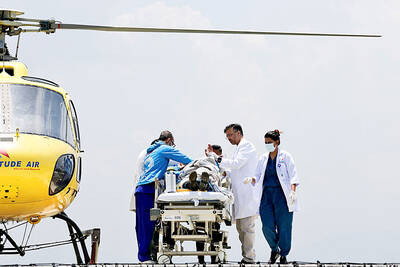
A Sherpa guide was found crawling to base camp on Mount Everest a week after he went missing and was reunited with his family, who had given up hope he would return. Dawa Sherpa was last seen on Friday last week descending the mountain, but he did not reach base camp even though his client did. The pair were among the last climbers on the mountain as the climbing season came to an end and the route was dismantled. Dawa was located by a cleaning crew on Thursday morning as he was crawling down the snowy slopes around the Khumbu Icefall, just above
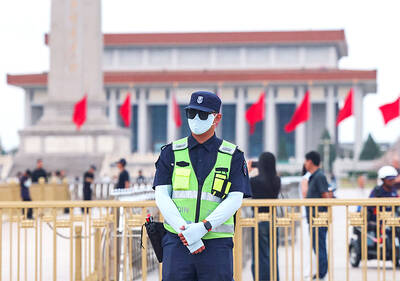
Chinese authorities are snuffing out any remembrance of the deadly 1989 military crackdown on student-led pro-democracy protests in Tiananmen Square, which happened 37 years ago yesterday, in a further tightening of a years-long campaign to erase what happened from public memory. Police told relatives of the victims they would not be allowed to visit a cemetery in Beijing on the anniversary of the crackdown, a person with knowledge of the matter said. Relatives of the victims visited the cemetery on the anniversary for more than 30 years to read memorial statements with police keeping watch, Amnesty International said. Hundreds of people,


 RSS
RSS