


Six US soldiers died in roadside bombings and a shooting, the military said yesterday, as lawmakers tried to persuade Sunni Arabs to accept federalism provisions in the draft constitution that is due today.
Three of the soldiers were killed in a roadside bombing late Friday near Tuz Khormato, 150km north of Baghdad, the military said. Another soldier was wounded in the blast and evacuated from the site.
One soldier on a patrol was killed yesterday and three others wounded in a blast east of Rutbah, 400km west of Baghdad, the military said. In another roadside bombing, one soldier was killed Saturday and another wounded in western Baghdad.
On Friday a US commander said the number of roadside bomb attacks against US convoys in Iraq had doubled in the past year to about 30 per week. Dozens of bombings, usually detonated by remote control, target US and Iraqi patrols each day.
The military said in a brief statement from Baghdad that one soldier was found dead Friday of a gunshot wound. The military said an investigation was underway and did not say where the soldier was found or if an attack was suspected in the soldier's death.
In the capital, a senior Iraqi Central Bank official, Haseeb Kadum, was kidnapped yesterday outside his home, police 1st Lieutenant Thaer Mahmoud said. The beheaded body of an unidentified woman was found in the violent southern neighborhood of Dora, Mahmoud added.
In northeast Baghdad, four police officers on a patrol were wounded by a roadside bombing late Saturday, police Captain Nabil Abdul Qadir said. Another bomb along a highway killed one civilian yesterday and injured another in Mahmoudiya, about 30km south of Baghdad, police Captain Saad al-Samaraei said.
Police also said two women were injured early yesterday when a mortar fell at the Noor Hospital in northwest Baghdad.
The violence came one day after US and UN diplomats stepped up pressure on Sunni Arabs to accept a new constitution that is due to be presented to parliament today. A top Sunni official said his group would never accept terms that they fear would lead to the division of the country.
Sunni Arabs were to meet yesterday with members of former Prime Minister Ayad Allawi's secular party and the Shiites would confer with Kurds, Iraqi officials said, adding that US Ambassador Zalmay Khalilzad was expected to attend both sessions.
A parliament session scheduled for yesterday was postponed because many legislators were working on the constitution, said Aref Tayfour, the deputy speaker of the assembly.
President Jalal Talabani predicted Saturday that a draft constitution would be ready by the deadline, and a Kurdish official said the draft would be presented to parliament with or without Sunni approval. Sunni leaders said they would not bow to pressure.
"We will not be subdued and will continue to cling to our stance," Sunni negotiator Kamal Hamdoun said Saturday. "We don't accept federalism ... We don't want federalism. We are confident that federalism means division and federalism cannot be approved at this time."
Mahmoud Othman, a Kurdish parliamentarian and member of the committee drafting the constitution, said the Shiites and Kurds had reached a number of agreements and were working to persuade the Sunnis to join them.
Othman cautioned Saturday that "if the Sunnis refuse to accept the agreements, we will present the draft as it is to the National Assembly."
Hamdoun, the Sunni leader, said his group did not consider themselves bound by an agreements worked out between the Shiites and Kurds. He said the Sunni Arabs were under "Iraqi and non-Iraqi pressure" but "we are not affected by pressure."
That strategy could backfire, however, in the Oct. 15 referendum when voters will be asked to ratify the constitution. According to the country's interim charter, the constitution will be void if it is rejected by two-thirds of voters in three of the 18 provinces. Sunni Arabs are a majority in four.
The US considers the charter a key part of the process to curb a Sunni-dominated insurgency. In his weekly radio address, US President George W. Bush said that the Iraqi constitution "is a critical step on the path to Iraqi self-reliance."
Talabani told reporters that negotiations were concentrating on the federalism question and the role of Islam in the government.
"We have gone forward," Talabani said Saturday. "There is a meeting today and another meeting tomorrow and God willing we will finish the job tomorrow."
Negotiations were thrown into a tailspin Thursday when the leader of the biggest Shiite party, Abdul-Aziz al-Hakim, called for a Shiite autonomous government in central and southern Iraq, including the southern oil fields. The demand was immediately rejected by Sunni Arab delegates.

PHISHING: The con might appear convincing, as the scam e-mails can coincide with genuine messages from Apple saying you have run out of storage For a while you have been getting messages from Apple saying “your iCloud storage is full.” They say you have exceeded your storage plan, so documents are no longer being backed up, and photos you take are not being uploaded. You have been resisting Apple’s efforts to get you to pay a minimum of £0.99 (US$1.33) a month for more storage, but it seems that you cannot keep putting off the inevitable: You have received an e-mail which says your iCloud account has been blocked, and your photos and videos would be deleted very soon. To keep them you need
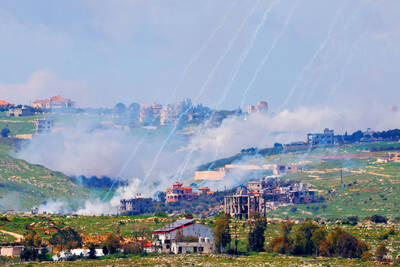
The Israeli military has demolished entire villages as part of its invasion of south Lebanon, rigging homes with explosives and razing them to the ground in massive remote detonations. The Guardian reviewed three videos posted by the Israeli military and on social media, which showed Israel carrying out mass detonations in the villages of Taybeh, Naqoura and Deir Seryan along the Israel-Lebanon border. Lebanese media has reported more mass detonations in other border villages, but satellite imagery was not readily available to verify these claims. The demolitions came after Israeli Minister of Defense Israel Katz called for the destruction of

A US YouTuber who caused outrage for filming himself kissing a statue commemorating Korean wartime sex slaves has been sentenced to six months in prison, a court in Seoul said yesterday. Johnny Somali, 25, gained notoriety several years ago for recording himself doing a series of provocative stunts in South Korea and Japan, and streaming them on platforms such as YouTube and Twitch. South Korean authorities indicted Somali — whose real name is Ramsey Khalid Ismael — in 2024 on public order violations and obstruction of business, and banned him from leaving the country. “The court has sentenced him to six months in
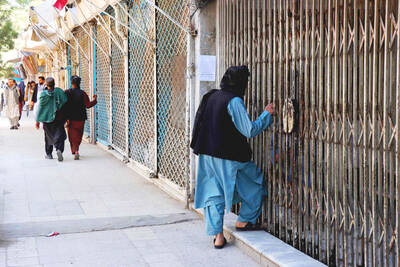
The death toll from a shooting in western Afghanistan rose to 11 on Saturday, after gunmen targeted civilians at a picnic spot in Herat, the provincial authority said. Bullet marks were visible on a wall of the Sayed Mohammad Agha Shia shrine, while bloodstains marked a blanket abandoned at the scene. “Eleven people have been recorded dead and eight others wounded from Friday’s incident, with the condition of two of the wounded reported as critical,” Herat’s information office said in a statement. The update raises a toll of seven killed provided on Friday by the Afghan Ministry of Interior Affairs


 RSS
RSS