


Saddam Hussein was called to a hearing where he was questioned about repression of the Shiite uprising in 1991, which erupted after US-led forces drove the Iraqi army out of Kuwait, the chief investigative judge said yesterday.
In ongoing violence, two Marines were killed by insurgent gunfire and rocket-propelled grenades in western Iraq, prompting US jets to pound insurgent positions with high-tech bombs, officials said yesterday. The deaths brought to 10 the number of US troop fatalities in Iraq this week.
Saddam was summoned Thursday, and answered questions alone during the 45-minute hearing, said Judge Raid Juhi of the Iraqi Special Tribunal, set up to try the former dictator.
Juhi said he expects to conclude the criminal investigation into Saddam's alleged crackdown against Shiites in southern Iraq, as well as his campaign during the late 1980s to forces Iraqi Kurds from wide areas of the north.
A trial date for the former dictator will be announced in coming days, Juhi said.
Saddam is expected to stand trial in September for his alleged role in the 1982 massacre of Shiite Muslims in Dujail north of Baghdad. It will be the first of what are expected to be about a dozen trials involving Saddam and his key henchmen.
In Baghdad, a car bomb exploded near a joint US-Iraqi patrol in the dangerous Dora neighborhood, police reported. At least three civilians were wounded but casualty reports were incomplete, police Lieutenant Thaer Mahmoud said.
A US military statement said the two Marines killed belonged to Regimental Combat Team-2 of the 2nd Marine Division and were killed Thursday by small arms and rocket-propelled grenade fire in a village west of Haditha about 270km west of Baghdad.
The Marines reported killing nine insurgents, five believed to be Syrians, during an engagement Thursday in the same small village.
Jets from the 2nd Marine Air Wing dropped three laser-guided bombs and one global positioning system guided bomb on three buildings used by the insurgents as firing positions, destroying all three of them, the statement added.
Following a rash of attacks and abductions of diplomats in Iraq, the Philippine Embassy in Baghdad has relocated its employees to Amman, Jordan, Philippine Foreign Undersecretary Jose Brillantes said yesterday.
"We continue to maintain our diplomatic ties with Iraq," Brillantes said. "The embassy in Baghdad remains open and the diplomats in Baghdad are in Amman for security reasons occasioned by the recent kidnappings of diplomats."
He said the Filipino diplomats will be in Amman "for an indefinite period of time." It was not clear if all of the embassy's Filipino staff have relocated.
Iraqi militants last month freed Filipino Robert Tarongoy after almost eight months in captivity.
Tarongoy, 31, was the second Filipino known to have been taken hostage in Iraq. Truck driver Angelo de la Cruz was freed last year after the Philippine government granted the militants' demand for the early withdrawal of its small peacekeeping contingent from Iraq -- a decision strongly criticized by Washington and other allies, but applauded at home.
On Thursday, the US ambassador to Iraq said the military is considering offering protection to foreign diplomats in Baghdad after al-Qaeda terrorists killed three Arab envoys this month.

PHISHING: The con might appear convincing, as the scam e-mails can coincide with genuine messages from Apple saying you have run out of storage For a while you have been getting messages from Apple saying “your iCloud storage is full.” They say you have exceeded your storage plan, so documents are no longer being backed up, and photos you take are not being uploaded. You have been resisting Apple’s efforts to get you to pay a minimum of £0.99 (US$1.33) a month for more storage, but it seems that you cannot keep putting off the inevitable: You have received an e-mail which says your iCloud account has been blocked, and your photos and videos would be deleted very soon. To keep them you need
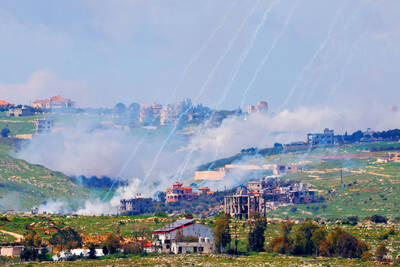
The Israeli military has demolished entire villages as part of its invasion of south Lebanon, rigging homes with explosives and razing them to the ground in massive remote detonations. The Guardian reviewed three videos posted by the Israeli military and on social media, which showed Israel carrying out mass detonations in the villages of Taybeh, Naqoura and Deir Seryan along the Israel-Lebanon border. Lebanese media has reported more mass detonations in other border villages, but satellite imagery was not readily available to verify these claims. The demolitions came after Israeli Minister of Defense Israel Katz called for the destruction of

A US YouTuber who caused outrage for filming himself kissing a statue commemorating Korean wartime sex slaves has been sentenced to six months in prison, a court in Seoul said yesterday. Johnny Somali, 25, gained notoriety several years ago for recording himself doing a series of provocative stunts in South Korea and Japan, and streaming them on platforms such as YouTube and Twitch. South Korean authorities indicted Somali — whose real name is Ramsey Khalid Ismael — in 2024 on public order violations and obstruction of business, and banned him from leaving the country. “The court has sentenced him to six months in
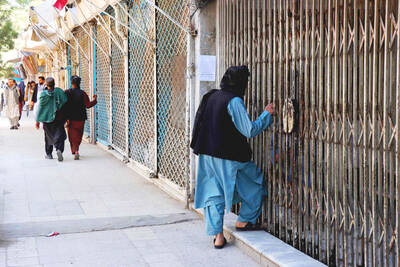
The death toll from a shooting in western Afghanistan rose to 11 on Saturday, after gunmen targeted civilians at a picnic spot in Herat, the provincial authority said. Bullet marks were visible on a wall of the Sayed Mohammad Agha Shia shrine, while bloodstains marked a blanket abandoned at the scene. “Eleven people have been recorded dead and eight others wounded from Friday’s incident, with the condition of two of the wounded reported as critical,” Herat’s information office said in a statement. The update raises a toll of seven killed provided on Friday by the Afghan Ministry of Interior Affairs


 RSS
RSS