


Israeli forces showed how quickly they can empty out a Gaza settlement when they stormed a hotel where extremists were holed up and removed them all in minutes -- an unplanned dress rehearsal for next month's pullout.
The lightning operation on Thursday targeted the most dangerous of the opponents -- West Bank extremists, some with long records of violence, who said they would battle against the Gaza pullout to the death. But they quickly surrendered to the overwhelming numbers of security forces, struggling and shouting as soldiers lifted them from the floor of the hotel dining room and carried them outside.
"You're expelling Jews like the Germans, like the Russians," shouted media-wise West Bank hard-liner Nadia Matter at the soldiers, who ignored her as TV cameras recorded her words.
Israeli Defense Minister Shaul Mofaz called the Jewish extremists "hooligans" and added, "Preparations for disengagement and the disengagement itself will go ahead as planned with no hesitation. This is a test of the nation's authority, and the nation will pass the test with honor." He spoke Thursday at an air force ceremony. The extremists had welded bars on the windows and had supplies of food, water and gasoline, preparing firebombs and nails. But the military blocked reinforcements from arriving by declaring all of Gaza a "closed military zone," banning all civilians except for residents from entering, and the squatters said they decided not to resist.
Early yesterday, the military lifted its order limiting access to Gaza. But it issued a new order limiting the transfer of equipment that might be used in another confrontation.
Settlers and their backers oppose the pullout on several grounds. Despite Sharon's denials, they believe one withdrawal will inevitably be followed by others, and Orthodox Jews, who make up the majority of the most visible opponents, say no Israeli government has the right to relinquish control of parts of the God-given Promised Land.
The military absorbed criticism from local media for delaying the expulsion until a day after some of the extremists clashed with soldiers and Palestinians in a nearby neighborhood. A Palestinian was seriously wounded when a rock hit him in the head, and young Jews threw more rocks at him as he lay unconscious on the ground with an Israeli soldier trying to protect him.
"I'm glad we succeeded in expelling that whole gang from here," said the area military commander, Major General Dan Harel. He said the operation could be a model for the pullout itself, when soldiers and police are to remove 8,500 settlers from all 21 Gaza settlements.
Near Jerusalem, meanwhile, pullout opponents briefly blocked a highway for the second day in a row. Speaking at an economic conference in Jerusalem Thursday evening, Sharon denounced the extremists. "Hooliganism ... is not the way of Judaism," he said. "We will not allow anyone to raise a hand against an Israeli soldier or police officer."
A survey conducted by the Dahaf polling institute showed backing for the Gaza evacuation up to 62 percent from 53 percent at the beginning of the month, largely on account of the confrontations. Opposition to the pullout was down to 31 percent from 38 percent.

PHISHING: The con might appear convincing, as the scam e-mails can coincide with genuine messages from Apple saying you have run out of storage For a while you have been getting messages from Apple saying “your iCloud storage is full.” They say you have exceeded your storage plan, so documents are no longer being backed up, and photos you take are not being uploaded. You have been resisting Apple’s efforts to get you to pay a minimum of £0.99 (US$1.33) a month for more storage, but it seems that you cannot keep putting off the inevitable: You have received an e-mail which says your iCloud account has been blocked, and your photos and videos would be deleted very soon. To keep them you need
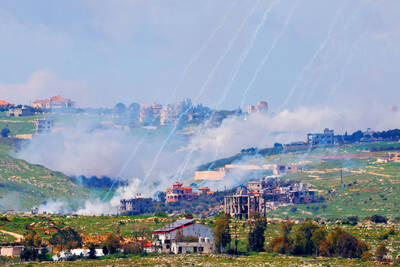
The Israeli military has demolished entire villages as part of its invasion of south Lebanon, rigging homes with explosives and razing them to the ground in massive remote detonations. The Guardian reviewed three videos posted by the Israeli military and on social media, which showed Israel carrying out mass detonations in the villages of Taybeh, Naqoura and Deir Seryan along the Israel-Lebanon border. Lebanese media has reported more mass detonations in other border villages, but satellite imagery was not readily available to verify these claims. The demolitions came after Israeli Minister of Defense Israel Katz called for the destruction of

A US YouTuber who caused outrage for filming himself kissing a statue commemorating Korean wartime sex slaves has been sentenced to six months in prison, a court in Seoul said yesterday. Johnny Somali, 25, gained notoriety several years ago for recording himself doing a series of provocative stunts in South Korea and Japan, and streaming them on platforms such as YouTube and Twitch. South Korean authorities indicted Somali — whose real name is Ramsey Khalid Ismael — in 2024 on public order violations and obstruction of business, and banned him from leaving the country. “The court has sentenced him to six months in
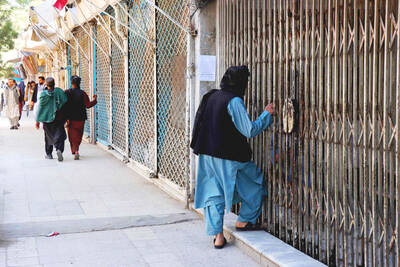
The death toll from a shooting in western Afghanistan rose to 11 on Saturday, after gunmen targeted civilians at a picnic spot in Herat, the provincial authority said. Bullet marks were visible on a wall of the Sayed Mohammad Agha Shia shrine, while bloodstains marked a blanket abandoned at the scene. “Eleven people have been recorded dead and eight others wounded from Friday’s incident, with the condition of two of the wounded reported as critical,” Herat’s information office said in a statement. The update raises a toll of seven killed provided on Friday by the Afghan Ministry of Interior Affairs


 RSS
RSS