


US first lady Laura Bush said yesterday she was not surprised to be met by protesters during her tour of Mideast holy sites and pledged the US will do all it can to help resolve age-old conflicts.
"As we all know, this is a place of very high tensions and high emotions," the first lady said while standing in the garden courtyard of the Church of the Resurrection. "And you can understand why when you see the people with a deep and sincere faith in their religion all living side by side."
Bush said the protesters who heckled her during Sunday's visits to the Dome of the Rock and the Western Wall did not surprise her and she denied that they overshadowed her goodwill visit.
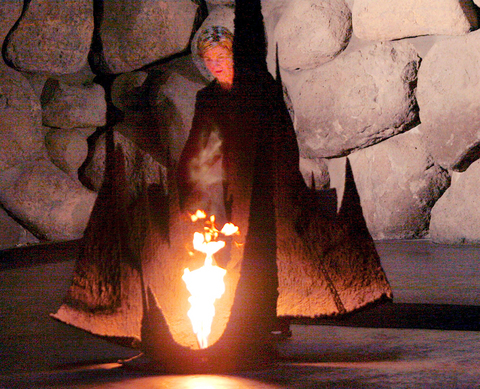
PHOTO: EPA
"I think the protests were very expected. If you didn't expect them, you didn't know what it would be like when you got here," she said. "Everyone knows how the tensions are and, believe me, I was very, very welcomed by most people."
Bush was visiting sites sacred to all three major religions born in the region, winding up with a stop yesterday at the Church of the Resurrection at Abu Ghosh, a predominantly Muslim town where some believe Jesus appeared on Easter.
"I think that Abu Ghosh, as we leave Israel, can show us what it's like when the people of three religions that have so many holy sites here in the Holy Land indeed can live in peace with each other," she said. The first lady was heading to Cairo later.
As Bush toured the 12th-century church, nuns and monks sang Psalm 150 in Hebrew as a symbol of the religious cultures coexisting in the region.
The peaceful visit was in contrast to her stops Sunday at sites sacred to Muslims and Jews.
At the Western Wall, Judaism's holiest shrine, protesters demanded that the US release Jonathan Pollard, a Jewish American imprisoned for spying for Israel. During a visit to the Dome of the Rock, she faced heckling from angry Palestinians. One man yelled, "How dare you come in here! Why your husband kill Muslim?"
Bush's five-day visit to the Middle East, which also included stops in Jordan and Egypt, was intended partly to help defuse anti-American sentiment in the region. Strains have arisen because of the US-led war in Iraq and allegations that American interrogators have mistreated Muslim prisoners.
Some visitors that Bush encountered near the Dome of the Rock, a mosque on a hilltop compound known to Muslims as Haram as-Sharif and to Jews as Temple Mount, shouted at her in Arabic. "None of you belong in here!" one man yelled as Bush and her entourage arrived.
Bush removed her shoes as she entered the mosque and walked barefoot on the red carpet. She held a black scarf tightly around her head as she gazed up at the gilded dome and the colorful mosaics.
As she left, visitors and media grew so aggressive that Israeli police locked arms to form a human chain to block people getting too close. US Secret Service agents packed tightly around her.
Pollard's supporters also held up signs outside the residence of Israeli President Moshe Katsav, where Bush had tea with his wife, Gila Katsav, and other Israeli women.
No protesters were evident when Bush had lunch with leading Palestinian women at a hotel in Jericho, a town that Israel recently turned over to Palestinian control, or when she visited the ruins of an eighth-century palace in the West Bank town of Jericho and appealed for peace.
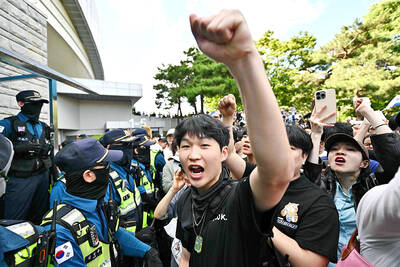
‘ABSURD MISTAKE’: The election commission said that there had been a failure to anticipate turnout after 14 polling stations ran short of ballot papers South Korean riot police yesterday cleared protesters from a Seoul polling station after a 35-hour blockade sparked by a shortage of ballot papers during local elections earlier this week. Wednesday’s election was the first nationwide vote since South Korean President Lee Jae-myung took office following the ouster of Yoon Suk-yeol over his short-lived martial law declaration. Lee’s ruling Democratic Party swept most races, but failed to flip the crucial Seoul mayoral seat. The South Korean National Election Commission apologized, blaming a failure to anticipate turnout after 14 polling stations in Seoul ran short of ballot papers. Some polling stations stayed open until 10pm to

France experienced its hottest spring on record, the French weather service said on Tuesday, after an exceptional early heat wave that also broke highs for the season in England and Wales. Meteo-France said the average nationwide temperature over March to May was 13.8°C — about 1.7°C above the norm, and surpassing records set in 2011 and 2020. “The warmest spring since records began in 1900,” it said in a bulletin. All three months were warmer than average, but the onset of an “unprecedented heatwave” late last month pushed the mercury to highs typically seen at the height of the summer. “Our country had never
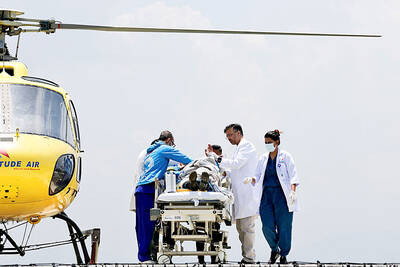
A Sherpa guide was found crawling to base camp on Mount Everest a week after he went missing and was reunited with his family, who had given up hope he would return. Dawa Sherpa was last seen on Friday last week descending the mountain, but he did not reach base camp even though his client did. The pair were among the last climbers on the mountain as the climbing season came to an end and the route was dismantled. Dawa was located by a cleaning crew on Thursday morning as he was crawling down the snowy slopes around the Khumbu Icefall, just above
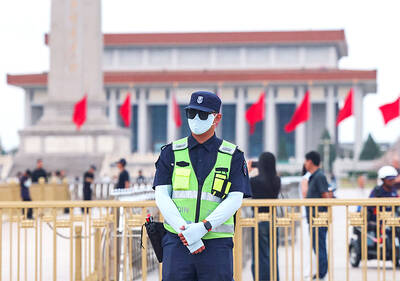
Chinese authorities are snuffing out any remembrance of the deadly 1989 military crackdown on student-led pro-democracy protests in Tiananmen Square, which happened 37 years ago yesterday, in a further tightening of a years-long campaign to erase what happened from public memory. Police told relatives of the victims they would not be allowed to visit a cemetery in Beijing on the anniversary of the crackdown, a person with knowledge of the matter said. Relatives of the victims visited the cemetery on the anniversary for more than 30 years to read memorial statements with police keeping watch, Amnesty International said. Hundreds of people,


 RSS
RSS