


North Korea reached a modest deal with the South, but didn't ease its rhetoric yesterday against Seoul's allies.
South Korea prepared to start shipping 200,000 tonnes of fertilizer across the border today as part of an agreement reached between the two rivals Thursday night after three days of hard bargaining in their first face-to-face meetings in 10 months.
Seoul couldn't convince the North to return to six-nation negotiations on Pyongyang's worrisome nuclear weapons program -- or even mention the issue in a joint final statement -- but did obtain agreement on a followup meeting in Seoul in a month with Cabinet-level officials.
South Korean officials also considered it a modest victory that the final statement committed both sides to "cooperate for peace on the Korean Peninsula."
"The North Korean side listened with a very serious attitude, and what was delivered was a message that could affect the North's decision-making process," South Korea's Yonhap news agency quoted Unification Minister Chung Dong-young as saying.
The North made no change in its anti-US and Japanese rhetoric.
Its official Korean Central News Agency scoffed at Washington's recognition of the North's sovereignty as a "lie" and repeated claims that the Bush administration is plotting to overthrow Kim Jong Il.
It targeted Japan with even harsher criticism for suggesting it would seek UN sanctions if the North were to hold a nuclear test.
"Our republic has made it clear numerous times that we will consider any sanctions against our country tantamount to a declaration of war," KCNA quoted a commentary by the North's state-run Rodong Sinmun newspaper.
Noting relations between Pyongyang and Tokyo have soured to "a dangerous stage on the verge of explosion," the commentary said: "Our republic will respond with strong retaliatory measures to Japan's move to impose economic sanctions."
It was possible that Pyongyang was reacting to subtle pressure on a separate front.
The North has been dependent on outside food aid since the 1990s, when more than 1 million people are estimated to have died from famine.
The Wall Street Journal yesterday quoted officials at the US Agency for International Development as saying the Bush administration has halted all food-aid shipments to North Korea so far this year.
US officials said there was no link to rising diplomatic tensions, attributing the curbs instead to an inability to monitor how the assistance is being used, as well as competing demands from famine-ravaged countries in Africa.
Still, the mood was generally upbeat in Seoul. North Korea, which has shunned direct talks with the South on the nuclear issue, didn't walk out when South Korea repeatedly brought up the subject this week.
"Not only did the North listen, but they have expressed understanding of our government's stance, and said that it will give the issue more study," said Rhee Bong-jo, the South's chief delegate. "Those five words, `peace on the Korean peninsula' succinctly reflect the southern government's will and the North's understanding of our stance."
The North also is believed to be pondering an overture from Washington, which sent diplomats to a secret meeting last Friday at Pyongyang's UN office.
The six-nation talks -- involving the two Koreas, the US, China, Japan and Russia -- are aimed at getting the North to abandon its nuclear arms program. Pyongyang said Feb. 10 that it has nuclear weapons and would stay away from the talks until Washington dropped its "hostile" policy.
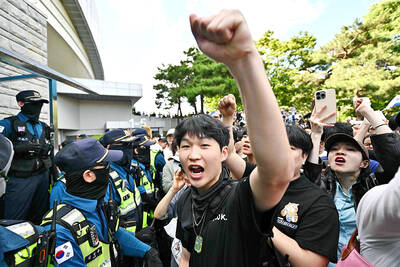
‘ABSURD MISTAKE’: The election commission said that there had been a failure to anticipate turnout after 14 polling stations ran short of ballot papers South Korean riot police yesterday cleared protesters from a Seoul polling station after a 35-hour blockade sparked by a shortage of ballot papers during local elections earlier this week. Wednesday’s election was the first nationwide vote since South Korean President Lee Jae-myung took office following the ouster of Yoon Suk-yeol over his short-lived martial law declaration. Lee’s ruling Democratic Party swept most races, but failed to flip the crucial Seoul mayoral seat. The South Korean National Election Commission apologized, blaming a failure to anticipate turnout after 14 polling stations in Seoul ran short of ballot papers. Some polling stations stayed open until 10pm to

France experienced its hottest spring on record, the French weather service said on Tuesday, after an exceptional early heat wave that also broke highs for the season in England and Wales. Meteo-France said the average nationwide temperature over March to May was 13.8°C — about 1.7°C above the norm, and surpassing records set in 2011 and 2020. “The warmest spring since records began in 1900,” it said in a bulletin. All three months were warmer than average, but the onset of an “unprecedented heatwave” late last month pushed the mercury to highs typically seen at the height of the summer. “Our country had never

A Sherpa guide was found crawling to base camp on Mount Everest a week after he went missing and was reunited with his family, who had given up hope he would return. Dawa Sherpa was last seen on Friday last week descending the mountain, but he did not reach base camp even though his client did. The pair were among the last climbers on the mountain as the climbing season came to an end and the route was dismantled. Dawa was located by a cleaning crew on Thursday morning as he was crawling down the snowy slopes around the Khumbu Icefall, just above
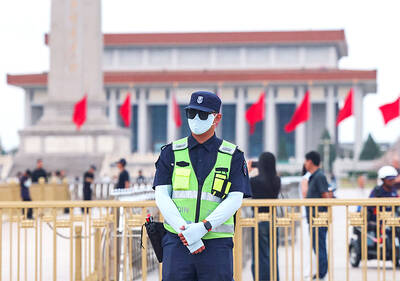
Chinese authorities are snuffing out any remembrance of the deadly 1989 military crackdown on student-led pro-democracy protests in Tiananmen Square, which happened 37 years ago yesterday, in a further tightening of a years-long campaign to erase what happened from public memory. Police told relatives of the victims they would not be allowed to visit a cemetery in Beijing on the anniversary of the crackdown, a person with knowledge of the matter said. Relatives of the victims visited the cemetery on the anniversary for more than 30 years to read memorial statements with police keeping watch, Amnesty International said. Hundreds of people,


 RSS
RSS