


In a delicate ballet 7,500m above the open sea, four Japanese F-15s pull up to a US Air Force tanker, the insignia of the rising sun shining from their wings. One by one, they maneuver into range of the tanker's refueling boom, hold their position, then dip their wings and vanish.
American military planners say it's the look of the future -- a deeply interwoven relationship with a credible Japanese ally ready to deploy overseas and share the burden of keeping the peace in a volatile region.
To the US crew, the mock refueling is just another day's work.
"The skill level is the same, the planes are the same," said boom operator Mike Webster. "It's basically just like working with our own people."
The only difference, he says, is the language, but both sides manage with English.
In Washington, it's called "interoperability" and it's a top military priority. With its own forces engaged in Iraq and elsewhere, the US needs to strengthen its alliances and draw on its friends for whatever support it can get. And since the end of World War II, Japan has been Washington's best friend in Asia.
But the idea of a beefed-up Japanese military doesn't resonate well through the region.
As the two-week refueling exercise was being carried out late last month, relations between Japan and neighboring China were plunging to their lowest point in years, largely over Japanese wartime aggression that left millions of Chinese dead, and over Tokyo's bid for a permanent seat on the UN Security Council.
There is no consensus in Japan, either.
Negotiations on a broad reworking of the military alliance with Washington are reportedly bogging down because the government is divided over just how far Japan should follow Washington's call.
The bigger question is whether Japan should even be a military power.
The US-led occupation forces disbanded Japan's military after World War II and helped write a constitution that barred Japan from using "the threat or use of force as a means of settling international disputes."
Washington soon realized it needed to build an ally to counter communism in Asia, and Japan passed a law in 1954 that paved the way for establishing its Self-Defense Forces. Though the decision was denounced by many who saw it as unconstitutional, the government argued that the military force is legal because it is strictly defense-oriented.
That argument is becoming hard to sustain.
Japan has more than 240,000 active-duty troops and an annual defense budget bigger than the UK's. Its air force has more than 160 F-15s and its spy satellites keep watch on North Korea.
Prime Minister Junichiro Koizumi, who advocates a constitutional change to free up the military, has pushed the envelope even further, sending hundreds of soldiers to southern Iraq for humanitarian activities and more to Southeast Asia to provide tsunami relief.
"Japan is America's only reliable partner in Asia, and Washington wants Japan to make a big contribution in its efforts in the region," said Takehiko Yamamoto, professor of international relations at Tokyo's Waseda University.
Yamamoto said Tokyo, for its part, wants to bolster its troops largely because of the perceived threat from China and regional wild card North Korea, which is developing nuclear weapons and has missiles that can deliver them to Japan.
This week the Japanese Defense Agency said its fighter jets scrambled 13 times last year in response to Chinese military aircraft approaching their airspace, up from only twice in 2003. And on Sunday North Korea apparently test-fired another missile into the Sea of Japan. However, Japanese and South Korean officials said it was a small missile unrelated to anything nuclear.
Yamamoto said the political constraints on Japan's military posture have eased.
"Collective security used to be seen as unconstitutional. But it seems the Japanese government believes it need only reinterpret -- not change -- the constitution to justify its policy shifts."
Two areas have long been taboo -- the development of nuclear weapons and the acquisition of aircraft carriers or other means of projecting power overseas.
The nuclear ban, driven by memories of Hiroshima and Nagasaki, remains firm.
But the Defense Agency announced plans in 2001 to buy a 13,000-tonne destroyer with a flight deck for anti-submarine helicopter operations. Opponents called it a mini-aircraft carrier.
The day when Japan refuels US F-15s, meanwhile, may not be far away. In two years, Japan's first tanker, a Boeing 767, will be delivered to a military airfield in the central Japanese city of Nagoya.
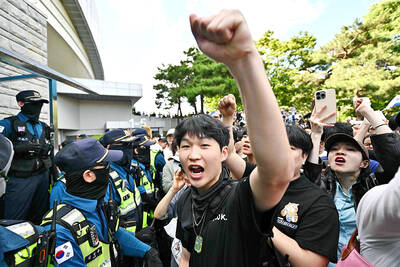
‘ABSURD MISTAKE’: The election commission said that there had been a failure to anticipate turnout after 14 polling stations ran short of ballot papers South Korean riot police yesterday cleared protesters from a Seoul polling station after a 35-hour blockade sparked by a shortage of ballot papers during local elections earlier this week. Wednesday’s election was the first nationwide vote since South Korean President Lee Jae-myung took office following the ouster of Yoon Suk-yeol over his short-lived martial law declaration. Lee’s ruling Democratic Party swept most races, but failed to flip the crucial Seoul mayoral seat. The South Korean National Election Commission apologized, blaming a failure to anticipate turnout after 14 polling stations in Seoul ran short of ballot papers. Some polling stations stayed open until 10pm to

France experienced its hottest spring on record, the French weather service said on Tuesday, after an exceptional early heat wave that also broke highs for the season in England and Wales. Meteo-France said the average nationwide temperature over March to May was 13.8°C — about 1.7°C above the norm, and surpassing records set in 2011 and 2020. “The warmest spring since records began in 1900,” it said in a bulletin. All three months were warmer than average, but the onset of an “unprecedented heatwave” late last month pushed the mercury to highs typically seen at the height of the summer. “Our country had never
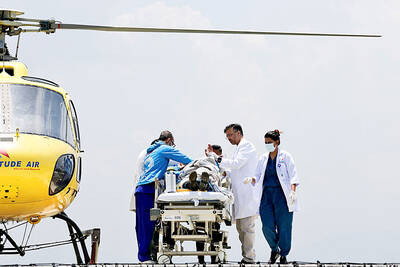
A Sherpa guide was found crawling to base camp on Mount Everest a week after he went missing and was reunited with his family, who had given up hope he would return. Dawa Sherpa was last seen on Friday last week descending the mountain, but he did not reach base camp even though his client did. The pair were among the last climbers on the mountain as the climbing season came to an end and the route was dismantled. Dawa was located by a cleaning crew on Thursday morning as he was crawling down the snowy slopes around the Khumbu Icefall, just above
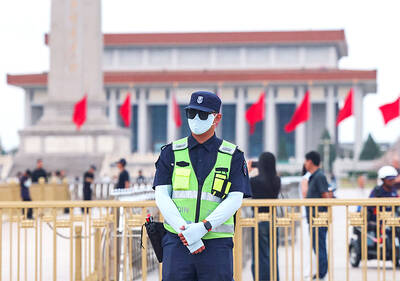
Chinese authorities are snuffing out any remembrance of the deadly 1989 military crackdown on student-led pro-democracy protests in Tiananmen Square, which happened 37 years ago yesterday, in a further tightening of a years-long campaign to erase what happened from public memory. Police told relatives of the victims they would not be allowed to visit a cemetery in Beijing on the anniversary of the crackdown, a person with knowledge of the matter said. Relatives of the victims visited the cemetery on the anniversary for more than 30 years to read memorial statements with police keeping watch, Amnesty International said. Hundreds of people,


 RSS
RSS