


Private conversations with George W. Bush secretly taped by an old friend before he was elected president foreshadow some of his political strategies and appear to reveal that he acknowledged using marijuana, The New York Times reported Saturday.
The conversations were recorded by Doug Wead, a former aide to George W. Bush's father, beginning in 1998, when Bush was weighing a presidential bid, until just before the Republican National Convention in 2000, the Times said in a story posted on its Web site.
The tapes show Bush crafting a strategy for navigating the tricky political waters between Christian conservative and secular voters, repeatedly worrying that evangelicals would be angered by a refusal to bash gays and that secular Americans would be turned off by meetings with evangelical leaders.
On one tape, Bush explains that he told one prominent evangelical that he would not "kick gays, because I'm a sinner. How can I differentiate sin?"
In early tapes, Bush dismisses the strength of John McCain for the nomination and expresses concern about rival Steve Forbes. He also praises John Ashcroft as a promising candidate for Supreme Court justice, attorney general or vice president.
Bush also criticizes then-Vice President Al Gore for admitting marijuana use and explains why he would not do the same.
"I wouldn't answer the marijuana questions," he said, according to the Times. "You know why? Because I don't want some little kid doing what I tried."
According to the article, Wead played 12 of the tapes to a Times reporter. He said he recorded them because he viewed Bush as a historic figure. He is the author of a new book on presidential childhoods.
The White House did not deny the authenticity of the tapes.
"The governor was having casual conversations with someone he believed was his friend," White House spokesman Trent Duffy said, referring to Bush.

Kouri Richins, a Utah mother who published a children’s book about grief after the death of her husband is to serve a life sentence for his murder without the possibility of parole, a judge ruled on Wednesday. Richins was convicted in March of aggravated murder for lacing a cocktail given to her husband, Eric Richins, with five times the lethal dose of fentanyl at their home near Park City in 2022. A jury also found her guilty of four other felonies, including insurance fraud, forgery and attempted murder for trying to poison her husband weeks earlier on Feb. 14, 2022, with a

DELA ROSA CASE: The whereabouts of the senator, who is wanted by the ICC, was unclear, while President Marcos faces a political test over the senate situation Philippine authorities yesterday were seeking confirmation of reports that a top politician wanted by the International Criminal Court (ICC) had fled, a day after gunfire rang out at the Philippine Senate where he had taken refuge fearing his arrest. Senator Ronald “Bato” dela Rosa, the former national police chief and top enforcer of former Philippine president Rodrigo Duterte’s “war on drugs,” has been under Senate protection and is wanted for crimes against humanity, the same charges Duterte is accused of. “Several sources confirmed that the senator, Senator Bato, is no longer in the Senate premises, but we are still getting confirmation,” Presidential
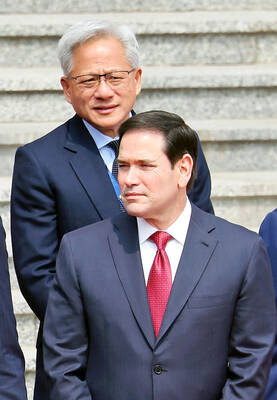
HELP DENIED? The US Department of State said that the Cuban leadership refuses to allow the US to provide aid to Cubans, ‘who are in desperate need of assistance’ US Secretary of State Marco Rubio on Wednesday said that Cuba’s leadership must change, as Washington renewed an offer of US$100 million in aid if the communist nation agrees to cooperate. Cuba has been suffering severe economic tumult led by an energy shortage that plunged 65 percent of the country into darkness on Tuesday. Cuba’s leaders have blamed US sanctions, but Rubio, a Cuban American and critic of the government established by Fidel Castro, said the system was to blame, including corruption by the military. “It’s a broken, nonfunctional economy, and it’s impossible to change it. I wish it were different,” he told
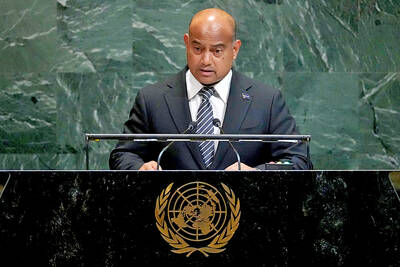
Nauru said it would hold a referendum to change its official name, described as a colonial relic from a time when “foreign tongues” mangled the native language. Nauru would change its name to Naoero to “more faithfully honor our nation’s heritage, our language and our identity,” Nauruan President David Adeang said in a statement on Tuesday. The Pacific island nation’s native language is Dorerin Naoero, which is spoken by the vast majority of its approximately 10,000 inhabitants. “Nauru emerged because Naoero could not be properly pronounced by foreign tongues, and was changed not by our choice, but for convenience,” the government said in


 RSS
RSS