


Voters in breakaway northern Cyprus went to early polls yesterday to try to elect a new Turkish Cypriot government aimed at breaking a political impasse sparked by the failure last year of a UN plan to reunify the island.
The isolated Turkish Republic of Northern Cyprus (TRNC) has been deadlocked since last May when the ruling pro-settlement coalition lost its slim parliamentary majority, shortly after the UN scheme was rejected in an April 24 referendum, and finally resigned.
Some 148,000 voters will elect 50 parliament members from seven parties in the polls, which are expected to be a close race between the senior ruling party of prime minister Mehmet Ali Talat and the nationalist main opposition.
Opinion polls predict the elections will not bring any one party to power but produce the same fragmented result as the last polls in December 2003, fanning fears of uncertainty in the self-proclaimed state recognized only by Ankara.
"Stamp for democracy," trumpeted the statelet's major newspaper Kibris.
"The decision is yours," said another daily, Halkin Sesi.
But with no hope of a breakthrough on the political scene, the polls have generated little excitement among the electorate with most parties attracting only minimal crowds at rallies.
Opinion polls have tipped Talat's center-left Republican Turkish Party (CTP) to emerge as the largest single party, but not with enough seats to set up a government on its own.
The party, which won the last elections after fiercely advocating the failed UN plan, has argued that a victory would help it push for a revival of peace talks and allow the isolated Turkish Cypriots to integrate with the international community.
His main contender in the race is the nationalist National Unity Party (UBP) of former prime minister Dervis Eroglu, who is a fierce opponent of reunification with the Greek Cypriots on the basis of the failed UN plan.
They have been campaigning heavily against the CTP, accusing it of failing to keep its promises of a settlement and eventual EU membership.
Two other parties -- the Democrat Party and the Peace and Democracy Movement -- are expected to garner enough votes to win parliamentary seats. The remaining three are not likely to overcome the 5 percent threshold to enter parliament.
Political commentators say the result of the vote is unlikely to change the stalemate in efforts to end the island's 30-year-long division. The peace process has been stalled since the majority of Greek Cypriots in southern Cyprus voted in a referendum against the UN reunification plan while the breakaway Turkish Cypriots rallied behind it.
As a result, only the internationally recognized Greek Cypriot south of the island joined the EU on May 1.
Observers believe any viable effort to jumpstart peace talks will have to wait until after presidential elections in April when hardline Turkish Cypriot leader Rauf Denktash is to stand down.
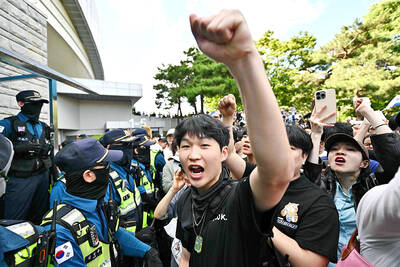
‘ABSURD MISTAKE’: The election commission said that there had been a failure to anticipate turnout after 14 polling stations ran short of ballot papers South Korean riot police yesterday cleared protesters from a Seoul polling station after a 35-hour blockade sparked by a shortage of ballot papers during local elections earlier this week. Wednesday’s election was the first nationwide vote since South Korean President Lee Jae-myung took office following the ouster of Yoon Suk-yeol over his short-lived martial law declaration. Lee’s ruling Democratic Party swept most races, but failed to flip the crucial Seoul mayoral seat. The South Korean National Election Commission apologized, blaming a failure to anticipate turnout after 14 polling stations in Seoul ran short of ballot papers. Some polling stations stayed open until 10pm to

France experienced its hottest spring on record, the French weather service said on Tuesday, after an exceptional early heat wave that also broke highs for the season in England and Wales. Meteo-France said the average nationwide temperature over March to May was 13.8°C — about 1.7°C above the norm, and surpassing records set in 2011 and 2020. “The warmest spring since records began in 1900,” it said in a bulletin. All three months were warmer than average, but the onset of an “unprecedented heatwave” late last month pushed the mercury to highs typically seen at the height of the summer. “Our country had never

A Sherpa guide was found crawling to base camp on Mount Everest a week after he went missing and was reunited with his family, who had given up hope he would return. Dawa Sherpa was last seen on Friday last week descending the mountain, but he did not reach base camp even though his client did. The pair were among the last climbers on the mountain as the climbing season came to an end and the route was dismantled. Dawa was located by a cleaning crew on Thursday morning as he was crawling down the snowy slopes around the Khumbu Icefall, just above
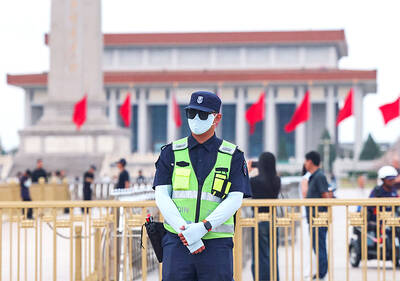
Chinese authorities are snuffing out any remembrance of the deadly 1989 military crackdown on student-led pro-democracy protests in Tiananmen Square, which happened 37 years ago yesterday, in a further tightening of a years-long campaign to erase what happened from public memory. Police told relatives of the victims they would not be allowed to visit a cemetery in Beijing on the anniversary of the crackdown, a person with knowledge of the matter said. Relatives of the victims visited the cemetery on the anniversary for more than 30 years to read memorial statements with police keeping watch, Amnesty International said. Hundreds of people,


 RSS
RSS