


Nepal came under international pressure Monday after the US, EU and India recalled their ambassadors from the Himalayan outpost to protest King Gyanendra's seizure of absolute power.
The US State Department indicated of possible international action if the king refused to heed calls to restore fundamental rights.
"The recall of our ambassador, along with the ambassadors of the United Kingdom, India and France, who are also leaving Kathmandu today, I think is an indication of the deep concern in the international community about the recent developments in Nepal," State Department spokesman Richard Boucher told reporters.
"These are widely shared among nations of the international community," he said.
In Paris, French foreign ministry spokesman Herve Ladsous said: "In light of recent events in Nepal, we have decided -- along with our European partners -- to recall EU ambassadors living in Kathmandu for consultations."
On Feb. 1, Nepal's King Gya-nendra sacked the government, appointed a pro-royalist Cabinet headed by himself and declared a state of emergency in the Himalayan kingdom.
Boucher said the US had "made clear the point" that the king needed to restore and protect civil and human rights.
Gyanendra should also release those detained under the state of emergency and move quickly toward restoration of civil liberties and multi-party, democratic institutions, he added.
"We will consult with our ambassador and others will consult with their ambassadors about how best to achieve those goals, how we can support those goals," Boucher said.
"And we'll be sending our ambassador back after a [week] in order to convey that message even more clearly," he said.
Whatever steps taken by the international community would be aimed at "supporting the Nepalese people's quest for democracy, peace, security and development," he added.
India's envoy to Nepal, Shiv Shankar Mukherjee, who returned to New Delhi on Monday, had called on the foreign minister Natwar Singh, and briefed him on the latest developments in the restive Himalayan kingdom and his talks with King Gyandendra last week.
Analysts say that among the first actions to be taken if the Nepalese king refused to budge would be freezing military aid to the impoverished nation fighting an uphill battle to suppress a Maoist insurgency, which has claimed more than 11,000 lives so far.
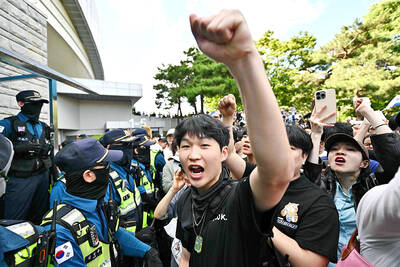
‘ABSURD MISTAKE’: The election commission said that there had been a failure to anticipate turnout after 14 polling stations ran short of ballot papers South Korean riot police yesterday cleared protesters from a Seoul polling station after a 35-hour blockade sparked by a shortage of ballot papers during local elections earlier this week. Wednesday’s election was the first nationwide vote since South Korean President Lee Jae-myung took office following the ouster of Yoon Suk-yeol over his short-lived martial law declaration. Lee’s ruling Democratic Party swept most races, but failed to flip the crucial Seoul mayoral seat. The South Korean National Election Commission apologized, blaming a failure to anticipate turnout after 14 polling stations in Seoul ran short of ballot papers. Some polling stations stayed open until 10pm to

France experienced its hottest spring on record, the French weather service said on Tuesday, after an exceptional early heat wave that also broke highs for the season in England and Wales. Meteo-France said the average nationwide temperature over March to May was 13.8°C — about 1.7°C above the norm, and surpassing records set in 2011 and 2020. “The warmest spring since records began in 1900,” it said in a bulletin. All three months were warmer than average, but the onset of an “unprecedented heatwave” late last month pushed the mercury to highs typically seen at the height of the summer. “Our country had never

A Sherpa guide was found crawling to base camp on Mount Everest a week after he went missing and was reunited with his family, who had given up hope he would return. Dawa Sherpa was last seen on Friday last week descending the mountain, but he did not reach base camp even though his client did. The pair were among the last climbers on the mountain as the climbing season came to an end and the route was dismantled. Dawa was located by a cleaning crew on Thursday morning as he was crawling down the snowy slopes around the Khumbu Icefall, just above
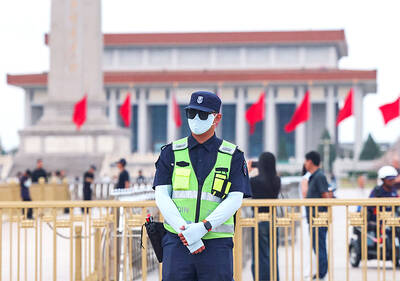
Chinese authorities are snuffing out any remembrance of the deadly 1989 military crackdown on student-led pro-democracy protests in Tiananmen Square, which happened 37 years ago yesterday, in a further tightening of a years-long campaign to erase what happened from public memory. Police told relatives of the victims they would not be allowed to visit a cemetery in Beijing on the anniversary of the crackdown, a person with knowledge of the matter said. Relatives of the victims visited the cemetery on the anniversary for more than 30 years to read memorial statements with police keeping watch, Amnesty International said. Hundreds of people,


 RSS
RSS