


A sophisticated Israeli spy satellite plummeted into the Mediterranean Sea shortly after launch, dealing a blow to Israeli efforts to keep an eye on Iran's alleged nuclear weapons program.
"An unsuccessful attempt was made to launch into orbit a remote sensing satellite," the defense ministry said in a terse announcement Monday, just after the top secret launch from the seaside Palmachim air force base in southern Israel.
The Ofek-6 satellite fell into the sea near the port city of Ashdod. No injuries were reported.
However, other spy satellites are still in orbit, taking high-resolution pictures and relaying them to Israel.
Israel, a world leader in satellite technology, relies heavily on its space-based cameras to monitor activities in Arab countries. The Ofek-5 satellite, launched in 2002, overflies Iran, Iraq, and Syria.
Israel hoped the Ofek-6 would enhance its coverage of these countries, in particular Iran, experts said.
"Israel wanted to use this [satellite] to monitor the Iranian nuclear developments and also things like their surface-to-surface missiles," said military expert Shlomo Brom, a retired general.
Defense Minister Shaul Mofaz said a replacement for Ofek-6 would be launched. "It might be with a delay, but it will go up," he said, without giving a date.
"We have to be on the satellite map," he said. Monday's failure cost an estimated $US50 million.
Israel believes Iran is moving forward with a nuclear weapons program and has intensified efforts to isolate Tehran diplomatically.
On Monday, Israeli Foreign Minister Silvan Shalom again asked his visiting Russian counterpart, Sergey Lavrov, to help contain Iranian nuclear ambitions.
Lavrov replied that Russia's nuclear cooperation with Iran was under the regulations of the International Atomic Energy Agency and did not pose a threat.

The Bolivian government on Friday struck a deal with protesting miners, but was still grappling with blockades and demonstrations by other workers across La Paz. Other groups are still blocking access roads into the city, which is also the seat of the government. Police on Thursday prevented the miners from entering the main square by using tear gas, while the demonstrators hurled stones and explosives with slingshots. Protests against the policies of Bolivian President Rodrigo Paz have convulsed the Andean nation since early this month, and roadblocks were choking routes into La Paz throughout Friday, the national road authority said. Miners demanded that Paz
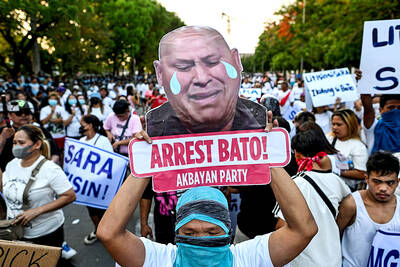
The Philippines said it has asked the country’s Supreme Court to allow it to arrest former Philippine president Rodrigo Duterte’s chief drug war enforcer to stand trial in an international tribunal. The International Criminal Court (ICC) last week unsealed an arrest warrant against Philippine Senator Ronald dela Rosa, accusing him along with Duterte and other “coperpetrators” of the “crime against humanity of murder.” Dela Rosa briefly sought refuge in the Philippine Senate last week while asking the Philippine Supreme Court to stop an ongoing attempt by government agents to arrest him. “By his own conduct, he has placed himself outside the protection of
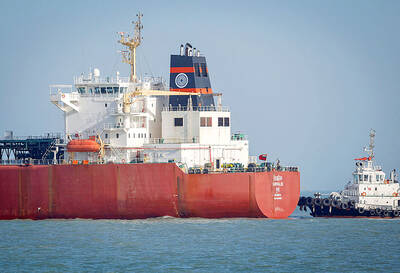
A ship anchored off the United Arab Emirates (UAE) was seized and taken toward Iran and another — a cargo ship near Oman — sank after being attacked, authorities said on Thursday, as tensions escalated near the Strait of Hormuz. It was not immediately clear who was behind these incidents, but they happened as a senior Iranian official reiterated his country’s claim of control over the waterway and another said it had a right to seize oil tankers connected to the US. The turmoil in the strait has been a sticking point for weeks in talks between the US and Iran to

Crowds in Bangladesh are flocking to snap photographs with an unlikely social media star — an albino buffalo with flowing blond hair nicknamed “Donald Trump” that is due to be sacrificed within days. Owner Zia Uddin Mridha, 38, said his brother named the 700kg bull over its flowing helmet of hair resembling the signature look of the US president. “My younger brother picked this name because of the buffalo’s extraordinary hair,” he said at his farm in Narayanganj, just outside the capital, Dhaka. Mridha said that a constant stream of curious visitors — social media fans, onlookers and children — have come throughout


 RSS
RSS