


Disappointed European leaders seem to be torn between pursuing efforts to engage Iran and calls for a harder line over Tehran's nuclear aims, to bring them closer to the US stance.
EU foreign ministers, gathered for back-to-work talks in the Netherlands this weekend, did little to disguise their deep concern over Iran, which Washington wants hauled before the UN Security Council.
"We agreed upon the need to send out a strong signal to Iran to cooperate with the IAEA," said Dutch Foreign Minister Bernard Bot, whose country holds the EU presidency, referring to the International Atomic Energy Agency (IAEA).
"We cannot accept of course the development of weapon-grade uranium," he said.
"That signal should be very strong and should be unanimously given by the 25" EU member states.
German Foreign Minister Joschka Fischer, who along with his British and French counterparts has spearheaded Europe's attempts to diplomatically engage Tehran, also turned up the pressure.
A nuclear-capable Iran "can become a subject for the [UN] Security Council, he said, referring to the IAEA board of governors meeting from Sept. 13 which will discuss a new report on Tehran's atomic aims.
Washington, which has dubbed Iran part of an "axis of evil" along with Iraq and North Korea, plans to call at the IAEA meeting for the issue to be referred to the UN Security Council, in a move bringing sanctions a step closer.
Europe seems to in a quandary over how to proceed.
"It is difficult to manage the situation," said one diplomat.
"Either we stick with the current way which risks not impressing the Iranians, or we go straight to the Security Council and they risk doing God knows what because they will feel betrayed by those who held up a solution for them."
The fear is that Iranian conservatives, who have maintained a hardline on the nuclear issue since winning February legislative elections, would use a standoff at the UN Security Council to raise the stakes even further.
"The risk is clear. We have to take account of the domestic balance of power in Tehran," said another diplomat.
"We must find as unanimous a position as possible," he added.
But he cast doubt on whether the EU can come such a joint position in the next week -- coincidentally the IAEA board of governors meeting is on the same day at the next formal meeting of EU foreign ministers.
The Europeans' disappointment with Tehran is all the more bitter because they have for years refused to bow to American pressure to cut ties with the Iranian government.
"We have given them every opportunity to continue with dialogue, in particular on the enrichment program," Bot said.
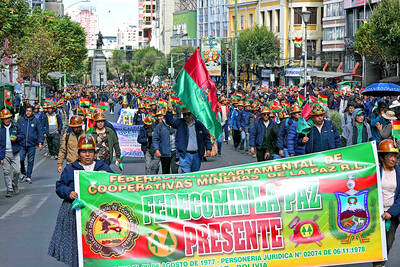
The Bolivian government on Friday struck a deal with protesting miners, but was still grappling with blockades and demonstrations by other workers across La Paz. Other groups are still blocking access roads into the city, which is also the seat of the government. Police on Thursday prevented the miners from entering the main square by using tear gas, while the demonstrators hurled stones and explosives with slingshots. Protests against the policies of Bolivian President Rodrigo Paz have convulsed the Andean nation since early this month, and roadblocks were choking routes into La Paz throughout Friday, the national road authority said. Miners demanded that Paz
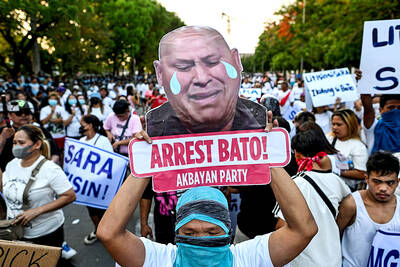
The Philippines said it has asked the country’s Supreme Court to allow it to arrest former Philippine president Rodrigo Duterte’s chief drug war enforcer to stand trial in an international tribunal. The International Criminal Court (ICC) last week unsealed an arrest warrant against Philippine Senator Ronald dela Rosa, accusing him along with Duterte and other “coperpetrators” of the “crime against humanity of murder.” Dela Rosa briefly sought refuge in the Philippine Senate last week while asking the Philippine Supreme Court to stop an ongoing attempt by government agents to arrest him. “By his own conduct, he has placed himself outside the protection of
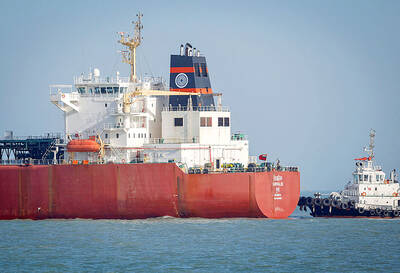
A ship anchored off the United Arab Emirates (UAE) was seized and taken toward Iran and another — a cargo ship near Oman — sank after being attacked, authorities said on Thursday, as tensions escalated near the Strait of Hormuz. It was not immediately clear who was behind these incidents, but they happened as a senior Iranian official reiterated his country’s claim of control over the waterway and another said it had a right to seize oil tankers connected to the US. The turmoil in the strait has been a sticking point for weeks in talks between the US and Iran to

Crowds in Bangladesh are flocking to snap photographs with an unlikely social media star — an albino buffalo with flowing blond hair nicknamed “Donald Trump” that is due to be sacrificed within days. Owner Zia Uddin Mridha, 38, said his brother named the 700kg bull over its flowing helmet of hair resembling the signature look of the US president. “My younger brother picked this name because of the buffalo’s extraordinary hair,” he said at his farm in Narayanganj, just outside the capital, Dhaka. Mridha said that a constant stream of curious visitors — social media fans, onlookers and children — have come throughout


 RSS
RSS