


Former world chess champion Bobby Fischer appealed to US Secretary of State Colin Powell yesterday to help him renounce US citizenship as he announced plans to marry a leading Japanese chess official, his lawyer said.
Fischer, wanted in the US for allegedly violating international sanctions on the former Yugosla-via, was detained in Japan last month when trying to travel on a revoked US passport. He has been fighting attempts to have him deported to the US.
Fischer's attorney, Masako Suzuki, said she faxed a letter to Powell and the US Embassy in Japan demanding that a US consular officer be sent to the chess great's detention center to accept his renunciation of US citizenship.
In the letter, Suzuki accused the embassy of refusing to send an official to Fischer, requiring him to come to the embassy in person. Japanese officials, however, will not allow him to make the trip, she said.
"Although renouncing US citizenship is a legal right ..., the US Embassy in Japan has made it impossible for Mr. Fischer to exercise his right," said the letter, which was also faxed to news organizations in Japan.
A separate statement from Suzuki also said Fischer and Japan Chess Association president Miyoko Watai had signed marriage papers that was to be submitted later yesterday.
It was unclear whether Japan-ese officials would accept the marriage application. A Tokyo ward official, Yoshihisa Yabe, said a person in Fischer's situation would have to either provide a valid US passport or a US government document confirming his citizenship's validity in order to get married in Japan.
It was also not immediately clear whether marriage to a Japan-ese citizen would affect attempts to deport him to the US. Suzuki said Fischer and Watai had been living together since 2000.
Fischer became an American icon when, at the height of the Cold War, he defeated Boris Spassky of the Soviet Union in a series of games in Iceland, in 1972.
He lost his title as world champion in 1978 and then largely vanished from the public eye until he reappeared to play a rematch in the former Yugoslavia against Spassky in 1992. Though Fischer won, and took home more than US$3 million in prize money, he played in violation of UN sanctions and has been wanted in the US ever since.
Fischer's renunciation of his US citizenship could possibly leave him without a country to call his own, Suzuki has said, adding that he had plans to apply for refugee status with the UN High Commissioner for Refugees.
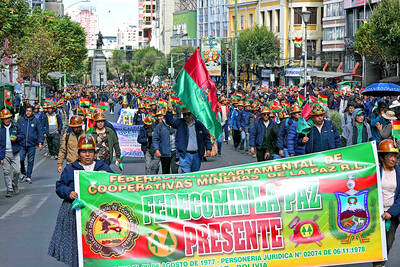
The Bolivian government on Friday struck a deal with protesting miners, but was still grappling with blockades and demonstrations by other workers across La Paz. Other groups are still blocking access roads into the city, which is also the seat of the government. Police on Thursday prevented the miners from entering the main square by using tear gas, while the demonstrators hurled stones and explosives with slingshots. Protests against the policies of Bolivian President Rodrigo Paz have convulsed the Andean nation since early this month, and roadblocks were choking routes into La Paz throughout Friday, the national road authority said. Miners demanded that Paz
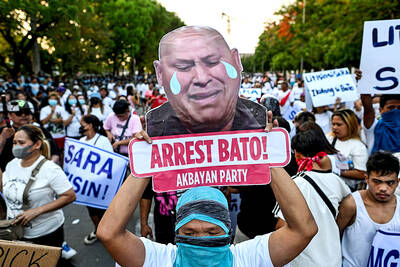
The Philippines said it has asked the country’s Supreme Court to allow it to arrest former Philippine president Rodrigo Duterte’s chief drug war enforcer to stand trial in an international tribunal. The International Criminal Court (ICC) last week unsealed an arrest warrant against Philippine Senator Ronald dela Rosa, accusing him along with Duterte and other “coperpetrators” of the “crime against humanity of murder.” Dela Rosa briefly sought refuge in the Philippine Senate last week while asking the Philippine Supreme Court to stop an ongoing attempt by government agents to arrest him. “By his own conduct, he has placed himself outside the protection of
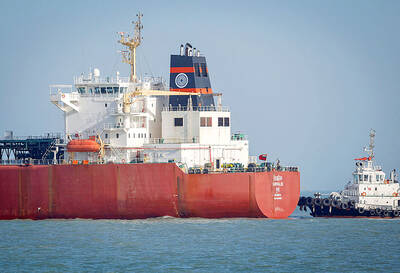
A ship anchored off the United Arab Emirates (UAE) was seized and taken toward Iran and another — a cargo ship near Oman — sank after being attacked, authorities said on Thursday, as tensions escalated near the Strait of Hormuz. It was not immediately clear who was behind these incidents, but they happened as a senior Iranian official reiterated his country’s claim of control over the waterway and another said it had a right to seize oil tankers connected to the US. The turmoil in the strait has been a sticking point for weeks in talks between the US and Iran to

Crowds in Bangladesh are flocking to snap photographs with an unlikely social media star — an albino buffalo with flowing blond hair nicknamed “Donald Trump” that is due to be sacrificed within days. Owner Zia Uddin Mridha, 38, said his brother named the 700kg bull over its flowing helmet of hair resembling the signature look of the US president. “My younger brother picked this name because of the buffalo’s extraordinary hair,” he said at his farm in Narayanganj, just outside the capital, Dhaka. Mridha said that a constant stream of curious visitors — social media fans, onlookers and children — have come throughout


 RSS
RSS