


Tehran has told an Iranian delegation in Paris for nuclear talks with representative of the EU's big three to adopt a tough stance in their discussions, sources close to the Iranian parliament said yesterday.
"We are on the verge of either giving in forever to politicized demands initiated by the United States, or making clear that countries like Iran cannot be simply deprived of legitimate rights such as peaceful nuclear technology," the parliamentary sources said.
Iranian officials from the foreign ministry and atomic energy organization are involved in reportedly difficult talks in Paris with representatives from the UK, France and Germany over Iran's controversial nuclear program.
"Before going into any details, the main question in Paris remains whether Iran should have the right to have peaceful nuclear projects or not," the sources said.
"The three EU states had in October last year granted Iran the basic right to have such a technology and even promised assistance but later revised their standpoint due to what Tehran believes was American pressure," the sources added.
Tehran has called on the EU to stick to agreements made last October and not let the nature of the issue become political.
The EU three, in line with the International Atomic Energy Agency, have charged Iran with not fully disclosing information about its nuclear program.
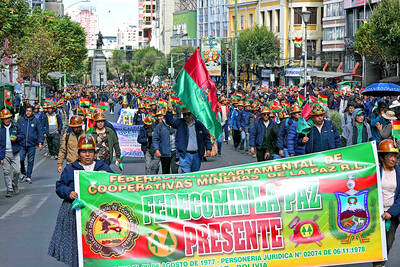
The Bolivian government on Friday struck a deal with protesting miners, but was still grappling with blockades and demonstrations by other workers across La Paz. Other groups are still blocking access roads into the city, which is also the seat of the government. Police on Thursday prevented the miners from entering the main square by using tear gas, while the demonstrators hurled stones and explosives with slingshots. Protests against the policies of Bolivian President Rodrigo Paz have convulsed the Andean nation since early this month, and roadblocks were choking routes into La Paz throughout Friday, the national road authority said. Miners demanded that Paz
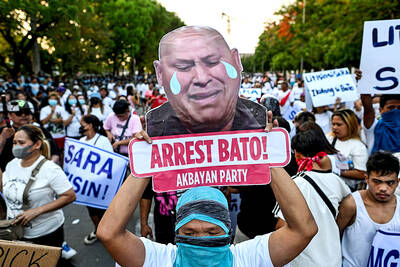
The Philippines said it has asked the country’s Supreme Court to allow it to arrest former Philippine president Rodrigo Duterte’s chief drug war enforcer to stand trial in an international tribunal. The International Criminal Court (ICC) last week unsealed an arrest warrant against Philippine Senator Ronald dela Rosa, accusing him along with Duterte and other “coperpetrators” of the “crime against humanity of murder.” Dela Rosa briefly sought refuge in the Philippine Senate last week while asking the Philippine Supreme Court to stop an ongoing attempt by government agents to arrest him. “By his own conduct, he has placed himself outside the protection of
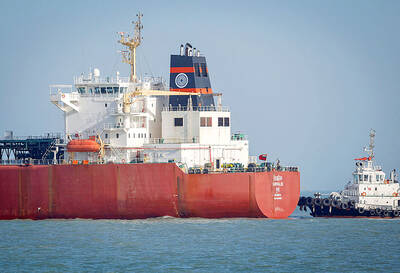
A ship anchored off the United Arab Emirates (UAE) was seized and taken toward Iran and another — a cargo ship near Oman — sank after being attacked, authorities said on Thursday, as tensions escalated near the Strait of Hormuz. It was not immediately clear who was behind these incidents, but they happened as a senior Iranian official reiterated his country’s claim of control over the waterway and another said it had a right to seize oil tankers connected to the US. The turmoil in the strait has been a sticking point for weeks in talks between the US and Iran to

Crowds in Bangladesh are flocking to snap photographs with an unlikely social media star — an albino buffalo with flowing blond hair nicknamed “Donald Trump” that is due to be sacrificed within days. Owner Zia Uddin Mridha, 38, said his brother named the 700kg bull over its flowing helmet of hair resembling the signature look of the US president. “My younger brother picked this name because of the buffalo’s extraordinary hair,” he said at his farm in Narayanganj, just outside the capital, Dhaka. Mridha said that a constant stream of curious visitors — social media fans, onlookers and children — have come throughout


 RSS
RSS