


With President Hamid Karzai in the US for talks with his chief international backers, speculation grew at home that he was planning an electoral pact with Afghanistan's most powerful warlords.
Critics charge he is betraying the hopes of millions of Afghans who have suffered more than two decades of war and turmoil by aligning himself with the powerbrokers. Many of them were behind that fighting and still control much of the country.
Karzai has, however, insisted that such leaders, several of them in his current government, were "part of the reality of this country."
He insists he has reached no deals, but suspicions were stoked last week when Karzai met with key leaders of the Northern Alliance which helped US forces drive out the hardline Taliban regime in late 2001.
Wali Massood, a brother of late alliance commander Ahmad Shah Massood, is among those who suspect Karzai of seeking warlords' support before the vote by offering them a role in a future government.
"That goes against the norm of democracy, that goes against everything," Massood, who is currently setting up an opposition party, said this week. "This is no way to build a country."
Karzai told reporters last week that he had met with many faction leaders, including Burhanuddin Rabbani, a former president and leader of the Jamiat-e-Islami party, and Uzbek strongman Abdul Rashid Dostum.
Several are veterans of Afghanistan's ruinous civil war in the early 1990s, which destroyed much of Kabul. Today, their private armies, though nominally loyal to the government, are suspected of drug and turf wars that have killed civilians and scared off relief workers.
Karzai said he would find time during his trip to the US, which is to include a meeting with US President George W. Bush, to study a list of demands laid out by Rabbani.
They include a prominent role for the mujahedeen in the security forces and respect for Islamic principles. But Karzai insisted that posts in a future government were not discussed in Kabul.
"There was nothing like that," he said.
Rabbani has also stopped short of endorsing Karzai publicly.
But critics say Karzai already looks compromised to ordinary Afghans, and risks cementing a status quo that will cripple his efforts to create a strong government able to heal deep ethnic rifts and keep the Taliban at bay.
The threat of the growing Taliban-led rebellion could yet spoil efforts to register some 10 million eligible Afghans in time for the election in September -- the first democratic vote in Afghanistan's modern history.
According to Andrew Wilder, head of the Afghan Research Evaluation Unit, a Kabul-based foundation, the faction leaders are less popular and powerful than Karzai seems to think.
Teaming up with them could cost him votes -- if the elections are kept reasonably free of intimidation and vote-buying by the armed groups and drug rings resisting Kabul's authority.
"Karzai should be winning the hearts and minds of the Afghans, not the hearts and minds of the warlords," Wilder said.

South Korea’s air force yesterday apologized for a 2021 midair collision involving two fighter jets, a day after auditors said the pilots were taking selfies and filming during the flight and held them responsible for the accident. “We sincerely apologize to the public for the concern caused by the accident that occurred in 2021,” an air force spokesman told a news conference, adding that one of the pilots involved had been suspended from flying duties, received severe disciplinary action and has since left the military. The apology followed a report released on Wednesday by the South Korean Board of Audit and Inspection,
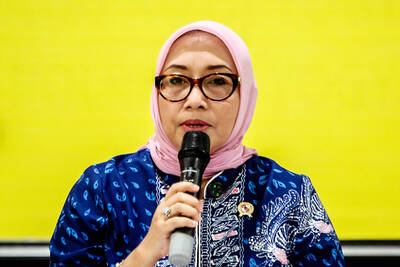
Indonesian police have arrested 13 people after shocking images of alleged abuse against small children at a daycare center went viral, sparking outrage across the nation, officials said on Monday. Police on Friday last week raided Little Aresha, a daycare center in Yogyakarta on Java island, following a report from a former employee. CCTV footage circulating on social media showed children, most younger than two, lying on the floor wearing only diapers, their hands and feet bound with rags. The police have confirmed that the footage is authentic. Police said they also found 20 children crammed into a room just 3m by 3m. “So
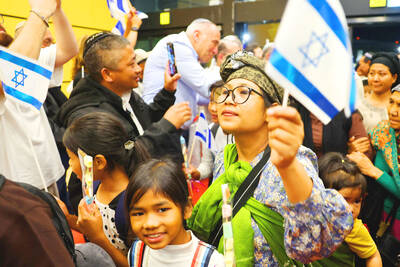
About 240 Indians claiming descent from a Biblical tribe landed at Tel Aviv airport on Thursday as part of a government operation to relocate them to Israel. The newcomers passed under a balloon arch in blue and white, the colors of the Israeli flag, as dozens of well-wishers welcomed them with a traditional Jewish song. They were the first “bnei Menashe” (“sons of Manasseh”) to arrive in Israel since the government in November last year announced funding for the immigration of about 6,000 members of the community from the states of Manipur and Mizoram in northeast India. The community claims to descend from

‘TROUBLING’: The firing of Phelan, who was an adviser to a nonprofit that supported the defense of Taiwan, was another example of ‘dysfunction’ under Trump, a US senator said US Secretary of the Navy John Phelan has been fired, a US official and a person familiar with the matter said on Wednesday, in another wartime shakeup at the Pentagon coming just weeks after US Secretary of Defense Pete Hegseth ousted the Army’s top general. The Pentagon announced his departure in a brief statement, saying he was leaving the administration “effective immediately,” but it did not provide a reason or say whether it was his decision to go. The sources, who spoke on condition of anonymity, said Phelan was dismissed in part because he was moving too slowly to implement reforms to


 RSS
RSS