


Housing Minister Effie Eitam and a second official from the pro-settler National Religious Party (NRP) resigned from the government yesterday in protest over the Cabinet's approval of a Gaza withdrawal plan.
The departure of the NRP would deprive Prime Minister Ariel Sharon of his parliamentary majority, but not bring him down.
Sharon's government has been in limbo since the Cabinet's historic vote on Sunday to pull out of Gaza by the end of next year. The decision could lead to new political alliances, or even elections, in the coming months.
The government survived two no-confidence motions in parliament on Monday night. NRP legislators were absent from the floor during the vote, a sign of the party's indecision.
Eitam and Yitzhak Levy, a deputy minister, had said they could not sit in a Cabinet that intended to pull down settlements, party sources said.
Zevulun Orlev, the labor and welfare minister who leads a more moderate wing of the party, planned to stay in the Cabinet, the sources said.
If the party pulled out of the coalition, it would leave Sharon with 55 seats in the 120-member Knesset. Sharon would likely court Labor, his main coalition partner in his first term, to replace the NRP, though the party is divided over whether to join.
For now, Labor is providing a "safety net" for Sharon in parliament. In Monday's votes, Labor legislators abstained, allowing the motions to be defeated.
"We will decide from day to day," said party leader Shimon Peres.
In Sunday's meeting, the Cabinet approved a Gaza withdrawal in principle, but in a nod to hardliners decided that no settlements would be removed without another vote, expected to be held by March 1. Meanwhile, the government will lay the groundwork for the settlement removals.
Sharon's ``disengagement plan,'' includes the removal of all 21 Gaza settlements and four small West Bank settlements.
Meanwhile, Israel plans to shut down a major industrial zone on its border with the Gaza Strip where thousands of Palestinians work, a senior political said yesterday.
Vice Premier Ehud Olmert was quoted as saying the decision to close the Erez zone and relocate its factories to southern Israel followed government approval of the Gaza pullout plan
The Erez plants have been a rare example of Israeli-Palestinian cooperation and some 4,000 Palestinians are employed there.

The Bolivian government on Friday struck a deal with protesting miners, but was still grappling with blockades and demonstrations by other workers across La Paz. Other groups are still blocking access roads into the city, which is also the seat of the government. Police on Thursday prevented the miners from entering the main square by using tear gas, while the demonstrators hurled stones and explosives with slingshots. Protests against the policies of Bolivian President Rodrigo Paz have convulsed the Andean nation since early this month, and roadblocks were choking routes into La Paz throughout Friday, the national road authority said. Miners demanded that Paz
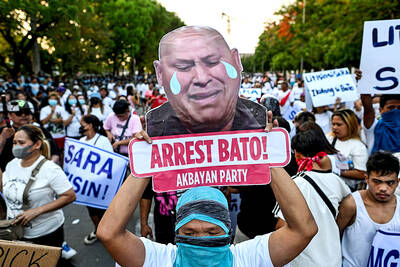
The Philippines said it has asked the country’s Supreme Court to allow it to arrest former Philippine president Rodrigo Duterte’s chief drug war enforcer to stand trial in an international tribunal. The International Criminal Court (ICC) last week unsealed an arrest warrant against Philippine Senator Ronald dela Rosa, accusing him along with Duterte and other “coperpetrators” of the “crime against humanity of murder.” Dela Rosa briefly sought refuge in the Philippine Senate last week while asking the Philippine Supreme Court to stop an ongoing attempt by government agents to arrest him. “By his own conduct, he has placed himself outside the protection of

A ship anchored off the United Arab Emirates (UAE) was seized and taken toward Iran and another — a cargo ship near Oman — sank after being attacked, authorities said on Thursday, as tensions escalated near the Strait of Hormuz. It was not immediately clear who was behind these incidents, but they happened as a senior Iranian official reiterated his country’s claim of control over the waterway and another said it had a right to seize oil tankers connected to the US. The turmoil in the strait has been a sticking point for weeks in talks between the US and Iran to

Crowds in Bangladesh are flocking to snap photographs with an unlikely social media star — an albino buffalo with flowing blond hair nicknamed “Donald Trump” that is due to be sacrificed within days. Owner Zia Uddin Mridha, 38, said his brother named the 700kg bull over its flowing helmet of hair resembling the signature look of the US president. “My younger brother picked this name because of the buffalo’s extraordinary hair,” he said at his farm in Narayanganj, just outside the capital, Dhaka. Mridha said that a constant stream of curious visitors — social media fans, onlookers and children — have come throughout


 RSS
RSS