


Japanese Prime Minister Junichiro Koizumi said yesterday he believes the acrimony between the US and some of its allies over Iraq is largely past, and that he's optimistic this week's summit of leading industrial nations will offer the world a display of unity.
Koizumi, who recently returned from a summit with North Korean leader Kim Jong Il, also said Pyongyang is aware of the importance of breaking a diplomatic impasse over its suspected development of nuclear weapons and "moving forward."
Speaking to a small group of foreign media, the Japanese leader said he believes Iraq and its transition to self-government will dominate the agenda at the Group of Eight summit in Sea Island, Georgia.
"France, Germany and Russia are not calling for the immediate withdrawal of US forces," he said, as an example of the improvement this year in the mood ahead of the annual summit, which begins tomorrow. "I consider this to be a great chance for the international community to demonstrate its cooperation and for the Iraqi people to stand up on their own two feet."
He was to leave this morning to attend the summit. It is the fourth for Koizumi, who was elected in a landslide victory in April 2001.
Koizumi -- whose outspoken, maverick approach to leadership is something of a rarity in consensus-conscious Japan -- continues to be one of the most popular leaders this nation has had in decades.
But as he heads to Georgia, he is under pressure amid a national pension scandal that has rocked his Cabinet.
Like many of this country's top politicians, Koizumi has acknow-ledged he failed to make all of the proper payments into the system. He has not been accused of any legal wrongdoing, however, or charged with any crimes.
He has also recently been under increasing fire from Japan's opposition for his staunch backing of US President George W. Bush's Iraq policy.
Despite deep concerns among the Japanese public, Koizumi has sent about 500 non-combatant soldiers to southern Iraq in this country's biggest military mission since World War II.
Koizumi said he stands by his support of Bush, but added that it is important to involve the UN as closely in the reconstruction process as is feasible.
"I have made that clear in many talks with American leaders," he said.
On North Korea, Koizumi said Kim indicated an understanding at their summit on May 22 that it is crucial for his impoverished nation to abandon its nuclear weapons program if it is to receive badly needed economic aid.
Koizumi and Russian President Vladimir Putin are the only G8 leaders who have met Kim, and his decision to hold a one-on-one with the North Korean leader is a step apart from Washington's policy of dealing with the North primarily through multilateral channels.
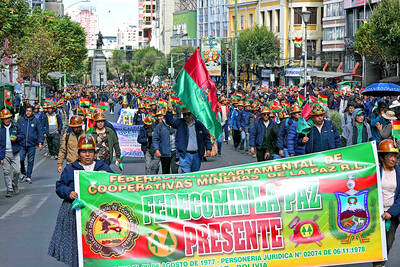
The Bolivian government on Friday struck a deal with protesting miners, but was still grappling with blockades and demonstrations by other workers across La Paz. Other groups are still blocking access roads into the city, which is also the seat of the government. Police on Thursday prevented the miners from entering the main square by using tear gas, while the demonstrators hurled stones and explosives with slingshots. Protests against the policies of Bolivian President Rodrigo Paz have convulsed the Andean nation since early this month, and roadblocks were choking routes into La Paz throughout Friday, the national road authority said. Miners demanded that Paz
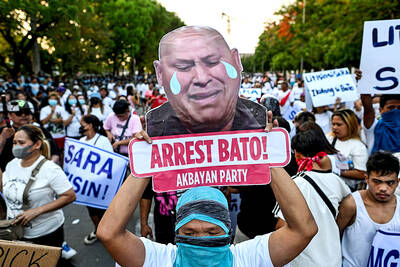
The Philippines said it has asked the country’s Supreme Court to allow it to arrest former Philippine president Rodrigo Duterte’s chief drug war enforcer to stand trial in an international tribunal. The International Criminal Court (ICC) last week unsealed an arrest warrant against Philippine Senator Ronald dela Rosa, accusing him along with Duterte and other “coperpetrators” of the “crime against humanity of murder.” Dela Rosa briefly sought refuge in the Philippine Senate last week while asking the Philippine Supreme Court to stop an ongoing attempt by government agents to arrest him. “By his own conduct, he has placed himself outside the protection of
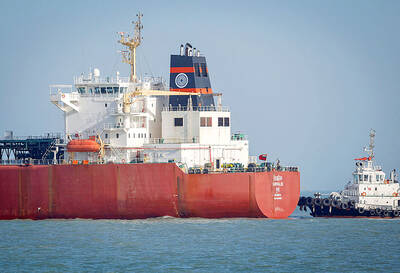
A ship anchored off the United Arab Emirates (UAE) was seized and taken toward Iran and another — a cargo ship near Oman — sank after being attacked, authorities said on Thursday, as tensions escalated near the Strait of Hormuz. It was not immediately clear who was behind these incidents, but they happened as a senior Iranian official reiterated his country’s claim of control over the waterway and another said it had a right to seize oil tankers connected to the US. The turmoil in the strait has been a sticking point for weeks in talks between the US and Iran to

Crowds in Bangladesh are flocking to snap photographs with an unlikely social media star — an albino buffalo with flowing blond hair nicknamed “Donald Trump” that is due to be sacrificed within days. Owner Zia Uddin Mridha, 38, said his brother named the 700kg bull over its flowing helmet of hair resembling the signature look of the US president. “My younger brother picked this name because of the buffalo’s extraordinary hair,” he said at his farm in Narayanganj, just outside the capital, Dhaka. Mridha said that a constant stream of curious visitors — social media fans, onlookers and children — have come throughout


 RSS
RSS