


Four US soldiers were killed in action in southern Afghanistan on Saturday, the latest sign of a growing militant insurgency that threatens to disrupt landmark elections due in September.
In one of the worst losses for US forces since the fall of the Taliban late in 2001, four service members assigned to a special forces unit were killed in the southern province of Zabul, scene of regular guerrilla attacks in recent months.
More than 700 people have died in violence since August, most of it blamed on Taliban and al-Qaeda fighters who have declared a jihad, or holy war, against foreign and Afghan troops as well as aid organizations.
The acceleration in attacks on US and Afghan forces in the last two months is particularly worrying as the country heads toward its first-ever free vote, which the West hopes will give legitimacy to a government seen by many as a US puppet.
"Four US service members assigned to the Combined Joint Special Operations Task Force, Afghanistan were killed in action today here in southern Afghanistan," said a brief statement from the US military.
"Names will not be released until notification of next of kin is complete," the statement said.
The four deaths bring to 90 the number of US fatalities in Afghanistan, 56 of them in combat.
A spokeswoman said there were no more details available.
In what has been a bloody week for Afghanistan, seven Afghan soldiers and four suspected Taliban fighters died in clashes in the southern province of Helmand on Saturday and two US soldiers were wounded near the Pakistani border on Thursday.
US aircraft supporting a patrol that came under fire on Tuesday in the southern province of Kandahar pounded Taliban positions, killing at least two militants, and a Norwegian peacekeeper was killed in a grenade attack in Kabul a week ago.
On Saturday, the US military announced plans to deploy the 10,000-strong Afghan National Army (ANA) across the country to secure polling and voter registration, which has lagged behind expectations partly because of security fears.
They will work alongside 20,000 US-led soldiers, 6,500 international peacekeepers restricted largely to Kabul and a growing police force, said Major-General Craig Weston.
He added that the fledgling ANA would set up four permanent garrisons in the north, south, east and west of the country to help consolidate Afghan President Hamid Karzai's control outside the capital.
Karzai and his backers in Washington have been undermined both by a militant rebellion and by regional commanders officially loyal to him but who have resisted a key nationwide disarmament program and clashed with government militia.
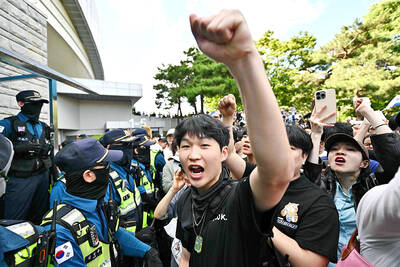
‘ABSURD MISTAKE’: The election commission said that there had been a failure to anticipate turnout after 14 polling stations ran short of ballot papers South Korean riot police yesterday cleared protesters from a Seoul polling station after a 35-hour blockade sparked by a shortage of ballot papers during local elections earlier this week. Wednesday’s election was the first nationwide vote since South Korean President Lee Jae-myung took office following the ouster of Yoon Suk-yeol over his short-lived martial law declaration. Lee’s ruling Democratic Party swept most races, but failed to flip the crucial Seoul mayoral seat. The South Korean National Election Commission apologized, blaming a failure to anticipate turnout after 14 polling stations in Seoul ran short of ballot papers. Some polling stations stayed open until 10pm to

France experienced its hottest spring on record, the French weather service said on Tuesday, after an exceptional early heat wave that also broke highs for the season in England and Wales. Meteo-France said the average nationwide temperature over March to May was 13.8°C — about 1.7°C above the norm, and surpassing records set in 2011 and 2020. “The warmest spring since records began in 1900,” it said in a bulletin. All three months were warmer than average, but the onset of an “unprecedented heatwave” late last month pushed the mercury to highs typically seen at the height of the summer. “Our country had never
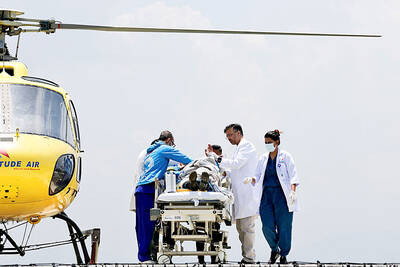
A Sherpa guide was found crawling to base camp on Mount Everest a week after he went missing and was reunited with his family, who had given up hope he would return. Dawa Sherpa was last seen on Friday last week descending the mountain, but he did not reach base camp even though his client did. The pair were among the last climbers on the mountain as the climbing season came to an end and the route was dismantled. Dawa was located by a cleaning crew on Thursday morning as he was crawling down the snowy slopes around the Khumbu Icefall, just above
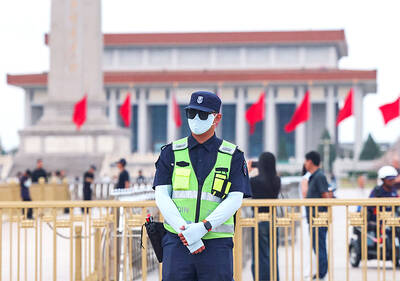
Chinese authorities are snuffing out any remembrance of the deadly 1989 military crackdown on student-led pro-democracy protests in Tiananmen Square, which happened 37 years ago yesterday, in a further tightening of a years-long campaign to erase what happened from public memory. Police told relatives of the victims they would not be allowed to visit a cemetery in Beijing on the anniversary of the crackdown, a person with knowledge of the matter said. Relatives of the victims visited the cemetery on the anniversary for more than 30 years to read memorial statements with police keeping watch, Amnesty International said. Hundreds of people,


 RSS
RSS