


A fire raged through a Honduran prison killing 103 inmates and injuring 25 others, amid allegations jail guards had refused to let young gang members out of their cells, authorities said.
Fifty-three of the victims belonged to the Mara Salvatrucha street gang. Under a law banning gang membership, some were jailed for wearing gang tattoos, a group that helps gang members said.
The blaze early Monday in the Central Prison of San Pedro Sula, some 240km north of Tegucigalpa was the second major fire tragedy to hit a Honduran prison in little more than a year.
Honduran President Ricardo Maduro broke off a European tour to return and handle the crisis.
First Vice President Vicente William convened an emergency Cabinet meeting to start up an investigation.
Deputy Security Minister Armando Calidonio said 102 inmates perished in the Central Prison fire and another died in hospital, where 25 people were being treated for burns.
Firefighters said a short circuit caused bedding to catch fire. Victims died from thick smoke and inadequate ventilation which hindered firefighters, fire commissioner Carlos Cordero said.
Honduran TV broadcast images of charred bodies strewn near the prison, which was destroyed.
One inmate claimed prisoners shouted in vain for help but that jailers refused to open the cells so they could flee the blaze.
"The police were saying, `leave them in there, leave them in there,' as we were yelling `let us out,'" inmate Pablo Cardona said.
"They wanted us to die," said Cardona, who identified himself as a member of one of Honduras' notorious drug gangs.
Coroners who had examined 30 bodies said there was not yet any evidence to support early reports that guards had shot the inmates.
Human-rights groups here have alleged that the government has quietly pursued a policy of executing gang members. Honduran officials have denied this.
San Pedro Sula prison director Elias Aceituno was suspended after the fire, but he told reporters the measure was to ensure an independent investigation.
"Later on, I'll return to my job," he added.
Auxiliary Bishop Romulo Emiliani of the San Pedro Sula Roman Catholic diocese called for an investigation into why the prisoners had not been released.
"If one of the gates had been opened an hour earlier, no one would have died," Emiliani said.
He called the loss of life "one of the worst tragedies ever to occur in our country's prisons.
"I'm upset because most of these were young men ... many of whom had hoped to turn over a new leaf and improve their lives, and who were hoping for a better future," he said.
Itsmania Pineda, who works with gang members, called the prison a "pressure cooker," filled with desperate gang members.
Security minister spokesman Leonel Sauceda said the prison, built for 1,700 inmates, held 2,227.
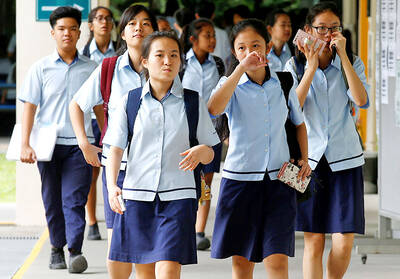
School bullies in Singapore are to face caning under new guidelines, but the education minister on Tuesday said it would be meted out only as a last resort with strict safeguards. Human rights groups regularly criticize Singapore for the use of corporal punishment, which remains part of the school and criminal justice systems, but authorities have defended it as a deterrent to crime and serious misconduct. Caning was discussed in the parliament after legislators asked how it would be used in relation to bullying in schools. The debate followed stricter guidelines on serious student misconduct, including bullying, unveiled by the Singaporean Ministry of
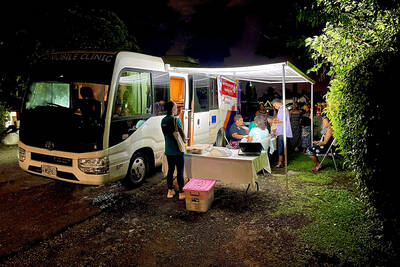
As evening falls in Fiji’s capital, a steady stream of people approaches a makeshift clinic that is a first line of defense against one of the world’s fastest-growing HIV epidemics. In the South Pacific nation — a popular tourist destination of just under a million people — more than 2,000 new HIV cases were recorded last year, a 26 percent increase from 2024. The government has declared an HIV outbreak and described it as a national crisis. “It’s spreading like wildfire,” said Siteri Dinawai, 46, who came to be tested. The Moonlight Clinic, a converted minibus parked in a suburban cul-de-sac in Suva, is
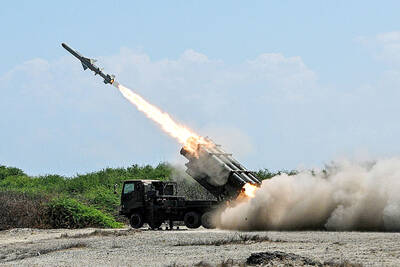
A MESSAGE: Japan’s participation in the Balikatan drills is a clear deterrence signal to China not to attack Taiwan while the US is busy in the Middle East, an analyst said The Japan Self-Defense Forces yesterday fired a Type 88 anti-ship missile during a joint maritime exercise with US, Australian and Philippine forces, hitting a decommissioned Philippine Navy ship in waters facing the disputed South China Sea, in drills that underscore Tokyo’s rising willingness to project military power on China’s doorstep. The drill took place as Manila and Tokyo began talks on a potential defense equipment transfer, made possible by Japan’s decision to scrap restrictions on military exports. The discussions include the possible early transfer of Abukuma-class destroyers and TC-90 aircraft to the Philippines, Japanese Minister of Defense Shinjiro Koizumi said. Philippine Secretary of
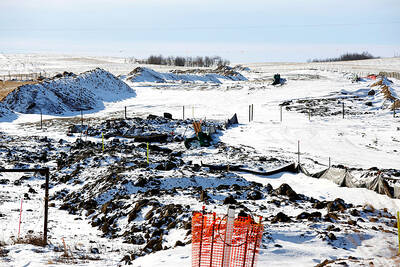
Separatists in Alberta are preparing to submit a petition tomorrow that they said has enough signatures to force a referendum on independence for the oil-rich Canadian province. Polls indicate the pro-independence camp remains a minority among Alberta’s 5 million people, but has hit a historic high of roughly 30 percent. Alberta separatists are also closer than ever to forcing a referendum, riding momentum fueled by intensifying grievances over Ottawa’s control of the provincial oil industry. They have also undeniably gotten a boost from the return to power of US President Donald Trump. After launching a petition in January, Stay Free Alberta, the group


 RSS
RSS