


US troops on Friday started releasing more than 300 Iraqi detainees from Abu Ghraib prison, a jail from the era of former Iraqi president Saddam Hussein where abuses of prisoners by US soldiers have damaged the credibility of the US-led coalition governing Iraq.
One bus carrying 17 prisoners left the jail and drove to a US military base in west Baghdad, where tribal leaders awaited them. The prisoners kneeled and prayed beside the bus.
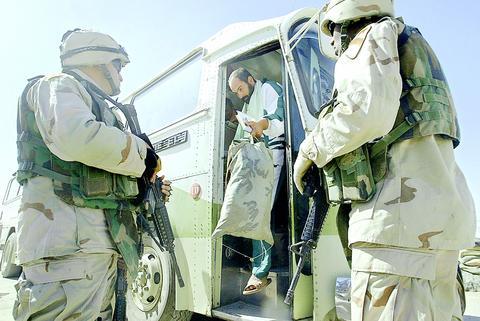
PHOTO: AFP
The coalition periodically releases prisoners from Abu Ghraib on the western outskirts of Baghdad. Some 315 were scheduled for release yesterday, and the next release was planned for May 21.
On Thursday, US Defense Secretary Donald Rumsfeld went to the Abu Ghraib prison camp and insisted the Pentagon did not try to cover up abuses there.
Images of abuse have appeared in photos of Iraqi prisoners that were taken by US military guards at the prison near Baghdad. Courts-martial have been ordered for three military police guards.
Rumsfeld called the controversy surrounding the prison a "body blow for all of us" and said people who did wrong will be punished.
All 3,800 Iraqis at Abu Ghraib are "security detainees," or people suspected of roles in insurgent attacks, said the commander, Major-General Geoffrey Miller.
All prisoners under US control will have been moved out of the old prison building by the end of the month, and a new complex of outdoor camps will be built to provide better living conditions.
Rumsfeld encouraged Miller to thin out the prisoner population as quickly as possible. Miller said 300 to 400 detainees per week are either released outright or transferred to the Iraqi justice system.
Meanwhile, explosions rocked the southern edge of the Iraqi Shiite holy city of Najaf yesterday, hours after fighting broke out between US troops and militiamen in the city's vast cemetery.
The explosions came from an area where US forces and radical Shiite cleric Moqtada Sadr's Mehdi army militia are facing off, south of the sacred Imam Ali mausoleum.
The explosions were heard shortly before yesterday's prayers at Najaf, one of Shiite Islam's holiest cities.
Shooting was also heard from the southern and western entrances to the city, and hospital sources said seven people, including an Afghan pilgrim, had been wounded.
Earlier at least three US tanks were seen in a cemetery northwest of the city centre about 1km from the shrine, and US helicopters hovered over the area.
Armed black-clad men veiled with scarves were seen running inside the sprawling cemetery and fanning out across the area.
Heavy black smoke was seen rising from the cemetery and the sound of heavy guns was heard.
In the area to the south, known as Bahr al-Najaf, some 2,500 US soldiers are camped in the desert.
Sadr's fighters have dug in with heavy weapons on a hill overlooking Bahr, about 100m south of the shrine. Their military command post is also in this area right behind the shrine.
The fighting comes one day after Najaf's new police chief, Ghaleb al-Jazairi, accused militiamen of "terrorizing" residents and asked them to leave.
The newly appointed governor, Adnan al-Zorfi, said Thursday that a "US entry into the center of Najaf may be imminent," saying that many around Sadr were "simple men who did not fathom the military might of the United States.
"Nobody can set conditions on the Americans," he said, urging Sadr to disband his militia "immediately" and promising that the matter of legal proceedings against him in connection with the murder of a rival cleric last year "could be resolved in Baghdad."
Sadr snubbed on Wednesday all mediation efforts and calls to disband his Mehdi Army militia, vowing to lead his men to martyrdom.
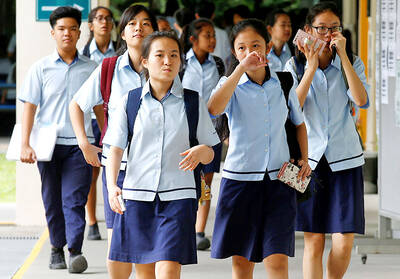
School bullies in Singapore are to face caning under new guidelines, but the education minister on Tuesday said it would be meted out only as a last resort with strict safeguards. Human rights groups regularly criticize Singapore for the use of corporal punishment, which remains part of the school and criminal justice systems, but authorities have defended it as a deterrent to crime and serious misconduct. Caning was discussed in the parliament after legislators asked how it would be used in relation to bullying in schools. The debate followed stricter guidelines on serious student misconduct, including bullying, unveiled by the Singaporean Ministry of
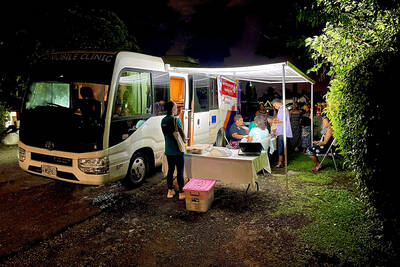
As evening falls in Fiji’s capital, a steady stream of people approaches a makeshift clinic that is a first line of defense against one of the world’s fastest-growing HIV epidemics. In the South Pacific nation — a popular tourist destination of just under a million people — more than 2,000 new HIV cases were recorded last year, a 26 percent increase from 2024. The government has declared an HIV outbreak and described it as a national crisis. “It’s spreading like wildfire,” said Siteri Dinawai, 46, who came to be tested. The Moonlight Clinic, a converted minibus parked in a suburban cul-de-sac in Suva, is
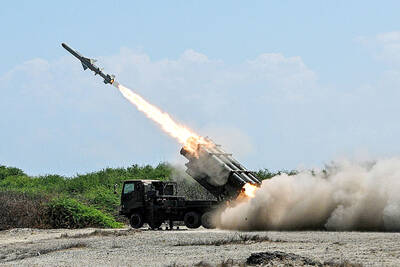
A MESSAGE: Japan’s participation in the Balikatan drills is a clear deterrence signal to China not to attack Taiwan while the US is busy in the Middle East, an analyst said The Japan Self-Defense Forces yesterday fired a Type 88 anti-ship missile during a joint maritime exercise with US, Australian and Philippine forces, hitting a decommissioned Philippine Navy ship in waters facing the disputed South China Sea, in drills that underscore Tokyo’s rising willingness to project military power on China’s doorstep. The drill took place as Manila and Tokyo began talks on a potential defense equipment transfer, made possible by Japan’s decision to scrap restrictions on military exports. The discussions include the possible early transfer of Abukuma-class destroyers and TC-90 aircraft to the Philippines, Japanese Minister of Defense Shinjiro Koizumi said. Philippine Secretary of
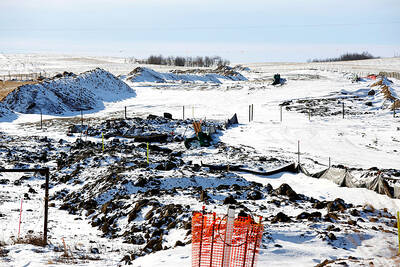
Separatists in Alberta are preparing to submit a petition tomorrow that they said has enough signatures to force a referendum on independence for the oil-rich Canadian province. Polls indicate the pro-independence camp remains a minority among Alberta’s 5 million people, but has hit a historic high of roughly 30 percent. Alberta separatists are also closer than ever to forcing a referendum, riding momentum fueled by intensifying grievances over Ottawa’s control of the provincial oil industry. They have also undeniably gotten a boost from the return to power of US President Donald Trump. After launching a petition in January, Stay Free Alberta, the group


 RSS
RSS