


Sonia Gandhi's rise from small-town, postwar Italy to the whitewashed British Raj bungalows of Delhi is a story of love and death in India's political cauldron, culminating in the most sensational victory since India became independent in 1947.
On Thursday Sonia Gandhi, nee Maino, the daughter of a Tuscan building contractor, was on the brink of becoming India's prime minister after defeating the most potent political force in the country's recent history: Hindu nationalism.
In a dramatic result which will have deep implications for the world's largest democracy, her Congress party swept the ruling Bharatiya Janata party (BJP) from power. Her shock victory was put down to her ability to woo India's millions of rural poor.
It is in the small town of Orbassano, 10km from Italy's busy metropolis of Turin, that her extraordinary political journey begins. It was here in the Tuscan countryside that she was born in 1946, her father, Stephano, doting on his "little princess" and providing his three daughters with a strict Catholic education.
In a small way the Gandhi family, which produced three Indian prime ministers and looks set to have another, has left its mark in rural Italy. The road leading east out of Orbassano is called Via Rajiv Gandhi, after Sonia's late husband and the last member of the world's most successful political dynasty to be Indian prime minister.
Sonia Gandhi is the most improbable of political leaders in modern day India. She became an Indian citizen in 1983, 15 years after she married Rajiv at the age of 21.
The two met at Cambridge, where she was studying English and Rajiv was trying, and ultimately failing, to get an engineering degree. Arriving in India in 1968, the young Mrs Gandhi struggled to cope with the country's deeply ingrained culture. At first, she did not like Indian food or clothes and there was a minor uproar when she was pictured in a miniskirt sucking on a lolly.
As a daughter-in-law in the Gandhi clan, Sonia had a ringside view of history. The sight was bloody and terrible.
Her mother-in-law, Indira Gandhi, was assassinated by her Sikh bodyguards in 1984. Her husband, Rajiv, whom she had implored not to enter politics, was blown up by a Tamil suicide bomber in 1991.
After her husband's death, Sonia Gandhi quietly departed from public life, but she was wooed back by a floundering Congress party in 1997.
Her start in Indian politics was difficult. Despite being a talented linguist who can converse in English, French, Spanish, Italian and Russian, her Hindi could be at best described as colloquial.
The reason for her success appears to be a combination of hard work and her name. Now fluent in Hindi, she can attract the masses and speak to them in a language they understand.
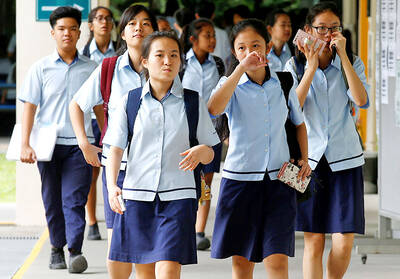
School bullies in Singapore are to face caning under new guidelines, but the education minister on Tuesday said it would be meted out only as a last resort with strict safeguards. Human rights groups regularly criticize Singapore for the use of corporal punishment, which remains part of the school and criminal justice systems, but authorities have defended it as a deterrent to crime and serious misconduct. Caning was discussed in the parliament after legislators asked how it would be used in relation to bullying in schools. The debate followed stricter guidelines on serious student misconduct, including bullying, unveiled by the Singaporean Ministry of
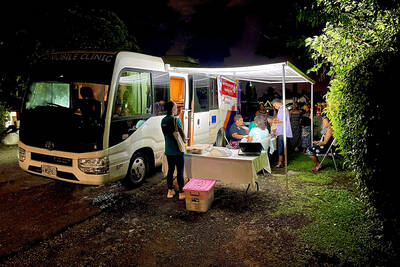
As evening falls in Fiji’s capital, a steady stream of people approaches a makeshift clinic that is a first line of defense against one of the world’s fastest-growing HIV epidemics. In the South Pacific nation — a popular tourist destination of just under a million people — more than 2,000 new HIV cases were recorded last year, a 26 percent increase from 2024. The government has declared an HIV outbreak and described it as a national crisis. “It’s spreading like wildfire,” said Siteri Dinawai, 46, who came to be tested. The Moonlight Clinic, a converted minibus parked in a suburban cul-de-sac in Suva, is
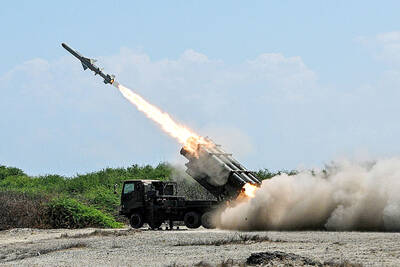
A MESSAGE: Japan’s participation in the Balikatan drills is a clear deterrence signal to China not to attack Taiwan while the US is busy in the Middle East, an analyst said The Japan Self-Defense Forces yesterday fired a Type 88 anti-ship missile during a joint maritime exercise with US, Australian and Philippine forces, hitting a decommissioned Philippine Navy ship in waters facing the disputed South China Sea, in drills that underscore Tokyo’s rising willingness to project military power on China’s doorstep. The drill took place as Manila and Tokyo began talks on a potential defense equipment transfer, made possible by Japan’s decision to scrap restrictions on military exports. The discussions include the possible early transfer of Abukuma-class destroyers and TC-90 aircraft to the Philippines, Japanese Minister of Defense Shinjiro Koizumi said. Philippine Secretary of
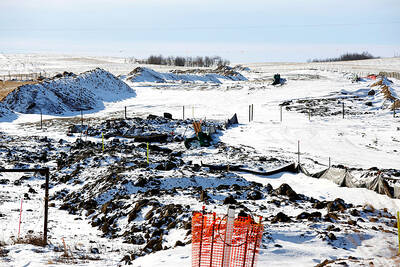
Separatists in Alberta are preparing to submit a petition tomorrow that they said has enough signatures to force a referendum on independence for the oil-rich Canadian province. Polls indicate the pro-independence camp remains a minority among Alberta’s 5 million people, but has hit a historic high of roughly 30 percent. Alberta separatists are also closer than ever to forcing a referendum, riding momentum fueled by intensifying grievances over Ottawa’s control of the provincial oil industry. They have also undeniably gotten a boost from the return to power of US President Donald Trump. After launching a petition in January, Stay Free Alberta, the group


 RSS
RSS