


Iranian authorities will erect a plaque outside the German embassy tomorrow denouncing Germany's contribution to former Iraqi president Saddam Hussein's chemical-weapons arsenal, in the latest tit-for-tat measure in a diplomatic spat between Berlin and Iran's clerical leaders, the official IRNA news agency said.
Tehran's conservative-controlled municipality gave the order on April 27 to put up the plaque, in a direct response to the unveiling the week before of a plaque in Berlin denouncing Iran for the 1992 murders there of four Kurdish dissidents.
"We will put up the plaque to commemorate the chemical-weapons victims in front of the German embassy on Friday," city council head Mehdi Chamran was quoted as saying by IRNA.
The ceremony will be attended by the members of the Tehran City Council, the government and military officials and veterans of the bloody 1980-1988 war against Iraq who were victims of chemical weapons.
Chamran added that the purpose of the plaque was to "support the chemical-weapons victims and to condemn the German government who sold the technology and the weapons of mass destruction to the Baathist regime of Saddam."
"Germany and the other oppressing countries are collectively responsible for these crimes and we want the Germans to ask questions of their government," Chamran added.
He also insisted that, "the German government must apologize to the Iranian nation, especially to the victims of the chemical weapons and their families."
Nearly a month ago, local officials in Berlin's Charlottenburg district unveiled a plaque marking the 1992 attack in the Mykonos restaurant.
It carries the victims' names and the words: "Murdered by the then regime in Iran. They died fighting for freedom and human rights."
A German court concluded in 1997 that the killers of the four Iranian Kurds were acting on Tehran's orders.
The decision prompted the German government to recall its ambassador and the EU to suspend dialogue with the Islamic republic for a year.

School bullies in Singapore are to face caning under new guidelines, but the education minister on Tuesday said it would be meted out only as a last resort with strict safeguards. Human rights groups regularly criticize Singapore for the use of corporal punishment, which remains part of the school and criminal justice systems, but authorities have defended it as a deterrent to crime and serious misconduct. Caning was discussed in the parliament after legislators asked how it would be used in relation to bullying in schools. The debate followed stricter guidelines on serious student misconduct, including bullying, unveiled by the Singaporean Ministry of
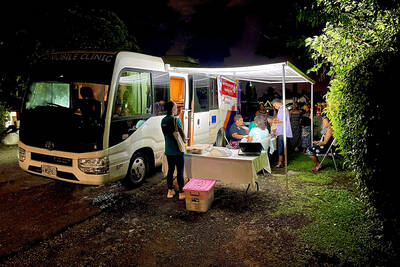
As evening falls in Fiji’s capital, a steady stream of people approaches a makeshift clinic that is a first line of defense against one of the world’s fastest-growing HIV epidemics. In the South Pacific nation — a popular tourist destination of just under a million people — more than 2,000 new HIV cases were recorded last year, a 26 percent increase from 2024. The government has declared an HIV outbreak and described it as a national crisis. “It’s spreading like wildfire,” said Siteri Dinawai, 46, who came to be tested. The Moonlight Clinic, a converted minibus parked in a suburban cul-de-sac in Suva, is
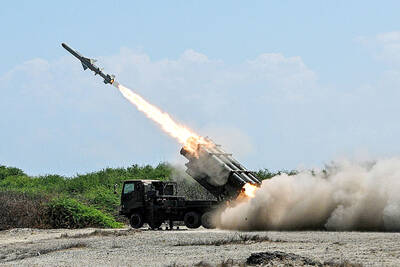
A MESSAGE: Japan’s participation in the Balikatan drills is a clear deterrence signal to China not to attack Taiwan while the US is busy in the Middle East, an analyst said The Japan Self-Defense Forces yesterday fired a Type 88 anti-ship missile during a joint maritime exercise with US, Australian and Philippine forces, hitting a decommissioned Philippine Navy ship in waters facing the disputed South China Sea, in drills that underscore Tokyo’s rising willingness to project military power on China’s doorstep. The drill took place as Manila and Tokyo began talks on a potential defense equipment transfer, made possible by Japan’s decision to scrap restrictions on military exports. The discussions include the possible early transfer of Abukuma-class destroyers and TC-90 aircraft to the Philippines, Japanese Minister of Defense Shinjiro Koizumi said. Philippine Secretary of
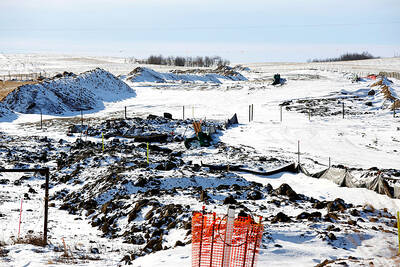
Separatists in Alberta are preparing to submit a petition tomorrow that they said has enough signatures to force a referendum on independence for the oil-rich Canadian province. Polls indicate the pro-independence camp remains a minority among Alberta’s 5 million people, but has hit a historic high of roughly 30 percent. Alberta separatists are also closer than ever to forcing a referendum, riding momentum fueled by intensifying grievances over Ottawa’s control of the provincial oil industry. They have also undeniably gotten a boost from the return to power of US President Donald Trump. After launching a petition in January, Stay Free Alberta, the group


 RSS
RSS