


Prime Minister Tony Blair on Sunday apologized for any abuses committed by British soldiers in Iraq, and said those responsible would be punished.
As the government acknowledged it had known for months about claims that its troops abused Iraqi prisoners, lawmakers called for the publication of an International Committee of the Red Cross report detailing many of the allegations. Human rights group Amnesty International said it told British officials about reports of violence and torture a year ago.
"We apologize deeply to anyone who has been mistreated by any of our soldiers," Blair told French television during a visit to Paris. "That is absolutely and totally unacceptable. Those who are responsible for this, if they have behaved in this appalling way, they will be punished according to the army discipline and rules."
However, he added, "The activities of a few people who have brought shame to their situation should not detract from the work done by the vast majority."
Amnesty says it has been documenting "patterns of torture" by coalition troops in Iraq for more than a year.
The human rights group said Sunday it first warned the government last May that prisoners had been tortured, and at least one killed, in British custody. The group said it had held a series of meetings with Foreign Office and defense ministry officials over the past year.
"They said they would look into it and get back to us," said Amnesty's Middle East spokeswoman, Nicole Choueiry. "Since then, they did not get back to us."
The Ministry of Defense could not confirm when it was first told of the allegations. But a spokeswoman said the ministry had been "investigating cases of alleged abuse since way back into last year."
The ministry is investigating 33 cases in all, she said.
The Red Cross also has said it warned American officials of prisoner abuse in Iraq more than a year ago.
On Saturday, Blair's office said it had been shown the Red Cross report in February. Officials would not discuss its contents.
"I find it intolerable that all we know about this report is what has actually leaked in Washington," former foreign secretary Robin Cook told the BBC.
Cook, who resigned from Blair's Cabinet last year to protest the war in Iraq, said publishing the report was the only way to "see what independent people are saying about the problem and how severe it is."
Cook's call for publication was supported by Conservative Party co-chairman Liam Fox and Liberal Democrat foreign affairs spokesman Sir Menzies Campbell.
"Only total transparency and swift investigation will provide answers," Campbell said. "It is not only the integrity of the army which is at stake but the safety of those serving in Iraq."
The Ministry of Defense said Defense Secretary Geoff Hoon would make a statement to the House of Commons yesterday about the allegations of abuse. However, a spokeswoman said the government was unlikely to publish the confidential Red Cross report.
On Friday the Wall Street Journal published details from the report describing beatings and humiliation of prisoners at Baghdad's Abu Ghraib prison and in the British-controlled southern city of Basra.
Roland Huguenin-Benjamin, a spokesman for the Red Cross, said Sunday that the organization identified concerns with every prison camp in Iraq.
"The concern we have been expressing for a year now deals with a general pattern of mistreatment of detainees," he told Sky Television. "What we are tackling in our reports is the overall treatment of prisoners in general in camps under coalition forces in Iraq.
"We were warning of the fact that the treatment given to prisoners and in particular the way they were prepared for interrogation is not acceptable from the point of view of the Geneva Convention."

School bullies in Singapore are to face caning under new guidelines, but the education minister on Tuesday said it would be meted out only as a last resort with strict safeguards. Human rights groups regularly criticize Singapore for the use of corporal punishment, which remains part of the school and criminal justice systems, but authorities have defended it as a deterrent to crime and serious misconduct. Caning was discussed in the parliament after legislators asked how it would be used in relation to bullying in schools. The debate followed stricter guidelines on serious student misconduct, including bullying, unveiled by the Singaporean Ministry of
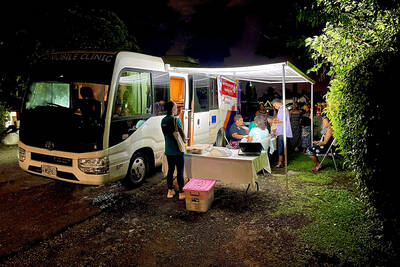
As evening falls in Fiji’s capital, a steady stream of people approaches a makeshift clinic that is a first line of defense against one of the world’s fastest-growing HIV epidemics. In the South Pacific nation — a popular tourist destination of just under a million people — more than 2,000 new HIV cases were recorded last year, a 26 percent increase from 2024. The government has declared an HIV outbreak and described it as a national crisis. “It’s spreading like wildfire,” said Siteri Dinawai, 46, who came to be tested. The Moonlight Clinic, a converted minibus parked in a suburban cul-de-sac in Suva, is
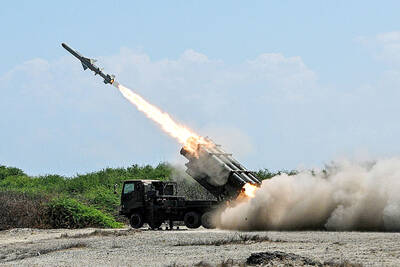
A MESSAGE: Japan’s participation in the Balikatan drills is a clear deterrence signal to China not to attack Taiwan while the US is busy in the Middle East, an analyst said The Japan Self-Defense Forces yesterday fired a Type 88 anti-ship missile during a joint maritime exercise with US, Australian and Philippine forces, hitting a decommissioned Philippine Navy ship in waters facing the disputed South China Sea, in drills that underscore Tokyo’s rising willingness to project military power on China’s doorstep. The drill took place as Manila and Tokyo began talks on a potential defense equipment transfer, made possible by Japan’s decision to scrap restrictions on military exports. The discussions include the possible early transfer of Abukuma-class destroyers and TC-90 aircraft to the Philippines, Japanese Minister of Defense Shinjiro Koizumi said. Philippine Secretary of
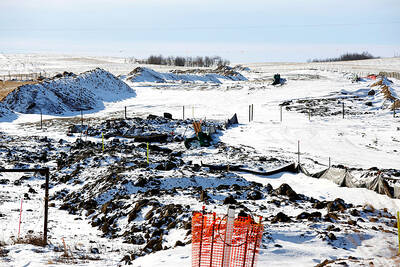
Separatists in Alberta are preparing to submit a petition tomorrow that they said has enough signatures to force a referendum on independence for the oil-rich Canadian province. Polls indicate the pro-independence camp remains a minority among Alberta’s 5 million people, but has hit a historic high of roughly 30 percent. Alberta separatists are also closer than ever to forcing a referendum, riding momentum fueled by intensifying grievances over Ottawa’s control of the provincial oil industry. They have also undeniably gotten a boost from the return to power of US President Donald Trump. After launching a petition in January, Stay Free Alberta, the group


 RSS
RSS