


Lawmakers in a mostly Muslim Nigerian state have approved legislation calling for Muslims to be whipped and Christians to be jailed if they are caught drinking alcohol, officials said Saturday, raising fears of renewed violence after sectarian fighting left 500 dead elsewhere in the country in recent days.
The bill, which was passed on Thursday, must be signed by the governor of northern Kano state before becoming law.
Lawmakers called for Muslims to be whipped with "80 strokes of the cane" if caught drinking alcohol, the speaker of Kano's legislature, Saidu Balarabe Gani, said in broadcasts on local radio stations.
The penalty for Christians would be a fine of 50,000 naira (US$380), a one-year jail term or both, Gani said.
Most of Kano's 8 million people are Muslim.
Several other northern states have officially banned alcohol and instituted punishments for Muslims, but they are rarely enforced. Christian civilians are permitted to drink in establishments on federal military and police installations.
Muslim clerics earlier expressed anger over what a Red Cross official said were the killings of 500 to 600 people in attacks on May 2 and May 4 by Christian militants on the Muslim town of Yelwa in the majority-Christian central state of Plateau.
Christian church leaders have distanced themselves from the killings, blaming them on rogue criminal elements.
On the streets of Kano, the state's main city, groups of men -- both Muslim and Christian -- huddled around radios and debated the proposed anti-drinking law.
Some non-Muslims reacted with alarm.
"This is an attempt to cause bloodshed," shouted Adams Yakubu, who said he was Christian. If authorities try to enforce the alcohol ban on Christians and animists, "only God knows what will follow," he warned.
"Some of these people are just looking for ways of repeating what is happening" in violence-torn Plateau state where hundreds, possibly thousands, have been killed in fighting between Muslim and Christian groups since January, said another man, Samson Ibrahim.
More than 10,000 people have been killed in intertwined ethnic, religious and political violence in Nigeria since President Olusegun Obasanjo was first elected in 1999, ending 15 years of repressive military rule.
Much of the violence has occurred between rival Christian and Muslim factions in Kano and other cities after a dozen northern states began implementing Islamic Sharia law in late 1999.
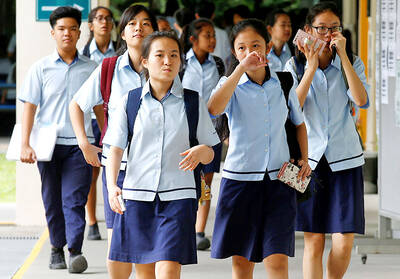
School bullies in Singapore are to face caning under new guidelines, but the education minister on Tuesday said it would be meted out only as a last resort with strict safeguards. Human rights groups regularly criticize Singapore for the use of corporal punishment, which remains part of the school and criminal justice systems, but authorities have defended it as a deterrent to crime and serious misconduct. Caning was discussed in the parliament after legislators asked how it would be used in relation to bullying in schools. The debate followed stricter guidelines on serious student misconduct, including bullying, unveiled by the Singaporean Ministry of
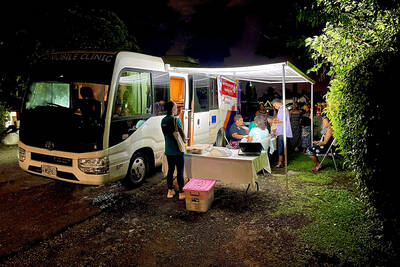
As evening falls in Fiji’s capital, a steady stream of people approaches a makeshift clinic that is a first line of defense against one of the world’s fastest-growing HIV epidemics. In the South Pacific nation — a popular tourist destination of just under a million people — more than 2,000 new HIV cases were recorded last year, a 26 percent increase from 2024. The government has declared an HIV outbreak and described it as a national crisis. “It’s spreading like wildfire,” said Siteri Dinawai, 46, who came to be tested. The Moonlight Clinic, a converted minibus parked in a suburban cul-de-sac in Suva, is
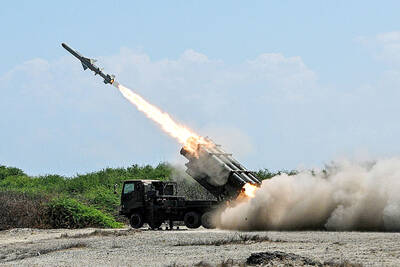
A MESSAGE: Japan’s participation in the Balikatan drills is a clear deterrence signal to China not to attack Taiwan while the US is busy in the Middle East, an analyst said The Japan Self-Defense Forces yesterday fired a Type 88 anti-ship missile during a joint maritime exercise with US, Australian and Philippine forces, hitting a decommissioned Philippine Navy ship in waters facing the disputed South China Sea, in drills that underscore Tokyo’s rising willingness to project military power on China’s doorstep. The drill took place as Manila and Tokyo began talks on a potential defense equipment transfer, made possible by Japan’s decision to scrap restrictions on military exports. The discussions include the possible early transfer of Abukuma-class destroyers and TC-90 aircraft to the Philippines, Japanese Minister of Defense Shinjiro Koizumi said. Philippine Secretary of
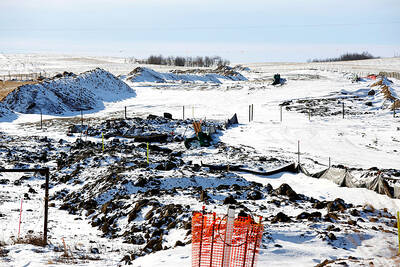
Separatists in Alberta are preparing to submit a petition tomorrow that they said has enough signatures to force a referendum on independence for the oil-rich Canadian province. Polls indicate the pro-independence camp remains a minority among Alberta’s 5 million people, but has hit a historic high of roughly 30 percent. Alberta separatists are also closer than ever to forcing a referendum, riding momentum fueled by intensifying grievances over Ottawa’s control of the provincial oil industry. They have also undeniably gotten a boost from the return to power of US President Donald Trump. After launching a petition in January, Stay Free Alberta, the group


 RSS
RSS