


Under extraordinary secrecy -- even paper was banned for fear documents could be leaked -- Arab foreign ministers tried Saturday to find common ground on Israel, Iraq and US-proposed political reforms in an effort to resurrect a summit of their leaders.
But opening at least part of the discussions to the public, Jordan's foreign minister held a news conference to urge Arab nations to do more on advancing the peace process with Israel, telling them not to wait for Israeli concessions before drafting some of their own.
The summit of the 22-member Arab League, scheduled to be held in Tunisia in March, was postponed at the last minute because of disagreements among ministers on Israel and the political reforms.
In an effort to present a unified Arab voice to the world, organizers imposed unusual secrecy on the ministers' gathering.
Visual aids were projected onto a screen, not handed out on paper, to avoid copies from making their way into public hands. Ministers held most of their meetings without aides to reduce the possibility of leaks to the news media.
Ministers did not speak to reporters as they entered the meeting, and no news conferences were scheduled.
An Arab league spokesman said the secrecy was "out of respect for the Arab leaders" so their summit doesn't get upstaged by their own ministers.
But some details of the meeting emerged.
Delegates, speaking only on condition of anonymity, said a new date for the summit and US-proposed reforms in the Arab world were not discussed Saturday.
Delegates spent much time debating a letter from US President George W. Bush to Jordan's King Abdullah II, they said.
In the letter, Bush did not give guarantees for Israeli-Palestinian negotiations that Arabs had sought, but he appeared to back away from assurances he gave to Israeli Prime Minister Ariel Sharon last month.
Some delegates had said the letter didn't go far enough, according to people who attended the meeting, but Jordanian Foreign Minister Marwan Muasher indicated the consensus was that the letter had done more good than harm.
He also urged Arab nations to do more to advance the peace process.
"Since the United States is saying in a written letter that the issues of final status are the responsibility of the two parties alone, let's build on this stance, benefit from it, and use it to move the peace process," he said.
Arabs have asked for guarantees from the US on two issues: that an eventual Palestinian state would encompass the West Bank and that Palestinian refugees who fled in 1948 from land that now lies in Israel be allowed to return.
In the letter, Bush said those are issues to be discussed in final negotiations between Israel and the Palestinians. Last month, he angered Arab nations by telling Sharon he supports Israel's retention of some West Bank settlements and opposes resettlement of the refugees.
Bush appeared to be backing off the assurances to Sharon in an effort to reach out to the Arab world in the wake of the prisoner-abuse scandal in Iraq.
Muasher appealed for initiative on the Arab side.
"In the end, the one that is going to move the peace process is the Arab side," he said.
Since the Tunisia meeting collapsed in March, the situation in the Middle East has become even more complicated, with Bush's letter of guarantees to Sharon, an upsurge in violence in Iraq, a scandal over abuse of Iraqi prisoners by US troops, an Israeli assassination of a Hamas leader and terrorist attacks in Saudi Arabia.
The ministers also discussed a Yemeni initiative that calls for US-led forces in Iraq to be replaced by a multinational force under UN oversight. It does not commit Arab troops to Iraq.
Arab League official Hisham Youssef indicated delegates weren't ruling out committing Arab forces to Iraq, but that they would need to clarify command structures before that could happen.
The initiative also seeks an Iraqi meeting, held under UN and Arab League auspices, on writing an Iraqi constitution and laying out the framework of a new Iraqi government. UN officials have proposed a similar idea. Delegates said the Iraqi delegation was not willing to discuss the new ideas.
The Yemeni initiative repeats Arab calls for a UN Security Council resolution to commit Israel to end violence, but it also seeks a Palestinian commitment to "end all forms of armed resistance" -- which would be a dramatic change for Arab nations.

School bullies in Singapore are to face caning under new guidelines, but the education minister on Tuesday said it would be meted out only as a last resort with strict safeguards. Human rights groups regularly criticize Singapore for the use of corporal punishment, which remains part of the school and criminal justice systems, but authorities have defended it as a deterrent to crime and serious misconduct. Caning was discussed in the parliament after legislators asked how it would be used in relation to bullying in schools. The debate followed stricter guidelines on serious student misconduct, including bullying, unveiled by the Singaporean Ministry of

As evening falls in Fiji’s capital, a steady stream of people approaches a makeshift clinic that is a first line of defense against one of the world’s fastest-growing HIV epidemics. In the South Pacific nation — a popular tourist destination of just under a million people — more than 2,000 new HIV cases were recorded last year, a 26 percent increase from 2024. The government has declared an HIV outbreak and described it as a national crisis. “It’s spreading like wildfire,” said Siteri Dinawai, 46, who came to be tested. The Moonlight Clinic, a converted minibus parked in a suburban cul-de-sac in Suva, is
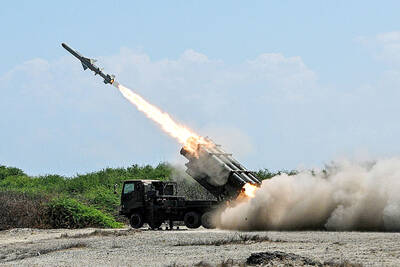
A MESSAGE: Japan’s participation in the Balikatan drills is a clear deterrence signal to China not to attack Taiwan while the US is busy in the Middle East, an analyst said The Japan Self-Defense Forces yesterday fired a Type 88 anti-ship missile during a joint maritime exercise with US, Australian and Philippine forces, hitting a decommissioned Philippine Navy ship in waters facing the disputed South China Sea, in drills that underscore Tokyo’s rising willingness to project military power on China’s doorstep. The drill took place as Manila and Tokyo began talks on a potential defense equipment transfer, made possible by Japan’s decision to scrap restrictions on military exports. The discussions include the possible early transfer of Abukuma-class destroyers and TC-90 aircraft to the Philippines, Japanese Minister of Defense Shinjiro Koizumi said. Philippine Secretary of
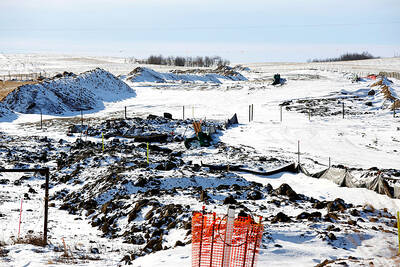
Separatists in Alberta are preparing to submit a petition tomorrow that they said has enough signatures to force a referendum on independence for the oil-rich Canadian province. Polls indicate the pro-independence camp remains a minority among Alberta’s 5 million people, but has hit a historic high of roughly 30 percent. Alberta separatists are also closer than ever to forcing a referendum, riding momentum fueled by intensifying grievances over Ottawa’s control of the provincial oil industry. They have also undeniably gotten a boost from the return to power of US President Donald Trump. After launching a petition in January, Stay Free Alberta, the group


 RSS
RSS