


Indian Prime Minister Atal Bihari Vajpayee warned of political instability unless voters return his ruling alliance to power with a parliamentary majority as he wrapped up campaigning ahead of the final round of national elections.
In the last few days on the campaign trail, Vajpayee appeared worried that his National Democratic Alliance (NDA) could lose its majority and be forced into horse-trading with smaller parties to form a government.
"The decision you have to make is whether we need a stable, strong, lasting and performing government, or instability," Vajpayee said at his last election rally in the northern city of Ludhiana, in Punjab.
Although the NDA was far ahead of the main opposition Congress party and its allies, most pollsters have predicted from the previous four rounds of voting that the 11-party coalition will not win the 272 seats required for an outright majority.
In order to form a government, the NDA would then need to rope in new partners from smaller groups. That raises the risk of an unstable government, which may not last the full five-year term or be able to implement its policies.
Today, 16 states vote for 182 of parliament's 543 elected seats.
After dismissing the exit polls conducted by private TV stations, Vajpayee spent the last weekend of the campaign warning of political chaos and instability if voters don't give his Bharatiya Janata Party (BJP) and its allies a strong mandate.
He said the economy and the country's development will suffer in the absence of a stable government.
"If the NDA does not get a majority, the country will slip into political anarchy," the Press Trust of India news agency quoted him as saying on Friday. The opposition "will not be able to run the government ... There will be a prime minister every six months," he said.
Vote counting begins Thursday and the results are expected more quickly than in previous polls because a million electronic voting machines have been installed around the country, absolving the need for manual counting.
There are 670 million people eligible to vote, and the turnout has averaged above 55 percent.
The main opposition Congress party remained upbeat, with pollsters predicting a big improvement in its seat tally in the last phase of voting.
"We have to start a new era, make a new history," the party's Italian-born leader, Sonia Gandhi, told a crowd of 10,000 at a rally in the Indian capital, New Delhi, on Saturday. "Bring victory to Congress, defeat BJP, save the nation," she said.
A survey by the Indian Express-New Delhi Television (NDTV) network, published Saturday, said Vajpayee's NDA was expected to win 240-260 seats. Congress and its allies were expected to collect 190-210 seats, with the remaining 90-110 seats going to smaller groups and independents, the survey indicated.
The Indian Express-NDTV survey assumed a 3 percent margin of error.

PHISHING: The con might appear convincing, as the scam e-mails can coincide with genuine messages from Apple saying you have run out of storage For a while you have been getting messages from Apple saying “your iCloud storage is full.” They say you have exceeded your storage plan, so documents are no longer being backed up, and photos you take are not being uploaded. You have been resisting Apple’s efforts to get you to pay a minimum of £0.99 (US$1.33) a month for more storage, but it seems that you cannot keep putting off the inevitable: You have received an e-mail which says your iCloud account has been blocked, and your photos and videos would be deleted very soon. To keep them you need
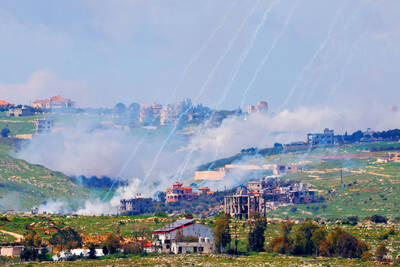
The Israeli military has demolished entire villages as part of its invasion of south Lebanon, rigging homes with explosives and razing them to the ground in massive remote detonations. The Guardian reviewed three videos posted by the Israeli military and on social media, which showed Israel carrying out mass detonations in the villages of Taybeh, Naqoura and Deir Seryan along the Israel-Lebanon border. Lebanese media has reported more mass detonations in other border villages, but satellite imagery was not readily available to verify these claims. The demolitions came after Israeli Minister of Defense Israel Katz called for the destruction of

A US YouTuber who caused outrage for filming himself kissing a statue commemorating Korean wartime sex slaves has been sentenced to six months in prison, a court in Seoul said yesterday. Johnny Somali, 25, gained notoriety several years ago for recording himself doing a series of provocative stunts in South Korea and Japan, and streaming them on platforms such as YouTube and Twitch. South Korean authorities indicted Somali — whose real name is Ramsey Khalid Ismael — in 2024 on public order violations and obstruction of business, and banned him from leaving the country. “The court has sentenced him to six months in
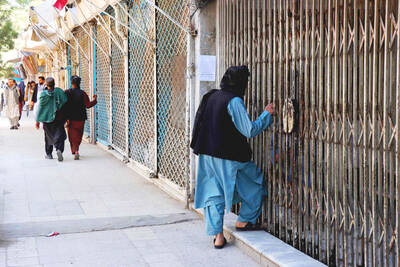
The death toll from a shooting in western Afghanistan rose to 11 on Saturday, after gunmen targeted civilians at a picnic spot in Herat, the provincial authority said. Bullet marks were visible on a wall of the Sayed Mohammad Agha Shia shrine, while bloodstains marked a blanket abandoned at the scene. “Eleven people have been recorded dead and eight others wounded from Friday’s incident, with the condition of two of the wounded reported as critical,” Herat’s information office said in a statement. The update raises a toll of seven killed provided on Friday by the Afghan Ministry of Interior Affairs


 RSS
RSS