


Chinese Prime Minister Wen Jiabao (
"I think the European Union is looking at this question very positively and many members of the European Union have also adopted a positive attitude on this question," Wen told reporters in Brussels, when asked about his hope for an end to the embargo.
"That is why I have great confidence that there will be a solution to this problem," he said, speaking after meeting Belgian Prime Minister Guy Verhofstadt.
Wen, in Belgium as part of an 11-day European tour, also met EU foreign affairs chief Javier Solana and was due to face tough trade questions at EU headquarters yesterday.
The embargo was imposed after the 1989 Tiananmen Square crackdown, and EU foreign ministers recently told the Chinese no change was likely before the middle of this year.
Verhofstadt said Belgium and other EU states favored lifting the ban, if progress on rights was made.
Wen said his country was preparing to take a step in this direction by ratifying the International Convenant on Civil and Political Rights, which it signed in 1998.
Diplomats have said Washington has put pressure on the EU to the keep the ban, accusing the Beijing government of backsliding on human rights and saying that selling arms to China could upset the strategic balance in East Asia.
With China now the EU's second-largest trading partner, Wen's meeting yesterday with European Commission President Romano Prodi will include many thorny issues.
"Things are booming, [trade] frictions are around and some will be on the agenda tomorrow, but I wouldn't overplay that," one EU official said.
The commission will discuss China's yuan, which many in European industry believe is artificially undervalued, and how to get China to ease export limits on coke.
Coke is used in steelmaking and tight supply is one reason steel prices have risen, squeezing sectors such as car makers.
The EU is also worried that China has introduced new requirements on European construction companies to qualify to take part in massive building works for the 2008 Olympic Games.
These included getting licenses and being part of a Chinese system where they have to prove their experience to qualify for big contracts over several years, even if they are multinational corporations with decades of work behind them.
Four EU-China agreements were also to be signed yesterday, including one on customs cooperation to fight counterfeiting.
Also See Story:
Europeans, Wen stick to business on Brussels visit

An American scientist convicted of lying to US authorities about payments from China while he was at Harvard University has rebuilt his research lab in Shenzhen, China, to pursue technology the Chinese government has identified as a national priority: embedding electronics into the human brain. Charles Lieber, 67, is among the world’s leading researchers in brain-computer interfaces. The technology has shown promise in treating conditions such as amyotrophic lateral sclerosis and restoring movement in paralyzed people. It also has potential military applications: Scientists at the Chinese People’s Liberation Army have investigated brain interfaces as a way to engineer super soldiers by boosting
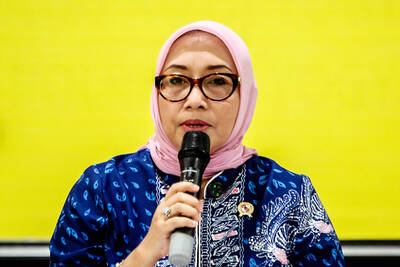
Indonesian police have arrested 13 people after shocking images of alleged abuse against small children at a daycare center went viral, sparking outrage across the nation, officials said on Monday. Police on Friday last week raided Little Aresha, a daycare center in Yogyakarta on Java island, following a report from a former employee. CCTV footage circulating on social media showed children, most younger than two, lying on the floor wearing only diapers, their hands and feet bound with rags. The police have confirmed that the footage is authentic. Police said they also found 20 children crammed into a room just 3m by 3m. “So

About 240 Indians claiming descent from a Biblical tribe landed at Tel Aviv airport on Thursday as part of a government operation to relocate them to Israel. The newcomers passed under a balloon arch in blue and white, the colors of the Israeli flag, as dozens of well-wishers welcomed them with a traditional Jewish song. They were the first “bnei Menashe” (“sons of Manasseh”) to arrive in Israel since the government in November last year announced funding for the immigration of about 6,000 members of the community from the states of Manipur and Mizoram in northeast India. The community claims to descend from
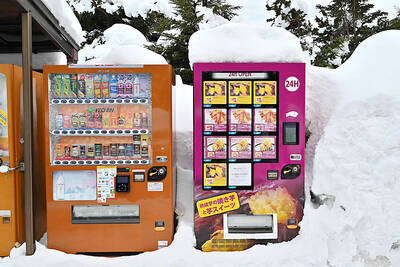
From post offices and parks to stations and even the summit of Mount Fuji, Japan’s vending machines are ubiquitous, but with the rapid pace of inflation cooling demand for their drinks, operators are being forced to rethink the business. Last month beverage giant DyDo Group Holdings announced it would remove about 20,000 vending machines — about 7 percent of their stock nationwide — by January next year, to “reconstruct a profitable network.” Pokka Sapporo Food & Beverage, based in Nagoya, also said last month it would sell its 40,000-machine operation to Osaka-based Lifedrink Co. “The strength of the vending machine


 RSS
RSS