


The Constitutional Court began its review yesterday of South Korea's first-ever presidential impeachment, starting what could be months of deliberations on whether to unseat the suspended president, Roh Moo-hyun.
The court decided to ask for Roh's testimony at its next meeting on March 30, when the prosecution and defense attorneys will lay out their cases, court spokesman Yang Chul-soo said. Roh does not have to appear in person at the public hearing, but must be represented, Yang said.
The opposition-controlled National Assembly needs at least six of the nine judges to rule in favor of its vote last Friday to impeach Roh. The justices have 180 days to decide.
The justices -- two seated under Roh's government and seven under Roh's predecessor, Kim Dae-jung -- have not commented on the case. Legal experts are divided over the impeachment's constitutionality.
The bench includes three justices selected by the parliament, three by the chief justice and three by former President Kim. Roh was a member of Kim's Cabinet and his Millennium Democratic Party (MDP), before quitting last autumn amid infighting. The MDP was one of the opposition parties that led the impeachment.
Kim Ki-choon, the chief prosecutor in the case, has said the hearing could take several months.
The opposition Grand National Party lawmaker and chairman of the National Assembly's Legislation and Judiciary Committee is leading a team of lawyers arguing that parliament's decision was legal.
Roh has appointed a former adviser on civil affairs, Moon Jae-in, to assemble his defense team.
Late on Wednesday, Moon submitted a 10-page report to the court outlining his team's arguments and calling the case "a historic precedent."
Details of the report were not available.
Parliament voted to impeach Roh for alleged election law violations, corruption scandals and economic incompetence.
The Constitutional Court must now decide if those reasons were sufficient to impeach the president.
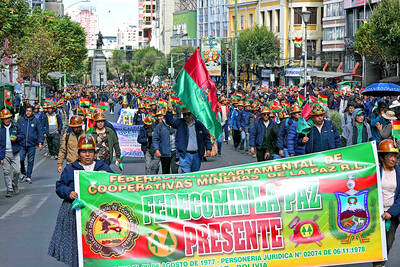
The Bolivian government on Friday struck a deal with protesting miners, but was still grappling with blockades and demonstrations by other workers across La Paz. Other groups are still blocking access roads into the city, which is also the seat of the government. Police on Thursday prevented the miners from entering the main square by using tear gas, while the demonstrators hurled stones and explosives with slingshots. Protests against the policies of Bolivian President Rodrigo Paz have convulsed the Andean nation since early this month, and roadblocks were choking routes into La Paz throughout Friday, the national road authority said. Miners demanded that Paz
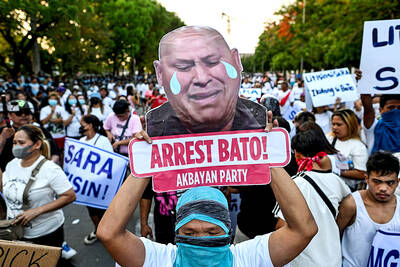
The Philippines said it has asked the country’s Supreme Court to allow it to arrest former Philippine president Rodrigo Duterte’s chief drug war enforcer to stand trial in an international tribunal. The International Criminal Court (ICC) last week unsealed an arrest warrant against Philippine Senator Ronald dela Rosa, accusing him along with Duterte and other “coperpetrators” of the “crime against humanity of murder.” Dela Rosa briefly sought refuge in the Philippine Senate last week while asking the Philippine Supreme Court to stop an ongoing attempt by government agents to arrest him. “By his own conduct, he has placed himself outside the protection of

A ship anchored off the United Arab Emirates (UAE) was seized and taken toward Iran and another — a cargo ship near Oman — sank after being attacked, authorities said on Thursday, as tensions escalated near the Strait of Hormuz. It was not immediately clear who was behind these incidents, but they happened as a senior Iranian official reiterated his country’s claim of control over the waterway and another said it had a right to seize oil tankers connected to the US. The turmoil in the strait has been a sticking point for weeks in talks between the US and Iran to
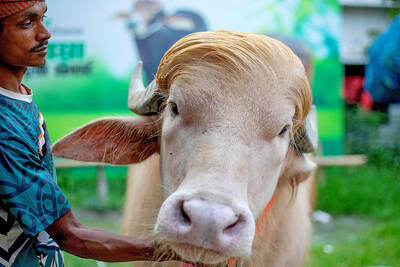
Crowds in Bangladesh are flocking to snap photographs with an unlikely social media star — an albino buffalo with flowing blond hair nicknamed “Donald Trump” that is due to be sacrificed within days. Owner Zia Uddin Mridha, 38, said his brother named the 700kg bull over its flowing helmet of hair resembling the signature look of the US president. “My younger brother picked this name because of the buffalo’s extraordinary hair,” he said at his farm in Narayanganj, just outside the capital, Dhaka. Mridha said that a constant stream of curious visitors — social media fans, onlookers and children — have come throughout


 RSS
RSS