


Nearly 10,000 rail workers fanned out across France's railway network on Wednesday searching for bombs after a previously unknown group threatened attacks unless it is paid millions of dollars.
Information from the group led to the recovery on Feb. 21 of an explosive device buried in the bed of a railway line near Limoges in central France, the government said.
Experts examined and tested the bomb, which was powerful enough to break a track, the government said.
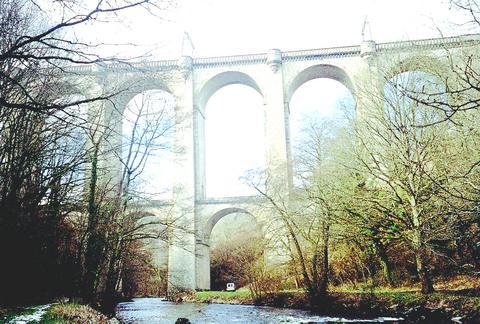
PHOTO: AFP
The explosive device was made from an explosive mixture of diesel fuel and nitrates and had a sophisticated detonator, said judicial officials speaking on condition of anonymity.
The group identifies itself with the initials AZF and "presents itself as a `pressure group with terrorist characteristics,'" the Interior Ministry said
AZF are the initials of a chemical factory that exploded, killing 30 people, in southwestern France in 2001. Investigators believe that explosion was accidental.
"We know nothing of this group but we are taking the threat seriously," said Interior Minister Nicolas Sarkozy.
Investigators have communicated with the group via a special phone line and newspaper classified ads, officials said.
After a contact on Monday failed, investigators ran an ad in the newspaper Liberation on Wednesday that read, "My big wolf, didn't see your blue scarf. Give me a sign. Suzy."
Anxious that more bombs might be hidden, the national SNCF rail company sent out nearly 10,000 maintenance workers to inspect its 32,000km of track, on foot.
They were looking for such signs as whether track ballast had been moved.
"It's a heck of a job," said SNCF spokesman Francois Remy. The inspection, starting with major lines that carry passengers and dangerous goods, should be completed by midday Thursday, he said.
The terror group "speaks of 10 bombs," he said. "We're inspecting the tracks to see if there are others still there."
The government had earlier urged French and international media not to report the blackmail effort to protect efforts to establish contacts with the group.
But the Interior Ministry released details Wednesday after the story leaked.
The group "sent several letters demanding an important sum of money in exchange for neutralizing several bombs it says it has laid, notably under rail lines," a ministry statement said.
Police said the group demanded US$4 million and 1 million euros. Police do not believe the group is connected to Islamic terrorism.
President Jacques Chirac's office and the Interior Ministry received at least three letters, on Dec. 10, and Feb. 13 and 17, that threatened nine railway targets, officials said.
Security on the network was heightened, but services were normal.
"If I felt that security wasn't assured, we wouldn't run trains," said SNCF chairman Louis Gallois.
Still, the train station in Grenoble, at the foot of the French Alps and busy with ski commuters at this time of year, was evacuated for over an hour Wednesday after authorities received a threat from a person identifying himself as a member of AZF, police said.
No bomb was found.
Two magistrates, including renowned anti-terror investigator Jean-Louis Bruguiere, are investigating.
Bruguiere is France's foremost anti-terror magistrate; his previous successes include tracking down infamous terrorist Carlos the Jackal.

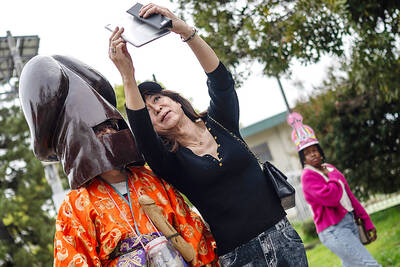
Showcasing phallus-shaped portable shrines and pink penis candies, Japan’s annual fertility festival yesterday teemed with tourists, couples and families elated by its open display of sex. The spring Kanamara Matsuri near Tokyo features colorfully dressed worshipers carrying a trio of giant phallic-shaped objects as they parade through the street with glee. The festival, as legend has it, honors a local blacksmith in the Edo Period (1603-1868) who forged an iron dildo to break the teeth of a sharp-toothed demon inhabiting a woman’s vagina that had been castrating young men on their wedding nights. A 1m black steel phallus sits in the courtyard of

JAN. 1 CLAUSE: As military service is voluntary, applications for permission to stay abroad for over three months for men up to age 45 must, in principle, be granted A little-noticed clause in sweeping changes to Germany’s military service policy has triggered an uproar after it emerged that the law requires men aged up to 45 to get permission from the armed forces before any significant stay abroad, even in peacetime. The legislation, which went into effect on Jan. 1 aims to bolster the military and demands all 18-year-old men fill out a questionnaire to gauge their suitability to serve in the armed forces, but stops short of conscription. If the “modernized” model fails to pull in enough recruits, parliament will be compelled to discuss the reintroduction of compulsory service, German
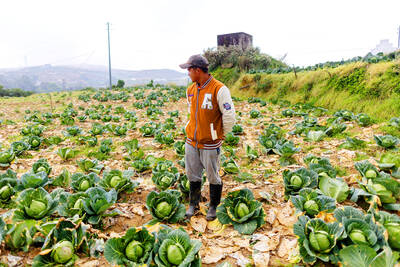
Filipino farmers like Romeo Wagayan have been left with little choice but to let their vegetables rot in the field rather than sell them at a loss, as rising oil prices linked to the Iran war drive up the cost of harvesting, labor and transport. “There’s nothing we can do,” said Wagayan, a 57-year old vegetable farmer in the northern Philippine province of Benguet. “If we harvest it, our losses only increase because of labor, transportation and packing costs. We don’t earn anything from it. That’s why we decided not to harvest at all,” he said. Soaring costs caused by the Middle East

For two decades, researchers observed members of the Ngogo chimpanzee group of Kibale National Park in Uganda spend their days eating fruits and leaves, resting, traveling and grooming in their tropical rainforest abode, but this stable community then fractured and descended into years of deadly violence. The researchers are now describing the first clearly documented example of a group of wild chimpanzees splitting into two separate factions, with one launching a series of coordinated attacks against the other. Adult males and infants were targeted, with 28 deaths. “Biting, pounding the victim with their hands, dragging them, kicking them — mostly adult males,


 RSS
RSS