


An Israeli lawmaker who met the son of Muammar Qaddafi five months ago said on Wednesday the Libyan leader could go so far as to forge ties with the Jewish state that has long considered him a foe.
But a senior Israeli Foreign Ministry source said "the road to establishing relations between Israel and Libya is a long one" and Qaddafi "must prove by action that he truly intends to conduct dialogue."
Israeli Prime Minister Ariel Sharon was also sceptical about any meetings with Libyan officials, including secret talks which political sources said took place two weeks ago between a senior Israeli Foreign Ministry official and a Libyan representative.
Libya dismissed a report of the meeting in December as a baseless rumor.
Word of a diplomatic initiative emerged after Libya issued a surprise announcement last month that it was abandoning its unconventional weapons, an action welcomed by the US as a key step toward ending Libya's international isolation.
Ephraim Sneh of the opposition Labor party said that he and a member of Shinui, a centrist party in Israel's governing coalition, in August met Saif al-Islam Qaddafi, whom analysts believe is being groomed as his father's successor.
"My impression is that Qaddafi has made a strategic decision and he is not a man who takes small steps," Sneh told Israel Radio. "He will not stop midway and could even go as far as forging ties with Israel ... Right now it is in Qaddafi's hands."
Any breakthrough would be a major turnabout in relations between the two countries.
Libya has long been a sworn foe of Israel and for years sheltered anti-Israel militants, including Palestinian guerrilla chief Abu Nidal, who died of gunshot wounds in Baghdad last year.
In 1973, Israel shot down a Libyan airliner with more than 100 people aboard after it strayed over its airspace.
At a non-aligned summit in Belgrade in 1989, Qaddafi suggested that Jews should move to a new homeland in either the French region of Alsace-Lorraine, Alaska or the Baltic states.
Political sources confirmed a television report that senior Israeli Foreign Ministry official Ron Prosor met a Libyan representative two weeks ago to discuss opening a dialogue.
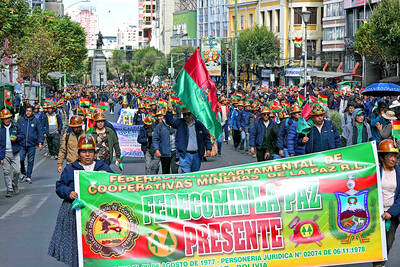
The Bolivian government on Friday struck a deal with protesting miners, but was still grappling with blockades and demonstrations by other workers across La Paz. Other groups are still blocking access roads into the city, which is also the seat of the government. Police on Thursday prevented the miners from entering the main square by using tear gas, while the demonstrators hurled stones and explosives with slingshots. Protests against the policies of Bolivian President Rodrigo Paz have convulsed the Andean nation since early this month, and roadblocks were choking routes into La Paz throughout Friday, the national road authority said. Miners demanded that Paz
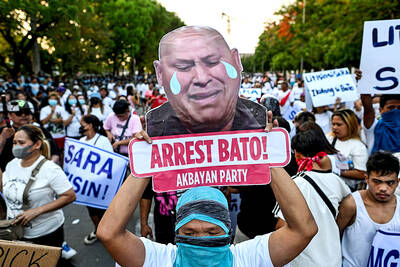
The Philippines said it has asked the country’s Supreme Court to allow it to arrest former Philippine president Rodrigo Duterte’s chief drug war enforcer to stand trial in an international tribunal. The International Criminal Court (ICC) last week unsealed an arrest warrant against Philippine Senator Ronald dela Rosa, accusing him along with Duterte and other “coperpetrators” of the “crime against humanity of murder.” Dela Rosa briefly sought refuge in the Philippine Senate last week while asking the Philippine Supreme Court to stop an ongoing attempt by government agents to arrest him. “By his own conduct, he has placed himself outside the protection of
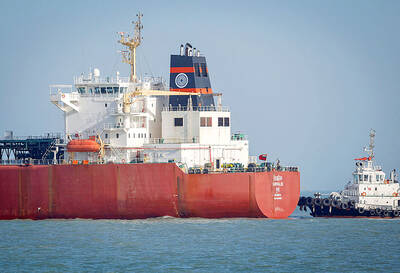
A ship anchored off the United Arab Emirates (UAE) was seized and taken toward Iran and another — a cargo ship near Oman — sank after being attacked, authorities said on Thursday, as tensions escalated near the Strait of Hormuz. It was not immediately clear who was behind these incidents, but they happened as a senior Iranian official reiterated his country’s claim of control over the waterway and another said it had a right to seize oil tankers connected to the US. The turmoil in the strait has been a sticking point for weeks in talks between the US and Iran to

Crowds in Bangladesh are flocking to snap photographs with an unlikely social media star — an albino buffalo with flowing blond hair nicknamed “Donald Trump” that is due to be sacrificed within days. Owner Zia Uddin Mridha, 38, said his brother named the 700kg bull over its flowing helmet of hair resembling the signature look of the US president. “My younger brother picked this name because of the buffalo’s extraordinary hair,” he said at his farm in Narayanganj, just outside the capital, Dhaka. Mridha said that a constant stream of curious visitors — social media fans, onlookers and children — have come throughout


 RSS
RSS