


A large-scale New Year pro-democracy rally in Hong Kong reflects widespread unhappiness with the city's China-backed government but will do nothing to speed up the pace of change, analysts said yesterday.
Around 100,000 people calling for full democracy by 2007 marched through the streets of the former British colony on Thursday, in the biggest protest since more than 500,000 rallied against the government last July.
The size of the New Year protest took authorities by surprise, with organizers initially expecting only 20,000 people would take part in the march to government headquarters.
Last year's July 1 protest ultimately forced Tung's government to indefinitely shelve security legislation that critics said would curb rights and freedoms in Hong Kong, which enjoys a high level of autonomy from China.
But although Thursday's demonstration would force Hong Kong's chief executive Tung Chee-hwa to take note of the public, the government would continue a "policy of procrastination" over reforms, analysts said.
"Although there is no SARS and the security bill has been withdrawn, key factors behind the July 1 rally, the public still turned out for the protest which shows they view democracy as crucial to maintaining their way of life," said City University analyst, Joseph Cheng.
"This send out an important message to Tung and Beijing that even if the economy improves and without other problems, people still want full democracy," he added.
However, Cheng said the protest would not "shake the government out of its policy of procrastination over political reform" with little change expected before key legislature elections in September.
Pro-democracy groups in Hong Kong are demanding the government and Beijing commit to a firm timetable for implementing political reforms, including direct elections of Hong Kong's next leader by 2007 and the legislature a year later.
Tung has pledged to start discussions on constitutional change this year. Tung, who was hand-picked by an 800-member election committee loyal to Beijing, heads a legislature in which only 30 of the 60 seats are directly elected.
A government spokesman said in a statement the administration would "listen carefully" to the views and aspirations of the public and will begin collecting public views "as soon as possible."
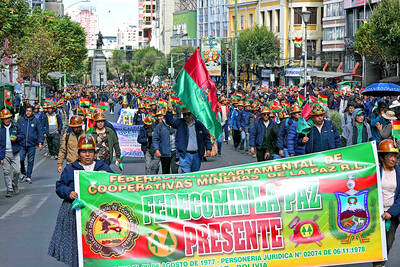
The Bolivian government on Friday struck a deal with protesting miners, but was still grappling with blockades and demonstrations by other workers across La Paz. Other groups are still blocking access roads into the city, which is also the seat of the government. Police on Thursday prevented the miners from entering the main square by using tear gas, while the demonstrators hurled stones and explosives with slingshots. Protests against the policies of Bolivian President Rodrigo Paz have convulsed the Andean nation since early this month, and roadblocks were choking routes into La Paz throughout Friday, the national road authority said. Miners demanded that Paz
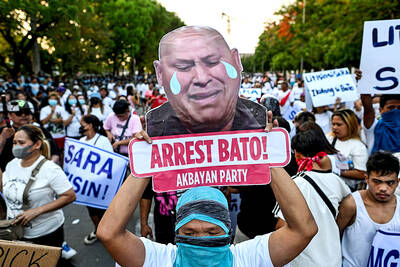
The Philippines said it has asked the country’s Supreme Court to allow it to arrest former Philippine president Rodrigo Duterte’s chief drug war enforcer to stand trial in an international tribunal. The International Criminal Court (ICC) last week unsealed an arrest warrant against Philippine Senator Ronald dela Rosa, accusing him along with Duterte and other “coperpetrators” of the “crime against humanity of murder.” Dela Rosa briefly sought refuge in the Philippine Senate last week while asking the Philippine Supreme Court to stop an ongoing attempt by government agents to arrest him. “By his own conduct, he has placed himself outside the protection of
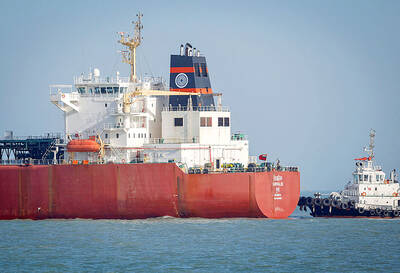
A ship anchored off the United Arab Emirates (UAE) was seized and taken toward Iran and another — a cargo ship near Oman — sank after being attacked, authorities said on Thursday, as tensions escalated near the Strait of Hormuz. It was not immediately clear who was behind these incidents, but they happened as a senior Iranian official reiterated his country’s claim of control over the waterway and another said it had a right to seize oil tankers connected to the US. The turmoil in the strait has been a sticking point for weeks in talks between the US and Iran to
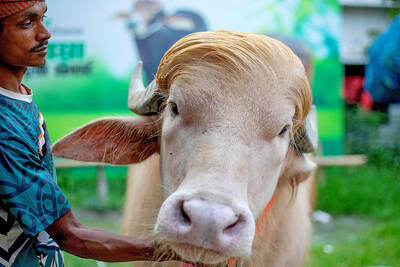
Crowds in Bangladesh are flocking to snap photographs with an unlikely social media star — an albino buffalo with flowing blond hair nicknamed “Donald Trump” that is due to be sacrificed within days. Owner Zia Uddin Mridha, 38, said his brother named the 700kg bull over its flowing helmet of hair resembling the signature look of the US president. “My younger brother picked this name because of the buffalo’s extraordinary hair,” he said at his farm in Narayanganj, just outside the capital, Dhaka. Mridha said that a constant stream of curious visitors — social media fans, onlookers and children — have come throughout


 RSS
RSS