


After his apartment was demolished by Israeli soldiers, Ahmed Abu Sair and his new bride found shelter in his father's home where eight people already shared two small rooms. His dad's bed was moved out onto the balcony.
However, Abu Sair, 29, a security guard who can't afford a new place on a US$125-a-month salary, won't remain in such cramped conditions much longer: his four-story apartment block is being rebuilt by neighbors who, though poor themselves, donated money and labor.
Such informal support systems -- neighborhood associations, clan welfare funds, mosque alms boxes -- have helped keep Palestinian society afloat, along with foreign aid, during three years of fighting. It works despite devastation that, according to a World Bank report in May, "would have torn the social fabric in many other societies."
At the root of Palestinian society is a tribal system that on one hand can stifle individuals' independence, discourage dissent, and greatly restrict women -- but on the other has also helped Palestinians manage their lives during hundreds of years of Turkish, British and Israeli rule.
"The one thing that never breaks down is kinship," Palestinian anthropologist Sharif Kanaana said. "You either live together or die together."
Less to share
But with increasingly less to share -- an estimated 60 percent of Palestinians now live on less than US$2 a day -- there is concern that even the ancient system could start unraveling.
Kanaana said that already there is growing hostility by some Palestinians toward those not relatives or neighbors -- considered, he said, "fair game" in an increasingly harsh competition over dwindling resources.
Since September 2000, the Palestinian economy suffered severe losses in trade and wages, largely because of Israeli travel bans meant to keep out suicide bombers and gunmen. This year alone, the GDP is expected to drop 7 percent, the Palestinian Finance Ministry says.
The international community is sending about US$1 billion a year to ease the worst hardships and help prop up the Palestinian Authority, which would otherwise cease to function.
In Nablus, the West Bank's largest city with 180,000 people, revenues dropped from US$50 million a year before the uprising to about US$30 million a year.
The municipality, which also runs four adjacent refugee camps, has stopped all infrastructure projects, cut back services, reduced salaries of employees by 30 percent and imposed a hiring freeze.
With unemployment at 60 percent, residents have run up US$45 million in unpaid utility bills since 2000.
"When we see people who cannot feed their kids, we cannot turn off their water and electricity," said the deputy mayor, Adnan Derhalli.
Yet there is no widespread destitution. Aid agencies note an increase in malnutrition -- one report says about 1 in 10 kids is not getting enough protein -- but there appears to be little stomach-turning hunger.
The informal safety net still catches most.
Those who have jobs share with even distant relatives who are unemployed -- often with no questions asked. It is not unusual for one breadwinner to support two or three dozen people.
Clans, the backbone of the tribal system, have their own welfare funds, with monthly contributions ranging from about US$30 to US$100 from each family able to pay.
A clan committee decides on spending -- maybe paying for furniture for a young couple, for university tuition or for the cost of surgery.
Overwhelming need
Some welfare funds are organized by neighborhood or area of origin. One Gaza City charity serves Palestinian refugees from what is now the Israeli town of Ashkelon.
Rawhi Mansour, who runs the Rimal neighborhood fund in Gaza City with contributions from 200 donors, said the need is overwhelming.
"We don't have enough money and the number of people who need help is so big," he said.
Islamic charities, funded by foreign and local contributions, pay out millions of dollars a year to help the needy. Others draw unemployment payments or other stipends from the cash-strapped Palestinian Authority.
The UN Relief and Works Agency -- created to help Palestinian refugees after Israel's creation in 1948 -- distributes emergency food rations to tens of thousands of people.
While Palestinians manage to hang on, some of the damage of the last three years may be irreversible. Many families have had to sell off assets to survive, including land and women's gold jewelry -- often at below-market prices.
Crime remains low, even though armed Palestinian police have not been permitted to patrol West Bank streets since Israel reoccupied most of the towns in April last year.
In Gaza, with a population of 1.3 million, only about 600 criminals are locked up in the central jail -- in part because the clans of offenders and victims often settle quietly, a system tolerated by police.
In Nablus, petty theft is up only slightly, and there hasn't been a bank robbery in the city in decades.
"In Iraq, everything collapsed in one day," said Derhalli, the city's deputy mayor. "We have been without security forces for almost three years, and the situation is still close to normal."
Chipping in
In the case of the young security guard Ahmed Abu Sair, his apartment was in a building blown up in an Aug. 8 army raid aimed at two bomb-makers wanted by Israel.
The two wanted men and an Israeli soldier were killed.
Some 40 people lived in the building. Displaced tenants pooled their government compensation money of US$16,400, construction workers charged only 40 percent of normal wages and other Gazans chipped in the rest, some as little as a dollar, to raise the shell of the building.
"We all know each other," explained Darwish Burghal, 32, from the neighborhood aid committee. "Any man who loses his house should be helped by his neighbors."

Four contenders are squaring up to succeed Antonio Guterres as secretary-general of the UN, which faces unprecedented global instability, wars and its own crushing budget crisis. Chile’s Michelle Bachelet, Argentina’s Rafael Grossi, Costa Rica’s Rebeca Grynspan and Senegal’s Macky Sall are each to face grillings by 193 member states and non-governmental organizations for three hours today and tomorrow. It is only the second time the UN has held a public question-and-answer, a format created in 2016 to boost transparency. Ultimately the five permanent members of the UN’s top body, the Security Council, hold the power, wielding vetoes over who leads the

A humanoid robot that won a half-marathon race for robots in Beijing on Sunday ran faster than the human world record in a show of China’s technological leaps. The winner from Honor, a Chinese smartphone maker, completed the 21km race in 50 minutes and 26 seconds, said a WeChat post by the Beijing Economic-Technological Development Area, also known as Beijing E-Town, where the race began. That was faster than the human world record holder, Ugandan Jacob Kiplimo, who finished the same distance in about 57 minutes in March at the Lisbon road race. The performance by the robot marked a significant step forward

An earthquake registering a preliminary magnitude of 7.7 off northern Japan on Monday prompted a short-lived tsunami alert and the advisory of a higher risk of a possible mega-quake for coastal areas there. The Cabinet Office and the Japan Meteorological Agency said there was a 1% chance for a mega-quake, compared to a 0.1% chance during normal times, in the next week or so following the powerful quake near the Chishima and Japan trenches. Officials said the advisory was not a quake prediction but urged residents in 182 towns along the northeastern coasts to raise their preparedness while continuing their daily lives. Prime
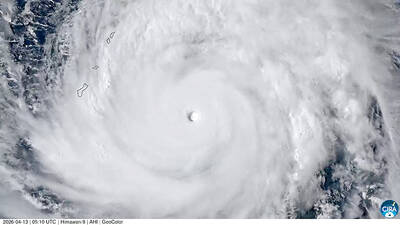
HAZARDOUS CONDITION: The typhoon’s sheer size, with winds extending 443km from its center, slowed down the ability of responders to help communities, an official said The US Coast Guard was searching for six people after losing contact with their disabled boat off the coast of Guam following Typhoon Sinlaku. The crew of the 44m dry cargo vessel, the US-registered Mariana, on Wednesday notified the coast guard that the boat had lost its starboard engine and needed assistance, Petty Officer 3rd Class Avery Tibbets said yesterday. The coast guard set up a one-hour communication schedule with the vessel, but lost contact on Thursday. A Coast Guard HC-130 Hercules aircraft was launched to search for the six people on board, but it had to return to Guam because of


 RSS
RSS