


A Muslim rebel was shot dead by Philippine police in the toilet of a Manila detention center yesterday, ending a three-hour hostage drama in which three guards were killed and three wounded.
The attempted jailbreak -- following the escape of an Indonesian militant from the same facility in July -- is likely to compound concerns about security ahead of a visit to Manila by US President George W. Bush on Oct. 18.
Police said the rebel, Buyungan Bungkak, grabbed an M16 rifle from one of his minders just after dawn yesterday while being escorted to an exercise yard at the Philippine National Police (PNP) headquarters.
He shot the guard and two others who tried to stop him.
Bungkak, 20, held two officers hostage for about three hours before a police SWAT team used the cover of smoke and tear gas to storm an office building inside the police compound and kill him.
"He's dead," Criminal Investigation director Eduardo Matillano told reporters. "We shot him inside a toilet."
One member of the SWAT team and the two hostages were wounded during the rescue operation, he added.
Bungkak was being held with four other Abu Sayyaf rebels as suspects in the bombing of a shopping mall in October last year in the southern city of Zamboanga. None of others tried to flee.
The 300-strong Abu Sayyaf, which has its stronghold on the southern Sulu islands, is the most violent of four Muslim rebel groups in this largely Roman Catholic nation of 82 million.
Washington blacklists Abu Sayyaf as a terrorist organization with links to Osama bin Laden's al-Qaeda network, which it blames for the attacks on the US on Sept. 11, 2001.
The police chief, Director-General Hermogenes Ebdane, ordered an inquiry into yesterday's incident, citing initial reports that Bungkak was not restrained when he was brought out of the detention center.
Ebdane said investigators were looking into reports that Bungkak regularly worked as an informal janitor in the detention center and had previously tried to escape when his guards were not watching.
He also removed from duty the officer responsible for the safekeeping of prisoners and ordered the transfer of the rest of the prisoners in the facility to another detention center inside the compound.
The PNP headquarters was the scene of a rebel jailbreak on July 14 when Fathur Rohman al-Ghozi, an Indonesian member of the regional militant network Jemaah Islamiah, strolled from his cell. He has yet to be recaptured.
Two detained Abu Sayyaf rebels fled with al-Ghozi but one was later killed by soldiers on the southern island of Mindanao.
An investigation of al-Ghozi's escape blamed incompetence and a faulty cell door, but there are lingering suspicions that he was given inside help.
The ease of his escape embarrassed the Philippine government, which is a stalwart ally in the Washington-led war on terror.

PHISHING: The con might appear convincing, as the scam e-mails can coincide with genuine messages from Apple saying you have run out of storage For a while you have been getting messages from Apple saying “your iCloud storage is full.” They say you have exceeded your storage plan, so documents are no longer being backed up, and photos you take are not being uploaded. You have been resisting Apple’s efforts to get you to pay a minimum of £0.99 (US$1.33) a month for more storage, but it seems that you cannot keep putting off the inevitable: You have received an e-mail which says your iCloud account has been blocked, and your photos and videos would be deleted very soon. To keep them you need
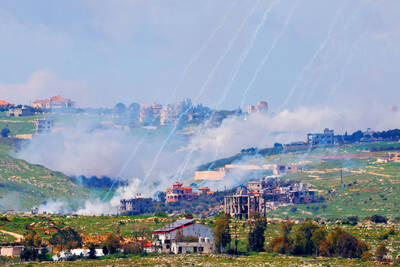
The Israeli military has demolished entire villages as part of its invasion of south Lebanon, rigging homes with explosives and razing them to the ground in massive remote detonations. The Guardian reviewed three videos posted by the Israeli military and on social media, which showed Israel carrying out mass detonations in the villages of Taybeh, Naqoura and Deir Seryan along the Israel-Lebanon border. Lebanese media has reported more mass detonations in other border villages, but satellite imagery was not readily available to verify these claims. The demolitions came after Israeli Minister of Defense Israel Katz called for the destruction of

A US YouTuber who caused outrage for filming himself kissing a statue commemorating Korean wartime sex slaves has been sentenced to six months in prison, a court in Seoul said yesterday. Johnny Somali, 25, gained notoriety several years ago for recording himself doing a series of provocative stunts in South Korea and Japan, and streaming them on platforms such as YouTube and Twitch. South Korean authorities indicted Somali — whose real name is Ramsey Khalid Ismael — in 2024 on public order violations and obstruction of business, and banned him from leaving the country. “The court has sentenced him to six months in
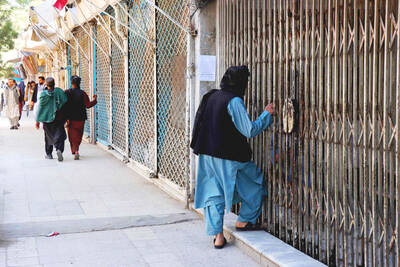
The death toll from a shooting in western Afghanistan rose to 11 on Saturday, after gunmen targeted civilians at a picnic spot in Herat, the provincial authority said. Bullet marks were visible on a wall of the Sayed Mohammad Agha Shia shrine, while bloodstains marked a blanket abandoned at the scene. “Eleven people have been recorded dead and eight others wounded from Friday’s incident, with the condition of two of the wounded reported as critical,” Herat’s information office said in a statement. The update raises a toll of seven killed provided on Friday by the Afghan Ministry of Interior Affairs


 RSS
RSS