


They prowl the streets and shopping malls, hunting down women who don't shroud themselves and Muslim men who ignore the call to prayer.
Saudi Arabia's pervasive and powerful morality police have been a pillar of the ultra-conservative kingdom since its foundation.
Answerable only to King Fahd and separate from ordinary police, members of the "Authority for the Promotion of Virtue and Prevention of Vice" patrol with police escorts, ensuring that their strict interpretation of Islamic social customs remains the norm among a youthful, Westernized population with wide access to the Internet and satellite TV.
They check that women wear the abaya, the all-enveloping black cloak, that men and women together in public are related, that drugs and alcohol are not being traded and that Muslims do not observe "frivolous" customs such as Valentine's Day.
Their Web site invites citizens to inform on those suspected of any manner of immoral behavior.
The role of the morality police has come under unprecedented scrutiny in Saudi Arabia, which has been accused in the West of breeding Islamic radicalism which in turn creates more recruits for Saudi-born Osama bin Laden.
The influence of the morality police varies throughout Saudi Arabia and is strongest in the central Riyadh area, a bastion of the kingdom's unique, strict Muslim creed known as Wahhabism.
The austere brand of Islam, and its ramifications on all aspects of Saudi society, was thrust in the international spotlight after the Sept. 11, 2001 attacks on US cities.
Most of the men blamed for the attacks were Saudis linked to bin Laden's al-Qaeda network.
US officials accused the Saudi education system of breeding "terrorists," but this appeared to have been largely ignored by the authorities until suspected al-Qaeda militants struck in the heart of Riyadh on May 12 with devastating suicide attacks on expatriate housing compounds.
The bombings, the first indiscriminate attack against civilians in the kingdom, caused much soul-searching among ordinary Saudis and their rulers, who admitted publicly they have a serious problem.
Some Saudis say that the religious police -- known as the mutawaeen, or enforcers -- are the core of this problem.
Saudis say the mutawaeen, with their trademark beards and loose-fitting red headscarves, are on the lookout for people using the latest mobile phones with cameras, lest they use them for flirting and to identify possible suitors.
Last month, dozens of Saudis approached the mass circulation, reformist daily al-Watan newspaper with tales of being mistreated by the mutawaeen.
One woman from a remote southern town wrote to say that she had been beaten and held in solitary confinement for riding alone in the back of a taxi.
A distraught man went to the paper's Riyadh bureau saying he would commit suicide if they did not run his story of being detained incommunicado detention.
"The whole thing was started by the religious police when they arrested one of our reporters, insulted him and even cut his hair," said Jamal Khashoggi, a former editor who was sacked after a senior Islamic scholar called for a mass boycott of the paper as a result of the stories.
Other, more conservative papers criticized the mutawaeen last year after they prevented men from rescuing girls in a burning school because they were not relatives.
Fourteen girls died in the blaze and dozens were injured.
The rare public discussion about the mutawaeen comes amid much anticipation of reform in the kingdom, ruled largely by royal decree with an unelected parliament.
Businessmen and well-known Saudis in January petitioned the royal court asking for elections, more rights for women and equality among the country's diverse social groups.
There has been growing domestic and foreign criticism that giving religious leaders a free hand to act, preach and police society fosters the kind of fanaticism and intolerance which encourages young Saudi men to become suicide attackers.
Religious figures are concerned that pressure is mounting to crowd them out of public life.
A statement issued by prominent clerics has said "extremist writers" are using the Riyadh blasts to attack the religious establishment.
And in a recent interview Grand Mufti Sheikh Abdul-Aziz bin Abdullah al-Sheikh, the kingdom's top religious authority, rejected calls to dismantle the morality police.
Anthropologist Saad Sowayan said the Saudi royal family would never scrap the morality squad because it bolsters their own rule, which has involved decades of absolute power.
But he added that the authorities could use the mutawaeen to advance reforms, as King Faisal did in the 1970s to push education for women and the spread of television.
"The government should choose people among the mutawaeen to justify reforms today. People will accept anything more readily if it is framed in a religious discourse," he explained.
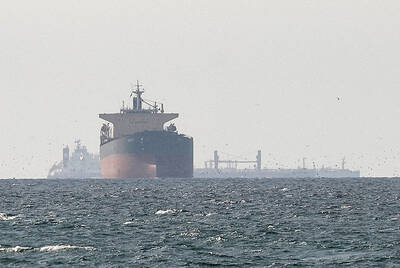
A ship that appears to be taking on the identity of a scrapped gas carrier exited the Strait of Hormuz on Friday, showing how strategies to get through the waterway are evolving as the Middle East war progresses. The vessel identifying as liquefied natural gas (LNG) carrier Jamal left the Strait on Friday morning, ship-tracking data show. However, the same tanker was also recorded as having beached at an Indian demolition yard in October last year, where it is being broken up, according to market participants and port agent’s reports. The ship claiming to be Jamal is likely a zombie vessel that

Cannabis-based medicines have shown little evidence of effectiveness for treating most mental health and substance-use disorders, according to a large review of past studies published in a major medical journal on Monday. Medical use of cannabinoids has been expanding, including in the US, Canada and Australia, where many patients report using cannabis products to manage conditions such as anxiety, post-traumatic stress disorder and sleep problems. Researchers reviewed data from 54 randomized clinical trials conducted between 1980 and May last year involving 2,477 participants for their analysis published in The Lancet. The studies assessed cannabinoids as a primary treatment for mental disorders or substance-use
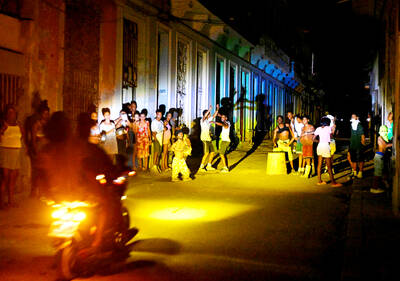
NATIONWIDE BLACKOUT: US President Donald Trump cut off Venezuelan oil shipments to Cuba, strangling the Caribbean island’s already antiquated grid Cuba’s national electric grid collapsed on Monday, the nation’s grid operator said, leaving about 10 million people without power amid a US-imposed oil blockade that has crippled the already obsolete generation system. Grid operator UNE on social media said that it is investigating the causes of the blackout, the latest in a series of widespread outages that last for hours or days and that this weekend sparked a rare violent protest in the communist-run nation. Officials ruled out a major power plant failure, but had still not pinpointed the root cause of the grid collapse, suggesting a problem with transmission. Officials said that

‘HEALTH ISSUE’: More than 250 women are hospitalized every day due to complications from unsafe abortions, and about three die, a study showed Jane had been bleeding heavily for days before finally seeking help, not from a hospital, but from the man who sold her the pills meant to end her six-week pregnancy. Abortions are strictly outlawed in the mainly Catholic Philippines, forcing women to turn to a patchwork of providers operating in the online shadows. While rare in practice, Philippine law allows for prison terms of up to six years for abortion patients and providers, leaving thousands of Filipinas to search for solutions in online forums where unlicensed sellers promote abortifacients. “It was very painful, as if my abdomen was being twisted,” said Jane, whose


 RSS
RSS