


President Tsai Ing-wen (蔡英文) has been in Central America this week, attending the inauguration of Nicaraguan President Daniel Ortega, touring Guatemala’s colonial city of Antigua and visiting the shrine of Honduras’ patron saint.
From a global perspective, it is the sort of tour that looks like a diplomatic asterisk. However, there is nothing trivial about it for Tsai, who is in Central America to shore up relationships amid increasing pressure from China.
Taiwan has diplomatic relations with only 20 nations, along with the Vatican; the largest cluster of those is in Latin America and the Caribbean. These relationships, complete with embassies, trade agreements and foreign aid, strengthen Taiwan’s effective sovereignty.
Maintaining the few formal relationships Taiwan has is an important source of domestic legitimacy for its leaders.
If Taiwan is “not recognized by any country in the world — what good are you?” said Richard Bush, director of the Center for East Asia Policy Studies at the Brookings Institution in Washington.
China has worked for decades to isolate Taiwan.
Under the “one China” policy, Beijing demands that nations it has diplomatic relations drop their recognition of Taiwan. Since the US established formal ties with China in 1979, most of the world has followed suit.
Central America is an outlier. In a quirk of diplomacy, all the countries of the region except Costa Rica still recognize Taiwan.
China poached Taiwan’s friendships for years, but it paused during the tenure of former president Ma Ying-jeou (馬英九), who advocated closer ties with China, was in office. New leaders in Panama, Paraguay and El Salvador all explored a switch, but China held them at bay.
“China can turn the screw whenever it wants,” said Colin Alexander, an assistant professor of political communications at Britain’s Nottingham Trent University, who wrote a book about the relationship between Taiwan and Central America.
In Tsai’s year-end news conference, she said she wished to avoid confrontation.
However, China responded bitterly to her congratulatory telephone call to US president-elect Donald Trump last month after his victory at the polls.
Afterward, Sao Tome and Principe, an island nation off the west coast of Africa, broke relations with Taiwan.
“One can see the Sao Tome switch as a signal from Beijing that ‘we have leverage,’” Bush said.
In light of the call, “it would not be surprising to see increasing efforts from Beijing (and concomitant response from Taiwan) to lure allies away,” Jonathan Sullivan, director of the China Policy Institute at the University of Nottingham, wrote in an e-mail.
In June, Tsai visited Panama and then Paraguay, the only South American country that maintains relations with Taiwan, and the trip this week to four Central American allies is intended to keep them in the fold.
“The best outcome” of the trip “is that nothing happens,” Bush said.
One curious advantage of the Central American relationships for Tsai is that they allow her to make transit stops in the US asserting Taiwan’s presence even if she cannot participate in formal diplomatic meetings. On her way to Panama last summer, Tsai met with Senator Marco Rubio in Miami. Recently in Texas, she met with Texas Governor Greg Abbott and Senator Ted Cruz on her way to Honduras.
Historically, Central American nations, like others with formal ties to Taiwan, have found the arrangement favorable because Taiwan spent heavily to maintain them. However, the money has sometimes ended up in the wrong hands.
“Until the late 1990s, this was all about state bribery,” Alexander said.
Former Guatemalan president Alfonso Portillo admitted in US federal court in 2014 that he had received US$2.5 million in bribes from Taiwan between 1999 and 2002 — ostensibly intended to buy books for school libraries — in exchange for diplomatic recognition.
Before his death last year, Salvadorean president Francisco Flores was charged with channeling US$10 million in donations from Taiwan for victims of a 2001 earthquake to his political party. An additional US$5 million in donations also disappeared.
There is a darker side to the relationships, too, going back to the Cold War. In the 1970s, Taiwan trained Guatemalan and Salvadorean military officers involved in rights violations in brutal civil wars.
Taiwan has since ended its “checkbook diplomacy,” in a tacit acknowledgment that it could never outspend China. That has been clear in the Caribbean, where China has invested in expensive projects, sometimes in exchange for switching diplomatic recognition from Taiwan.
Other Central American nations have found that they can attract Chinese investment without normalizing diplomatic relations. They maintain informal business contacts.
“It’s all a kind of smoke and mirrors,” Alexander said. “The Central American republics have it pretty good. Taiwan treats them like a princess, and China is engaged in smart power and flexible diplomacy where it’s still willing to invest.”
China’s most grandiose investment in the region is a Chinese tycoon’s US$50 billion plan to build a canal across Nicaragua, an opaque project with uncertain funding that stalled before work had begun. In Honduras, a Chinese company is building a dam on the Patuca River with funding from Chinese banks.
“As long as there is a fluid relationship between Taiwan and China, it’s a game they can continue to play,” said Enrique Dussel Peters, a China expert at the National Autonomous University of Mexico.
However, turbulence in that relationship could change the dynamic.
“There have been discussions in each of these countries about whether it makes sense to continue the relationship with Taiwan,” Dussel said.
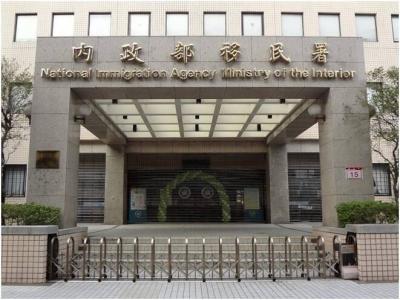
A small number of Taiwanese this year lost their citizenship rights after traveling in China and obtaining a one-time Chinese passport to cross the border into Russia, a source said today. The people signed up through Chinese travel agencies for tours of neighboring Russia with companies claiming they could obtain Russian visas and fast-track border clearance, the source said on condition of anonymity. The travelers were actually issued one-time-use Chinese passports, they said. Taiwanese are prohibited from holding a Chinese passport or household registration. If found to have a Chinese ID, they may lose their resident status under Article 9-1

PROBLEMATIC APP: Citing more than 1,000 fraud cases, the government is taking the app down for a year, but opposition voices are calling it censorship Chinese Nationalist Party (KMT) Chairwoman Cheng Li-wun (鄭麗文) yesterday decried a government plan to suspend access to Chinese social media platform Xiaohongshu (小紅書) for one year as censorship, while the Presidential Office backed the plan. The Ministry of the Interior on Thursday cited security risks and accusations that the Instagram-like app, known as Rednote in English, had figured in more than 1,700 fraud cases since last year. The company, which has about 3 million users in Taiwan, has not yet responded to requests for comment. “Many people online are already asking ‘How to climb over the firewall to access Xiaohongshu,’” Cheng posted on
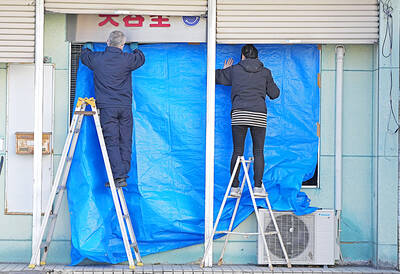
Taiwanese were praised for their composure after a video filmed by Taiwanese tourists capturing the moment a magnitude 7.5 earthquake struck Japan’s Aomori Prefecture went viral on social media. The video shows a hotel room shaking violently amid Monday’s quake, with objects falling to the ground. Two Taiwanese began filming with their mobile phones, while two others held the sides of a TV to prevent it from falling. When the shaking stopped, the pair calmly took down the TV and laid it flat on a tatami mat, the video shows. The video also captured the group talking about the safety of their companions bathing
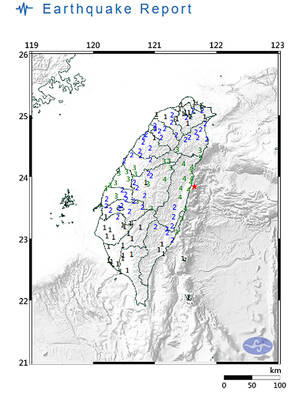
A magnitude 5.7 earthquake yesterday struck off the coast of Hualien, causing brief transportation disruptions in northern and eastern Taiwan, as authorities said that aftershocks of magnitude 5 or higher could occur over the next three days. The quake, which hit at 7:24pm at a depth of 24.5km, registered an intensity of 4 in Hualien and Nantou counties, the Central Weather Administration (CWA) said. There were no immediate reports of damage or injuries. In Taipei, the MRT railway’s operations control center received an earthquake alert and initiated standard safety procedures, briefly halting trains on the Bannan (blue) line for about a minute.


 RSS
RSS