


The Ill-gotten Party Assets Settlement Committee is on Jan. 28 to begin examining evidence regarding the Chinese Nationalist Party’s (KMT) alleged affiliation with four foundations.
If the Minsheng Development Foundation (民生建設基金會), the Minchuan Foundation (民權基金會), the Mintsu Foundation (民族基金會) and the National Development Fund (國家發展基金會) are found to be affiliated with the KMT, the NT$180 million (US$5.58 million) that has been donated to them by Hsinyutai Co (欣裕台) — which the committee has concluded was founded using illegally obtained assets — would be seized as ill-gotten assets, committee spokeswoman Shih Chin-fang (施錦芳) said.
Shih said the committee recently uncovered the donations made by the company to the four foundations, adding that it is investigating the whereabouts of NT$94 million the KMT withdrew from the Minsheng Development Foundation in November last year.
Shih said that discussions are under way on how to proceed with the foundations’ seizure if they are discovered to be linked with the KMT.
Three of the foundations have not engaged in any business since their establishment and would therefore be easy for the committee to investigate, Shih said, adding that the Minsheng Development Foundation is different, as it has a longer history.
Shih said the committee will need sufficient proof to establish that the donations were illegal.
The Minsheng Development Foundation was established by the KMT’s financial affairs committee in 1979, whereas the other three foundations were established more recently during New Taipei City Mayor Eric Chu’s (朱立倫) tenure as KMT chairman with NT$90 million in donations.
“The committee has asked Minsheng for paperwork to help us understand what they were up to for the past several decades,” she said.
Shih said the committee has invited the KMT and representatives from the four foundations to attend a closed-door hearing.
One committee member who declined to be named said that foundation representatives have asked for individual hearings, saying they are independent of each other.
Foundation members told the committee that since the KMT is bringing a lawsuit against the Executive Yuan over the handling of Hsinyutai, the committee should await the outcome of the lawsuit before investigating the foundations, the committee member said.
Committee Chairman Wellington Koo (顧立雄) said he will bring up the concerns with other committee members at this week’s meeting, adding that the committee has not yet decided the particulars of this month’s hearing.
In related news, the China Youth Corps and the National Women’s League, both of which are also under investigation by the committee for alleged links with the KMT, have come under fire after petitioning for support at a public venue.
The petition, which was placed in the reception area of the Yonghe (永和) Civil Sports Center in New Taipei City, asked the public to support the organizations, stating that they did not receive money from the KMT and that they were not affiliated with any political party.
One user on the online bulletin board, Professional Technology Temple posted pictures of the petition, which drew criticism from several netizens and politicians who said that private organizations should not use public space for their own benefit.
“The fitness center is under the management of the city’s Department of Sports. Do not tell me that [New Taipei City] Mayor Eric Chu does not need to come out and explain this,” Democratic Progressive Party New Taipei City Councilor Hsu Chao-hsing (許昭興) said, adding that she will investigate the issue and take action against those responsible.

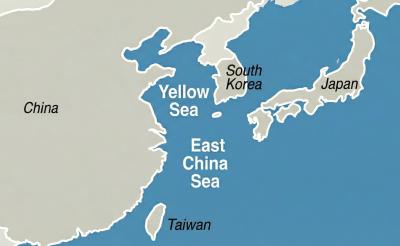
China has reserved offshore airspace in the Yellow Sea and East China Sea from March 27 to May 6, issuing alerts usually used to warn of military exercises, although no such exercises have been announced, the Wall Street Journal (WSJ) reported yesterday. Reserving such a large area for 40 days without explanation is an “unusual step,” as military exercises normally only last a few days, the paper said. These alerts, known as Notice to Air Missions (Notams), “are intended to inform pilots and aviation authorities of temporary airspace hazards or restrictions,” the article said. The airspace reserved in the alert is
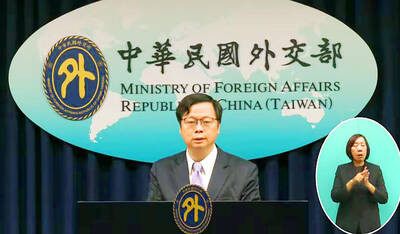
NAMING SPAT: The foreign ministry called on Denmark to propose an acceptable solution to the erroneous nationality used for Taiwanese on residence permits Taiwan has revoked some privileges for Danish diplomatic staff over a Danish permit that lists “Taiwan” as “China,” Eric Huang (黃鈞耀), head of the Ministry of Foreign Affairs’ Department of European Affairs, told a news conference in Taipei yesterday. Reporters asked Huang whether the Danish government had responded to the ministry’s request that it correct the nationality on Danish residence permits of Taiwanese, which has been listed as “China” since 2024. Taiwan’s representative office in Denmark continues to communicate with the Danish government, and the ministry has revoked some privileges previously granted to Danish representatives in Taiwan and would continue to review

More than 6,000 Taiwanese students have participated in exchange programs in China over the past two years, despite the Mainland Affairs Council’s (MAC) “orange light” travel advisory, government records showed. The MAC’s publicly available registry showed that Taiwanese college and university students who went on exchange programs across the Strait numbered 3,592 and 2,966 people respectively. The National Immigration Agency data revealed that 2,296 and 2,551 Chinese students visited Taiwan for study in the same two years. A review of the Web sites of publicly-run universities and colleges showed that Taiwanese higher education institutions continued to recruit students for Chinese educational programs without
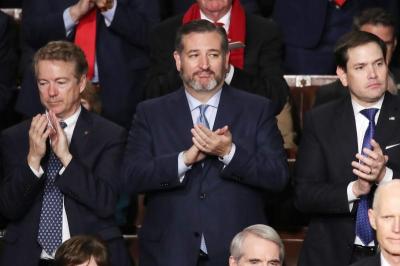
A bipartisan group of US senators has introduced a bill to enhance cooperation with Taiwan on drone development and to reduce reliance on supply chains linked to China. The proposed Blue Skies for Taiwan Act of 2026 was introduced by Republican US senators Ted Cruz and John Curtis, and Democratic US senators Jeff Merkley and Andy Kim. The legislation seeks to ease constraints on Taiwan-US cooperation in uncrewed aerial systems (UAS), including dependence on China-sourced components, limited access to capital and regulatory barriers under US export controls, a news release issued by Cruz on Wednesday said. The bill would establish a "Blue UAS


 RSS
RSS