


The Sports Administration and Chinese Taipei’s Olympic Committee are still waiting for the results of a second doping test on a second Taiwanese weightlifter before they take any action, local media reports said yesterday.
The news came after female weightlifter Lin Tzu-chi (林子琦) was suspended from competition on Tuesday because of an abnormal doping test.
Sports Administration officials yesterday confirmed the development, saying that one of the nation’s male weightlifters also had an abnormal test result.
The three male members of the weightlifting team are Chen Shih-chieh (陳士杰), Pan Chien-hung (潘建宏) and Tang Chi-chung (唐啟中).
As of press time last night, team members and officials were still waiting for the outcome of a second test to come back from the IOC-certified Mitsubishi Kagaku Bio-Clinical Lab in Japan.
The testing was administered in accordance with World Anti-Doping Agency (WADA) regulations, sports officials said.
Lin was suspended after she was found to have high levels of a synthetic anabolic-androgenic steroid, which is related to male hormones and is a banned performance-enhancing drug, officials said.
Anabolic-androgenic steroids and related male hormone drugs have been favored by weightlifting athletes in the past because they add body weight and increase muscle strength.
However, the use of such drugs can have adverse side effects, such as the development and enhancement of male characteristics in female athletes, including the growth of facial and body hair, deepening of the voice, a reduction in breast size, menstruation disruption and infertility.
“The ban against these drugs was imposed by WADA to ensure a level playing field for everyone, but it also served to protect the athletes, due to the many adverse side effects, which could cause irreparable damage to an athlete’s body,” weightlifting coach Tsai Wen-yi (蔡溫義) said.
During the 2000 Sydney Olympics, Taiwanese weightlifters Chen Juei-lien (陳瑞蓮), Wu Mei-yi (吳美儀) and Chen Po-fu (陳柏甫) were suspended for abnormal doping tests.

SPACE VETERAN: Kjell N. Lindgren, who helps lead NASA’s human spaceflight missions, has been on two expeditions on the ISS and has spent 311 days in space Taiwan-born US astronaut Kjell N. Lindgren is to visit Taiwan to promote technological partnerships through one of the programs organized by the US for its 250th national anniversary. Lindgren would be in Taiwan from Tuesday to Saturday next week as part of the US Bureau of Educational and Cultural Affairs’ US Speaker Program, organized to celebrate the 250th anniversary of the signing of the Declaration of Independence, the American Institute in Taiwan (AIT) said in a statement yesterday. Lindgren plans to engage with key leaders across the nation “to advance cutting-edge technological partnerships and inspire the next generation of scientists and engineers,”

UNREASONABLE SURVEILLANCE: A camera targeted on an road by a neighbor captured a man’s habitual unsignaled turn into home, netting him dozens of tickets The Taichung High Administrative Court has canceled all 45 tickets given to a man for failing to use a turn signal while driving, as it considered long-term surveillance of his privacy more problematic than the traffic violations. The man, surnamed Tseng (曾), lives in Changhua County and was reported 45 times within a month for failing to signal while driving when he turned into the alley where his residence is. The reports were filed by his neighbor, who set up security cameras that constantly monitored not only the alley but also the door and yard of Tseng’s house. The surveillance occurred from July
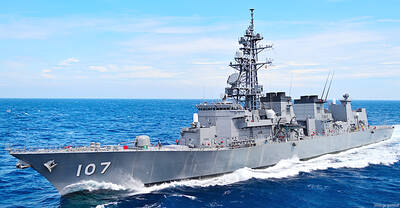
A Japan Self-Defense Forces vessel entered the Taiwan Strait yesterday, Japanese media reported. After passing through the Taiwan Strait, the Ikazuchi was to proceed to the South China Sea to take part in a joint military exercise with the US and the Philippines, the reports said. Japan Self-Defense Force vessels were first reported to have passed through the strait in September, 2024, with two further transits taking place in February and June last year, the Asahi Shimbun reported. Yesterday’s transit also marked the first time since Japanese Prime Minister Sanae Takaichi took office that a Japanese warship has been sent through the Taiwan
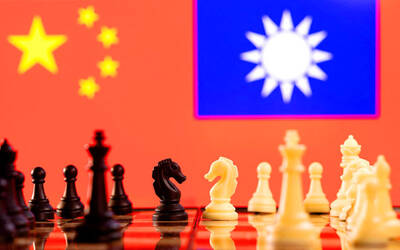
‘SAME OLD TRICK’: Even if Beijing resumes individual travel to Taiwan, it would only benefit Chinese tourism companies, the Economic Democracy Union convener said China’s 10 new “incentives” are “sugar-coated poison,” an official said yesterday, adding that Taiwanese businesses see them clearly for what they are, but that Beijing would inevitably find some local collaborators to try to drums up support. The official, speaking on condition of anonymity, made the remark ahead of a news conference the General Chamber of Commerce is to hold today. The event, titled “Industry Perspectives on China’s Recent Pro-Taiwan Policies,” is expected to include representatives from industry associations — such as those in travel, hotels, food and agriculture — to request the government cooperate with China’s new measures, people familiar with


 RSS
RSS