


Chiayi on Tuesday became the first city outside of the six special municipalities to adopt the same-sex couples’ addendum, but the measure was criticized by same-sex couples as being too little, too late.
The addendum allows same-sex couples to exercise the same rights as family members in medical emergencies, such as signing surgery release forms and being allowed to visit hospitalized partners.
Chiayi Mayor Twu Shiing-jer (涂醒哲) told a news conference that the household registration offices in the East District (東區) and West District (西區) will begin processing registration applications by same-sex couples next month.
However, a man using the pseudonym “66” complained at the news conference that the move came too late and offered too little.
Citing the Tainan City Government’s adoption of the addendum, “66” said applicants in Tainan were able to have the addendum stamped on their household registration documents, but Chiayi does not allow such open registration. It also requires both partners to be registered residents of Chiayi, he said.
While the city government has made an effort to promote same-sex rights, the limitations have dampened the spirits of many of his friends, he said.
Chiayi officials said that the addendum could not be openly marked on household registration documents because it lacks legal backing, as same-sex marriage has yet to be legalized in the nation.
Twu also said that the city’s announcement was a tentative first step before the Civic Code could be amended to legalize same-sex marriage, and the city government is open to suggestions on how to improve the measures.
Representatives of several groups who attended the news conference called on the government to be more active in promoting lesbian, gay, bisexual and transgender (LGBT) rights.
They suggested incorporating same-sex issues into sex education, hosting activities involving LGBT groups and establishing a friendlier working and medical environments toward LGBT people.
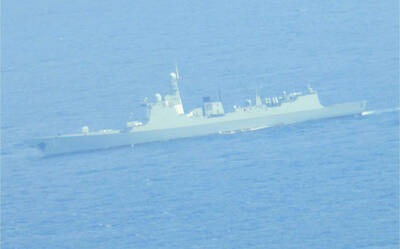
The military has spotted two Chinese warships operating in waters near Penghu County in the Taiwan Strait and sent its own naval and air forces to monitor the vessels, the Ministry of National Defense (MND) said. Beijing sends warships and warplanes into the waters and skies around Taiwan on an almost daily basis, drawing condemnation from Taipei. While the ministry offers daily updates on the locations of Chinese military aircraft, it only rarely gives details of where Chinese warships are operating, generally only when it detects aircraft carriers, as happened last week. A Chinese destroyer and a frigate entered waters to the southwest
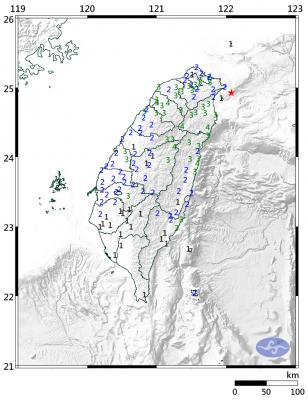
A magnitude 6.1 earthquake struck off the coast of Yilan County at 8:39pm tonight, the Central Weather Administration (CWA) said, with no immediate reports of damage or injuries. The epicenter was 38.7km east-northeast of Yilan County Hall at a focal depth of 98.3km, the CWA’s Seismological Center said. The quake’s maximum intensity, which gauges the actual physical effect of a seismic event, was a level 4 on Taiwan’s 7-tier intensity scale, the center said. That intensity level was recorded in Yilan County’s Nanao Township (南澳), Hsinchu County’s Guansi Township (關西), Nantou County’s Hehuanshan (合歡山) and Hualien County’s Yanliao (鹽寮). An intensity of 3 was

Japanese Prime Minister Sanae Takaichi’s comment last year on Tokyo’s potential reaction to a Taiwan-China conflict has forced Beijing to rewrite its invasion plans, a retired Japanese general said. Takaichi told the Diet on Nov. 7 last year that a Chinese naval blockade or military attack on Taiwan could constitute a “survival-threatening situation” for Japan, potentially allowing Tokyo to exercise its right to collective self-defense. Former Japan Ground Self-Defense Force general Kiyofumi Ogawa said in a recent speech that the remark has been interpreted as meaning Japan could intervene in the early stages of a Taiwan Strait conflict, undermining China’s previous assumptions
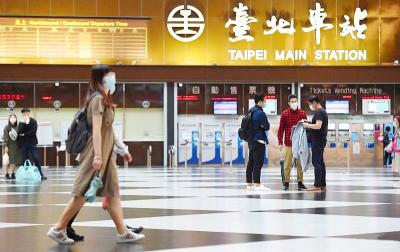
Taiwan Railways Corp (TRC) today announced that Shin Kong Mitsukoshi has been selected as the preferred bidder to operate the Taipei Railway Station shopping mall, replacing the current operator, Breeze Development Co Ltd. Among eight qualified firms that delivered presentations and were evaluated by a review committee, Shin Kong Mitsukoshi was ranked first, while Breeze was named the runner-up, the rail company said in a statement. Contract negotiations are to proceed in accordance with regulations, it said, adding that if negotiations with the top bidder fail, it could invite the second-ranked applicant to enter talks. Breeze in a statement today expressed doubts over


 RSS
RSS