


The Ministry of Transportation and Communications is planning to press criminal charges to stop what it feels are illegal ride-sharing services offered by Uber Taiwan, ministry sources said yesterday.
Since September last year, the Directorate-General of Highways (DGH) has imposed more than NT$40 million (US$1.22 million) in fines on Uber Taiwan and its drivers for violating the Highway Act (公路法), which bans unlicensed operators of transportation services.
However, those fines have failed to stop the practices, the ministry sources said.
Uber runs transportation services in Taiwan, but has refused to apply for the required licenses and has never paid taxes in Taiwan because its earnings from the services are all booked overseas, according to the ministry.
The DGH is consulting with its lawyers on a plan to stop Uber’s allegedly illegal operations by means of the Criminal Code, under which it is illegal to “induce people into committing crimes,” the ministry sources said.
Under the Highway Act, people managing taxicab transportation services without applying for a business license are subject to a fine of between NT$50,000 and NT$150,000. Though the government seems determined to take legal action against the service, academics have suggested trying to guide it to become a legal entity rather than shutting it down.
Feng Chia University Department of Transportation Technology and Management associate professor Lee Ker-tsung (李克聰) said Uber cannot be eradicated, because it helps to offer consumers access to multiple services and provides a chance for people to supplement their income through a sharing economy.
Uber has defied payment of some administrative fines, in part, because its services receive few complaints from its users, Lee said, adding that the government should try to make Uber pay taxes and operate legally.
National Taiwan Normal University dean of College Management Chen Dun-ji (陳敦基) agreed with Lee, but said Uber should also accept regulation of the service and face the issue of paying taxes and insurance. He also suggested that the government make the taxi industry more competitive by easing regulations on taxi pricing to allow a gap between peak and off-peak hours and differentiate between various classes of taxis.
The government could even guide Uber into becoming a leasing business, which could balance the competitive environment between Uber and taxi drivers, Chen said.
Since Uber entered the Taiwanese market in 2013, the ministry has held repeated talks with Uber representatives over registering their business legally as a transportation services provider, but Uber has resisted because it considers itself an information technology services provider, according to the ministry.
Highway authorities have imposed NT$35 million in fines on Uber and NT$11.5 million in fines on its drivers, of which Uber has paid NT$30.20 million of its own fines and NT$8.59 million of its drivers’ fines, according to the DGH.
It refused to pay several fines imposed between Jan. 21 and Jan. 26, and the Taipei High Administrative Court upheld the move after ruling that 19 of the 21 citations, accounting for NT$2.05 million in fines, failed to state clearly where and when the violations occurred.
The court added that the DGH does not have the authority to shut down Uber’s operations under the Highway Act, since the company’s registered businesses do not fall under the terms of the act.
The highway authority is planning to appeal the ruling, saying it lost on procedural grounds rather than because Uber was innocent, and that it plans to present the necessary documents to show that the fines were indeed legitimate.

The military has spotted two Chinese warships operating in waters near Penghu County in the Taiwan Strait and sent its own naval and air forces to monitor the vessels, the Ministry of National Defense (MND) said. Beijing sends warships and warplanes into the waters and skies around Taiwan on an almost daily basis, drawing condemnation from Taipei. While the ministry offers daily updates on the locations of Chinese military aircraft, it only rarely gives details of where Chinese warships are operating, generally only when it detects aircraft carriers, as happened last week. A Chinese destroyer and a frigate entered waters to the southwest
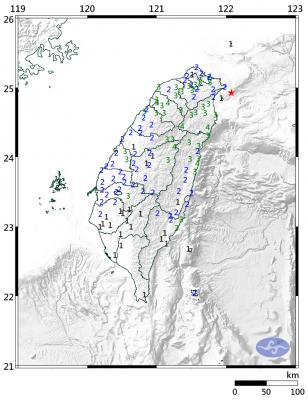
A magnitude 6.1 earthquake struck off the coast of Yilan County at 8:39pm tonight, the Central Weather Administration (CWA) said, with no immediate reports of damage or injuries. The epicenter was 38.7km east-northeast of Yilan County Hall at a focal depth of 98.3km, the CWA’s Seismological Center said. The quake’s maximum intensity, which gauges the actual physical effect of a seismic event, was a level 4 on Taiwan’s 7-tier intensity scale, the center said. That intensity level was recorded in Yilan County’s Nanao Township (南澳), Hsinchu County’s Guansi Township (關西), Nantou County’s Hehuanshan (合歡山) and Hualien County’s Yanliao (鹽寮). An intensity of 3 was

Japanese Prime Minister Sanae Takaichi’s comment last year on Tokyo’s potential reaction to a Taiwan-China conflict has forced Beijing to rewrite its invasion plans, a retired Japanese general said. Takaichi told the Diet on Nov. 7 last year that a Chinese naval blockade or military attack on Taiwan could constitute a “survival-threatening situation” for Japan, potentially allowing Tokyo to exercise its right to collective self-defense. Former Japan Ground Self-Defense Force general Kiyofumi Ogawa said in a recent speech that the remark has been interpreted as meaning Japan could intervene in the early stages of a Taiwan Strait conflict, undermining China’s previous assumptions
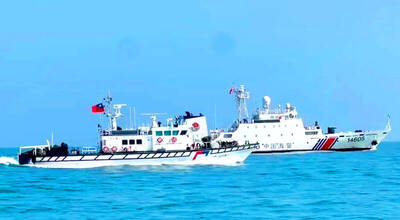
Instead of focusing solely on the threat of a full-scale military invasion, the US and its allies must prepare for a potential Chinese “quarantine” of Taiwan enforced through customs inspections, Stanford University Hoover fellow Eyck Freymann said in a Foreign Affairs article published on Wednesday. China could use various “gray zone” tactics in “reconfiguring the regional and ultimately the global economic order without a war,” said Freymann, who is also a nonresident research fellow at the US Naval War College. China might seize control of Taiwan’s links to the outside world by requiring all flights and ships entering or leaving Taiwan


 RSS
RSS