


Academia Sinica officials yesterday said they would propose an energy policy package next year aimed at reducing greenhouse gases emissions and developing nuclear-free energy amid controversy over nuclear waste management.
In a question-and-answer session at a meeting of the legislature’s Education and Culture Committee, Democratic Progressive Party Legislator Cheng Li-chun (鄭麗君) questioned Academia Sinica President Wong Chi-huey (翁啟惠) over the status of the Greenhouse Gas Reduction and Management Act (溫室氣體減量及管理法) and relevant energy policies following the enactment of the legislation in June.
Citing an energy policy report released by the Academia Sinica in 2008 that promoted the use of nuclear energy as a means of reducing carbon emissions, Cheng asked if the institution still maintains that position, given that no acceptable way has been found to dispose of radioactive waste, and the cost of nuclear energy turned out to be higher than had been estimated.
Wong said that the new policy proposals would be based on the development of renewable energy, and include assessments of the potential viability of solar power, wind energy, geothermal power and tidal power.
Academica Sinica Research Center for Environmental Changes director Wang Pao-kuan (王寶貫) said that the development of nuclear energy has safety implications and the package would likely not propose nuclear energy as a way to combat greenhouse gas emissions.
The package would take into account the decommissioning of the nation’s three operating nuclear plants and the sealing of the Fourth Nuclear Power Plant in New Taipei City’s Gongliao District (貢寮), which has not yet been completed, Wang said.
Wong said the carbon emission reduction goals to be reached at the UN’s Climate Change Conference in Paris in December could well affect Taiwan, even though the nation is not a member of the UN.
Taiwan’s competitors could impose trade restrictions should the nation fail to commit to emission reductions, Wong said.
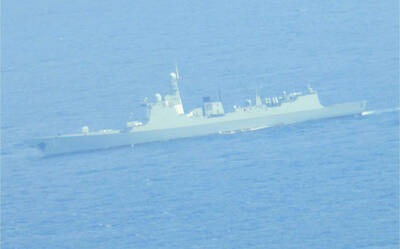
The military has spotted two Chinese warships operating in waters near Penghu County in the Taiwan Strait and sent its own naval and air forces to monitor the vessels, the Ministry of National Defense (MND) said. Beijing sends warships and warplanes into the waters and skies around Taiwan on an almost daily basis, drawing condemnation from Taipei. While the ministry offers daily updates on the locations of Chinese military aircraft, it only rarely gives details of where Chinese warships are operating, generally only when it detects aircraft carriers, as happened last week. A Chinese destroyer and a frigate entered waters to the southwest
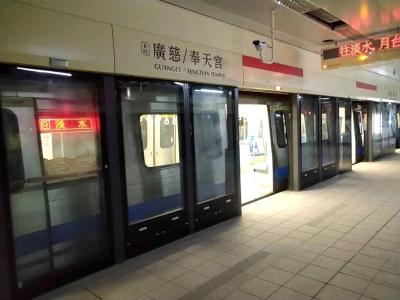
The eastern extension of the Taipei MRT Red Line could begin operations as early as late June, the Taipei Department of Rapid Transit Systems said yesterday. Taipei Rapid Transit Corp said it is considering offering one month of free rides on the new section to mark its opening. Construction progress on the 1.4km extension, which is to run from the current terminal Xiangshan Station to a new eastern terminal, Guangci/Fengtian Temple Station, was 90.6 percent complete by the end of last month, the department said in a report to the Taipei City Council's Transportation Committee. While construction began in October 2016 with an
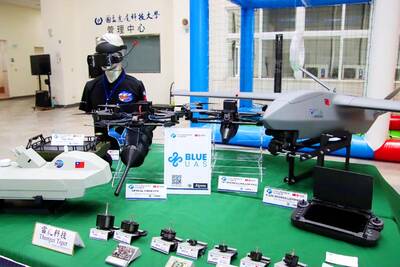
NON-RED SUPPLY: Boosting the nation’s drone industry is becoming increasingly urgent as China’s UAV dominance could become an issue in a crisis, an analyst said Taiwan’s drone exports to Europe grew 41.7-fold from 2024 to last year, with demand from Ukraine’s fight against Russian aggression the most likely driver of growth, a study showed. The Institute for Democracy, Society and Emerging Technology (DSET) in a statement on Wednesday said it found that many of Taiwan’s uncrewed aerial vehicle (UAV) sales were from Poland and the Czech Republic. These countries likely transferred the drones to Ukraine to aid it in its fight against the Russian invasion that started in 2022, it said. Despite the gains, Taiwan is not the dominant drone exporter to these markets, ranking second and fourth
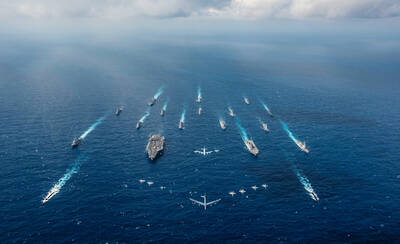
Japanese Prime Minister Sanae Takaichi’s comment last year on Tokyo’s potential reaction to a Taiwan-China conflict has forced Beijing to rewrite its invasion plans, a retired Japanese general said. Takaichi told the Diet on Nov. 7 last year that a Chinese naval blockade or military attack on Taiwan could constitute a “survival-threatening situation” for Japan, potentially allowing Tokyo to exercise its right to collective self-defense. Former Japan Ground Self-Defense Force general Kiyofumi Ogawa said in a recent speech that the remark has been interpreted as meaning Japan could intervene in the early stages of a Taiwan Strait conflict, undermining China’s previous assumptions


 RSS
RSS