


As many as 500,000 Chinese could transit through Taiwan’s airports in the first 12 months after a recent relaxation in restrictions on Chinese transit passengers takes effect, Minister of Transportation and Communications Chen Chien-yu (陳建宇) said.
That number could rise to 800,000 in the following 12 months as more Chinese travelers discover that transiting through Taiwan on their way to third countries could save them time and money, Chen said.
“This service could be especially attractive to those traveling between second or third-tier Chinese cities and North American countries or Australia,” Chen said.
Most travelers from cities such as Wuxi and Xiamen in southern China and Shijiazhuang and Taiyuan in northern China heading to third countries currently have to transit via South Korea, Japan or Hong Kong, he said.
Taiwanese travelers can make transit stops in China en route to other countries, but China does not allow its nationals to do so through Taiwan, which has put Taiwanese airlines at a significant disadvantage relative to their regional rivals.
Beijing has expressed concern that the inspection of Chinese passports in Taiwan during transit stops or layovers could signal that it sees Taiwan as a sovereign country.
However, in a meeting between top Taiwanese and Chinese officials on May 23, the two sides reached a consensus on allowing Chinese tourists to use Taiwan as a transit destination and the practice is expected to begin in the near future.
Chinese travelers are to be able to transit through Taiwan as long as they hold passports, airline tickets and visas from the countries they intend to visit, Chen said.
High-ranking executives at China Airlines and EVA Airways — the two largest airlines in Taiwan — said they were optimistic about the market prospects for the transit business.
CAL chairman Sun Hung-hsiang (孫洪祥) said that if only 15 percent of the total number of Chinese tourists traveling between China and the US transited in Taiwan, it would be a great boost to the company.
According to the US Department of Commerce, visitor growth from China to the US will increase by 172 percent to 3.1 million visitors by 2019.
EVA president Austin Cheng (鄭傳義) said EVA was optimistic about the development and welcomed the liberalization of the aviation market across the Taiwan Strait.

The military has spotted two Chinese warships operating in waters near Penghu County in the Taiwan Strait and sent its own naval and air forces to monitor the vessels, the Ministry of National Defense (MND) said. Beijing sends warships and warplanes into the waters and skies around Taiwan on an almost daily basis, drawing condemnation from Taipei. While the ministry offers daily updates on the locations of Chinese military aircraft, it only rarely gives details of where Chinese warships are operating, generally only when it detects aircraft carriers, as happened last week. A Chinese destroyer and a frigate entered waters to the southwest
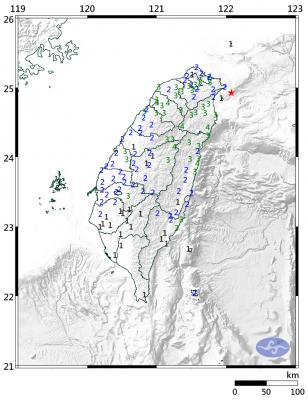
A magnitude 6.1 earthquake struck off the coast of Yilan County at 8:39pm tonight, the Central Weather Administration (CWA) said, with no immediate reports of damage or injuries. The epicenter was 38.7km east-northeast of Yilan County Hall at a focal depth of 98.3km, the CWA’s Seismological Center said. The quake’s maximum intensity, which gauges the actual physical effect of a seismic event, was a level 4 on Taiwan’s 7-tier intensity scale, the center said. That intensity level was recorded in Yilan County’s Nanao Township (南澳), Hsinchu County’s Guansi Township (關西), Nantou County’s Hehuanshan (合歡山) and Hualien County’s Yanliao (鹽寮). An intensity of 3 was
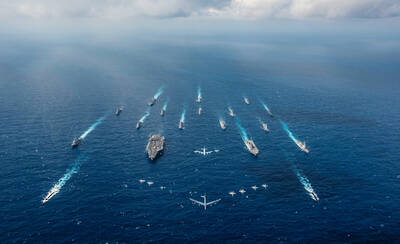
Japanese Prime Minister Sanae Takaichi’s comment last year on Tokyo’s potential reaction to a Taiwan-China conflict has forced Beijing to rewrite its invasion plans, a retired Japanese general said. Takaichi told the Diet on Nov. 7 last year that a Chinese naval blockade or military attack on Taiwan could constitute a “survival-threatening situation” for Japan, potentially allowing Tokyo to exercise its right to collective self-defense. Former Japan Ground Self-Defense Force general Kiyofumi Ogawa said in a recent speech that the remark has been interpreted as meaning Japan could intervene in the early stages of a Taiwan Strait conflict, undermining China’s previous assumptions
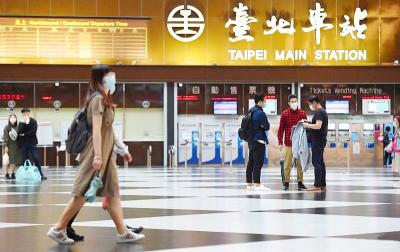
Taiwan Railways Corp (TRC) today announced that Shin Kong Mitsukoshi has been selected as the preferred bidder to operate the Taipei Railway Station shopping mall, replacing the current operator, Breeze Development Co Ltd. Among eight qualified firms that delivered presentations and were evaluated by a review committee, Shin Kong Mitsukoshi was ranked first, while Breeze was named the runner-up, the rail company said in a statement. Contract negotiations are to proceed in accordance with regulations, it said, adding that if negotiations with the top bidder fail, it could invite the second-ranked applicant to enter talks. Breeze in a statement today expressed doubts over


 RSS
RSS