


Taiwan Organ Registry and Sharing Center chairman Lee Po-chang (李伯璋) yesterday expressed concern over the potential impact of some online petitions calling for people to remove themselves from the organ donation registry.
Lee voiced the concern amid the fallout from the recent organ-harvesting accusations leveled by Chinese Nationalist Party (KMT) lawmakers against National Taiwan University Hospital (NTUH) physician-turned-independent Taipei mayoral candidate Ko Wen-je (柯文哲).
“We have noticed a number of netizens threatening to nullify their organ donation cards on Facebook [since the KMT legislators’ accusations], with some even launching an online movement urging people to opt out of the registry,” Lee said.
Lee said while it remains to be seen whether the negative sentiment would translate into actual action, it is the right of every registered organ donor to change their mind at any point and apply to have their names removed from the registry.
“Nevertheless, every cloud has a silver lining. Maybe the incident will give the public a more profound understanding of organ procurement and transplantation, ridding people of their prejudices and misconceptions,” Lee said.
Lee also dismissed physician-turned-KMT Legislator Su Ching-chuan (蘇清泉) and KMT Legislator Liao Kuo-tung’s (廖國棟) accusations on Thursday last week that NTUH had given high doses of phentolamine and heparin to 26 trauma patients in the past 15 years, causing them to die from cardiac arrest, for the sole purpose of making them eligible as organ donors and deceiving district prosecutors into issuing death certificates.
The pair also criticized the hospital’s later procedure of connecting the patients to an extracorporeal membrane oxygenation (ECMO) machine to improve the viability of their organs as medically unethical.
“If people study the 26 cases carefully, they will realize that most of the patients in question donated their kidneys rather than their hearts,” Lee said. “That means the team of cardiac experts who attached the donors to an ECMO machine did not carry out the procedure to benefit their own patients, but to improve the viability of the donors’ kidneys so that someone out there with renal failure could live their lives without the need for dialysis.”
Organ Procurement Association secretary-general Wu Ying-lai (吳英萊), who donated her elder brother’s heart, liver, kidneys, cornea and other usable tissues to 17 patients after he died from an accidental fall 18 years ago, also took to Facebook yesterday to vent her discontent with the KMT lawmakers’ remarks.
“The lawmakers’ sensational accusations have hurt many families, who, despite knowing little about standard organ procurement and transplant procedures, have decided to donate the organs of their loved ones to those in need. Their words have torn their hearts apart and reopened old wounds,” Wu said.
Wu said she despises and loathes anyone who uses organ donors as a political ploy, regardless of their political affiliation.
“I can only pray to my God that the love and kindness of the families of organ donors will one day rub off on these people... and make them see what the residents of Taipei really need — a city filled with love and ethnic harmony,” Wu said.
Su and Liao’s remarks have prompted an outpouring of criticism by the medical community.
Taipei Veterans General Hospital superintendent Lin Fang-yu (林芳郁), who headed NTUH between 2004 and 2008, said on Saturday that the organ harvesting controversy has deviated the focus of Saturday’s Taipei mayoral election and that “it is not right to resort to such ploys.”
Former minister of health Yeh Ching-chuan (葉金川) said the pair’s accusations have caused irreversible damage to the nation’s organ donation and transplant environment, making organ donors, recipients and their families question their decisions.
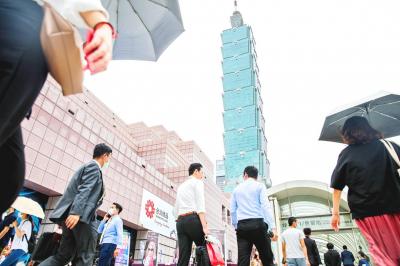
Japanese footwear brand Onitsuka Tiger today issued a public apology and said it has suspended an employee amid allegations that the staff member discriminated against a Vietnamese customer at its Taipei 101 store. Posting on the social media platform Threads yesterday, a user said that an employee at the store said that “those shoes are very expensive” when her friend, who is a migrant worker from Vietnam, asked for assistance. The employee then ignored her until she asked again, to which she replied: "We don't have a size 37." The post had amassed nearly 26,000 likes and 916 comments as of this

Taiwanese can file complaints with the Tourism Administration to report travel agencies if their activities caused termination of a person’s citizenship, Mainland Affairs Council Minister Chiu Chui-cheng (邱垂正) said yesterday, after a podcaster highlighted a case in which a person’s citizenship was canceled for receiving a single-use Chinese passport to enter Russia. The council is aware of incidents in which people who signed up through Chinese travel agencies for tours of Russia were told they could obtain Russian visas and fast-track border clearance, Chiu told reporters on the sidelines of an event in Taipei. However, the travel agencies actually applied
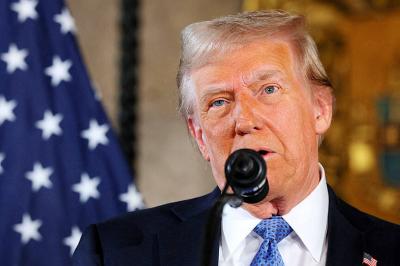
US President Donald Trump said "it’s up to" Chinese President Xi Jinping (習近平) what China does on Taiwan, but that he would be "very unhappy" with a change in the "status quo," the New York Times said in an interview published yesterday. Xi "considers it to be a part of China, and that’s up to him what he’s going to be doing," Trump told the newspaper on Wednesday. "But I’ve expressed to him that I would be very unhappy if he did that, and I don’t think he’ll do that," he added. "I hope he doesn’t do that." Trump made the comments in

Tourism in Kenting fell to a historic low for the second consecutive year last year, impacting hotels and other local businesses that rely on a steady stream of domestic tourists, the latest data showed. A total of 2.139 million tourists visited Kenting last year, down slightly from 2.14 million in 2024, the data showed. The number of tourists who visited the national park on the Hengchun Peninsula peaked in 2015 at 8.37 million people. That number has been below 2.2 million for two years, although there was a spike in October last year due to multiple long weekends. The occupancy rate for hotels


 RSS
RSS