


Taipei Zoo has become a deathtrap for nocturnal animals after more than a score died after a renovation project forced their relocation, a Taipei City councilor said on Tuesday.
Zoo statistics show that 12 nocturnal animals have died since the Nocturnal Animals exhibition area was closed in September last year so the site could be converted into an indoor tropical rainforest display. About 70 percent of them were rare or endangered species, such as Malayan porcupines, pygmy slow lorises, Siberian weasels and jungle cats, the statistics show.
According to the zoo’s Web site, the 118 inhabitants of the Nocturnal Animals exhibit were gradually moved to other exhibition halls in October, even though the NT$380 million (US$12.7 million) rainforest project is still in the bidding process. Construction of the new exhibition area is scheduled to be completed next year, according to the Web site.
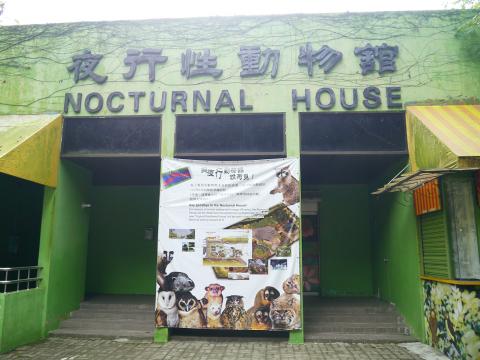
Photo: Kuo An-chia, Taipei Times
However, Democratic Progressive Party Taipei City Councilor Lee Ching-feng (李慶鋒) said a review of documents shows that 27 animals have died.
The death toll represents a mortality rate of 21 percent, far higher than the overall death rate of 4.3 percent for the entire zoo and the fatality rate of 10 percent for nocturnal animals recorded before the relocation.
“Among the deceased animals were a Formosan gem-faced civet, a rare species endemic to Taiwan, and collared scops owl,” Lee said.
Lee said some of these animals died because of difficulties adjusting to their new environment, while others died as a result of negligent care by the zoo’s management.
“This construction project has turned the zoo into an animal graveyard and even victimized the last remaining Siberian weasel at the zoo,” Lee said.
“However, the zoo will simply purchase more animals, because it is trapped in a vicious circle [of buying animals and letting them die] that is not a good educational approach and does not set a good example for children,” Lee said.
Taipei Zoo spokesman Chao Ming-chieh (趙明杰) told reporters that only 12 animals died after the move.
“Nocturnal animals have a relatively short life span and it is natural that their death toll increases over time. Most of the animals, such as Malayan porcupines and white-bellied hedgehogs, died of old age, malignant tumors or hepatitis, while others, including Linnaeus’ two-toed sloth, died as a result of [improper] care from their mothers,” Chao said.
None died because of the relocation, Chao said.
Lee responded to Chao’s comments by saying the zoo should not try to shift the blame onto the mothers of dead animals, who could not speak for themselves.
The zoo operates in an opaque manner and refuses to let the public examine its hygiene standards and environment.
Environment and Animal Society of Taiwan director Chen Yu-min (陳玉敏) said the zoo had always treated animals as toys and shirked responsibility for deaths.
“Since it is taxpayers’ money that funds the zoo’s operations, it is only right that the zoo opens its doors to private animal welfare organizations and wildlife specialists for evaluation and inspection,” Chen said.
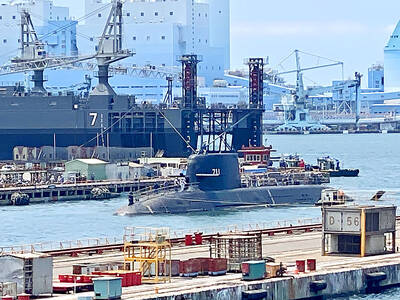
AGING: While Japan has 22 submarines, Taiwan only operates four, two of which were commissioned by the US in 1945 and 1946, and transferred to Taiwan in 1973 Taiwan would need at least 12 submarines to reach modern fleet capabilities, CSBC Corp, Taiwan chairman Chen Cheng-hung (陳政宏) said in an interview broadcast on Friday, citing a US assessment. CSBC is testing the nation’s first indigenous defense submarine, the Hai Kun (海鯤, Narwhal), which is scheduled to be delivered to the navy next month or in July. The Hai Kun has completed torpedo-firing tests and is scheduled to undergo overnight sea trials, Chen said on an SET TV military affairs program. Taiwan would require at least 12 submarines to establish a modern submarine force after assessing the nation’s operational environment and defense

A white king snake that frightened passengers and caused a stir on a Taipei MRT train on Friday evening has been claimed by its owner, who would be fined, Taipei Rapid Transit Corp (TRTC) said yesterday. A person on Threads posted that he thought he was lucky to find an empty row of seats on Friday after boarding a train on the Bannan (Blue) Line, only to spot a white snake with black stripes after sitting down. Startled, he jumped up, he wrote, describing the encounter as “terrifying.” “Taipei’s rat control plan: Release snakes on the metro,” one person wrote in reply, referring
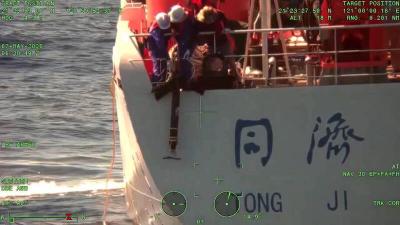
The coast guard today said that it had disrupted "illegal" operations by a Chinese research ship in waters close to the nation and driven it away, part of what Taipei sees a provocative pattern of China's stepped up maritime activities. The coast guard said that it on Thursday last week detected the Chinese ship Tongji (同濟號), which was commissioned only last year, 29 nautical miles (54km) southeast of the southern tip of Taiwan, although just outside restricted waters. The ship was observed lowering ropes into the water, suspected to be the deployment of scientific instruments for "illegal" survey operations, and the coast
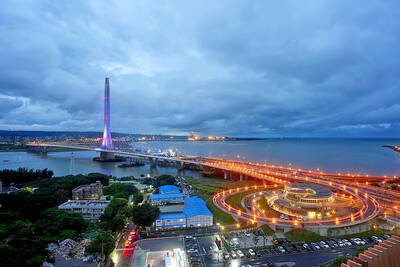
An inauguration ceremony was held yesterday for the Danjiang Bridge, the world’s longest single-mast asymmetric cable-stayed bridge, ahead of its official opening to traffic on Tuesday, marking a major milestone after nearly three decades of planning and construction. At the ceremony in New Taipei City attended by President William Lai (賴清德), Premier Cho Jung-tai (卓榮泰), Minister of Transportation and Communications Chen Shih-kai (陳世凱) and New Taipei City Mayor Hou Yu-ih (侯友宜), the bridge was hailed as both an engineering landmark and a long-awaited regional transport link connecting Tamsui (淡水) and Bali (八里)


 RSS
RSS