


A prestigious Taiwanese researcher specializing in anti-aging protein research was found dead in his office yesterday morning surrounded by injection bottles of sedatives and muscle relaxants.
Lin Yu-yi (林育誼), 38, who also served as an assistant professor at National Taiwan University College of Medicine’s Graduate Institute of Biochemistry and Molecular Biology, was rushed to a hospital after being found in his office with no signs of life at about 11am yesterday. He was later pronounced dead after efforts to resuscitate him failed.
A preliminary examination of Lin’s body found a pinhole on his left arm and a fresh bruise on his forehead. Needles were also found at the scene along with sedatives and muscle relaxants, police said.
Police ruled out suicide as no suicide note was found at the scene and, according to Lin’s family members, everything was going well with his wife and family.
However, Lin’s family said he may have injected the muscle relaxants due to overwhelming work-related pressure, which raised suspicions that Lin’s death could have been an accidental overdose. Ruling on the cause of death is on hold until the results of Lin’s blood analysis are given, police said.
According to Lin’s assistant, no visitors were seen entering Lin’s office that morning and no strange sounds were heard coming from it.
With a doctoral degree from the medical school of Johns Hopkins University in the US, Lin was one of the few researchers in Taiwan studying anti-aging proteins. A research team he led was featured in the scientific journal Nature in February for their discovery of the key mechanism for maintaining cell energy balance — believed to be linked to cellular aging and cancer.

The military has spotted two Chinese warships operating in waters near Penghu County in the Taiwan Strait and sent its own naval and air forces to monitor the vessels, the Ministry of National Defense (MND) said. Beijing sends warships and warplanes into the waters and skies around Taiwan on an almost daily basis, drawing condemnation from Taipei. While the ministry offers daily updates on the locations of Chinese military aircraft, it only rarely gives details of where Chinese warships are operating, generally only when it detects aircraft carriers, as happened last week. A Chinese destroyer and a frigate entered waters to the southwest

A magnitude 6.1 earthquake struck off the coast of Yilan County at 8:39pm tonight, the Central Weather Administration (CWA) said, with no immediate reports of damage or injuries. The epicenter was 38.7km east-northeast of Yilan County Hall at a focal depth of 98.3km, the CWA’s Seismological Center said. The quake’s maximum intensity, which gauges the actual physical effect of a seismic event, was a level 4 on Taiwan’s 7-tier intensity scale, the center said. That intensity level was recorded in Yilan County’s Nanao Township (南澳), Hsinchu County’s Guansi Township (關西), Nantou County’s Hehuanshan (合歡山) and Hualien County’s Yanliao (鹽寮). An intensity of 3 was

Japanese Prime Minister Sanae Takaichi’s comment last year on Tokyo’s potential reaction to a Taiwan-China conflict has forced Beijing to rewrite its invasion plans, a retired Japanese general said. Takaichi told the Diet on Nov. 7 last year that a Chinese naval blockade or military attack on Taiwan could constitute a “survival-threatening situation” for Japan, potentially allowing Tokyo to exercise its right to collective self-defense. Former Japan Ground Self-Defense Force general Kiyofumi Ogawa said in a recent speech that the remark has been interpreted as meaning Japan could intervene in the early stages of a Taiwan Strait conflict, undermining China’s previous assumptions
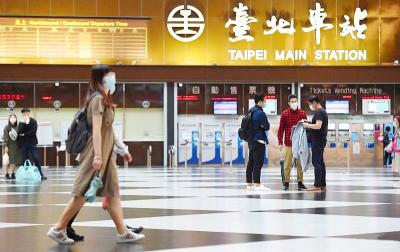
Taiwan Railways Corp (TRC) today announced that Shin Kong Mitsukoshi has been selected as the preferred bidder to operate the Taipei Railway Station shopping mall, replacing the current operator, Breeze Development Co Ltd. Among eight qualified firms that delivered presentations and were evaluated by a review committee, Shin Kong Mitsukoshi was ranked first, while Breeze was named the runner-up, the rail company said in a statement. Contract negotiations are to proceed in accordance with regulations, it said, adding that if negotiations with the top bidder fail, it could invite the second-ranked applicant to enter talks. Breeze in a statement today expressed doubts over


 RSS
RSS