


The Chinese Nationalist Party (KMT) yesterday denied charges by a former US official that Taiwan’s China-leaning policy was steering it away from the ranks of world democracies and that President Ma Ying-jeou (馬英九) did not have a US policy.
A report in the Taipei Times on Friday cited former US diplomat John Tkacik as testifying at a US congressional hearing that Taiwan is “moving out of the column of the community of democracies” and now “basically agrees” that it is part of China.
Tkacik also said the Ma administration had a very clear China policy, but not a US policy.
KMT spokesman Yin Wei (殷瑋) said Tkacik was wrong on both counts, calling his comments groundless and not factual.
The Ma administration’s China policy is clearly based on the principles of “no unification, no independence and no use of force” and a cross-strait understanding that there is only “one China,” with each side free to interpret what that is, Yin said.
The “one China,” Yin said, refers to the Republic of China and there is no alternative explanation.
Therefore, how can it be that “Taiwan is part of mainland China?” Yin asked.
On Tkacik’s charge that Taiwan is moving away from the community of democracies and that Ma has adopted a policy of “accommodating” Beijing, Yin said the 16 cross-strait agreements signed since Ma took office in 2008 were made in the interests of Taiwan.
He pointed to Ma’s re-election in January as clear evidence of support for the agreements.
Addressing the accusation that the Ma administration had a China policy, but not a US policy, Yin said former US president George W. Bush and US President Barack Obama have repeatedly recognized improved ties between Taiwan and China, with Obama praising the Economic Cooperation Framework Agreement signed between Taiwan and China in June 2010.
Moreover, US Secretary of State Hillary Rodham Clinton last year said that Taiwan was an important security and economic partner of the US, and American Institute in Taiwan Chairman Raymond Burghardt praised Ma in February for improving US-Taiwan relations during his first term, Yin said.
Taiwan’s US policy is further reflected by US$18.3 billion in arms sales offered to Taiwan, visits by senior US officials and the ongoing evaluation of Taiwan’s bid to join the US visa-waiver program, Yin said, adding that US-Taiwan ties were at their best in 60 years.

Yangmingshan National Park authorities yesterday urged visitors to respect public spaces and obey the law after a couple was caught on a camera livestream having sex at the park’s Qingtiangang (擎天崗) earlier in the day. The Shilin Police Precinct in Taipei said it has identified a suspect and his vehicle registration number, and would summon him for questioning. The case would be handled in accordance with public indecency charges, it added. The couple entered the park at about 11pm on Thursday and began fooling around by 1am yesterday, the police said, adding that the two were unaware of the park’s all-day live
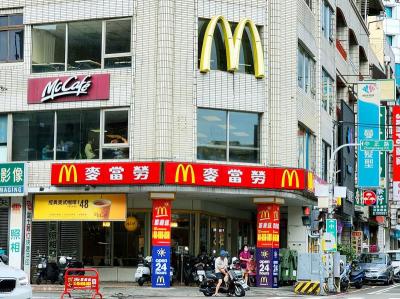
Fast food chain McDonald's is to raise prices by up to NT$5 on some products at its restaurants across Taiwan, starting on Wednesday next week, the company announced today. The prices of all extra value meals and sharing boxes are to increase by NT$5, while breakfast combos and creamy corn soup would go up by NT$3, the company said in a statement. The price of the main items of those meals, if ordered individually, would remain the same. Meanwhile, the price of a medium-sized lemon iced tea and hot cappuccino would rise by NT$3, extra dipping sauces for chicken nuggets would go up

Yangmingshan National Park’s Qingtiangang (擎天崗) nature area has gone viral after a park livestream camera observed a couple in the throes of intimate congress, which was broadcast live on YouTube, drawing large late-night crowds and sparking a backlash over noise, bright lights and disruption to wildlife habitat. The area’s livestream footage appeared to show a couple engaging in sexual activity on a picnic table in the park on Friday last week, with the uncensored footage streamed publicly online. The footage quickly spread across social media, prompting a tide of visitors to travel to the site to “check in” and recreate the

Minister of Digital Affairs Lin Yi-ching (林宜敬) yesterday cited regulatory issues and national security concerns as an expert said that Taiwan is among the few Asian regions without Starlink. Lin made the remarks on Facebook after funP Innovation Group chief executive officer Nathan Chiu (邱繼弘) on Friday said Taiwan and four other countries in Asia — China, North Korea, Afghanistan and Syria — have no access to Starlink. Starlink has become available in 166 countries worldwide, including Ukraine, Malaysia, the Philippines and Vietnam, in the six years since it became commercial, he said. While China and North Korea block Starlink, Syria is not


 RSS
RSS